3-K and Pre-K Deadline Hits February 27 as City Leans Into Multilingual Outreach Across Boroughs
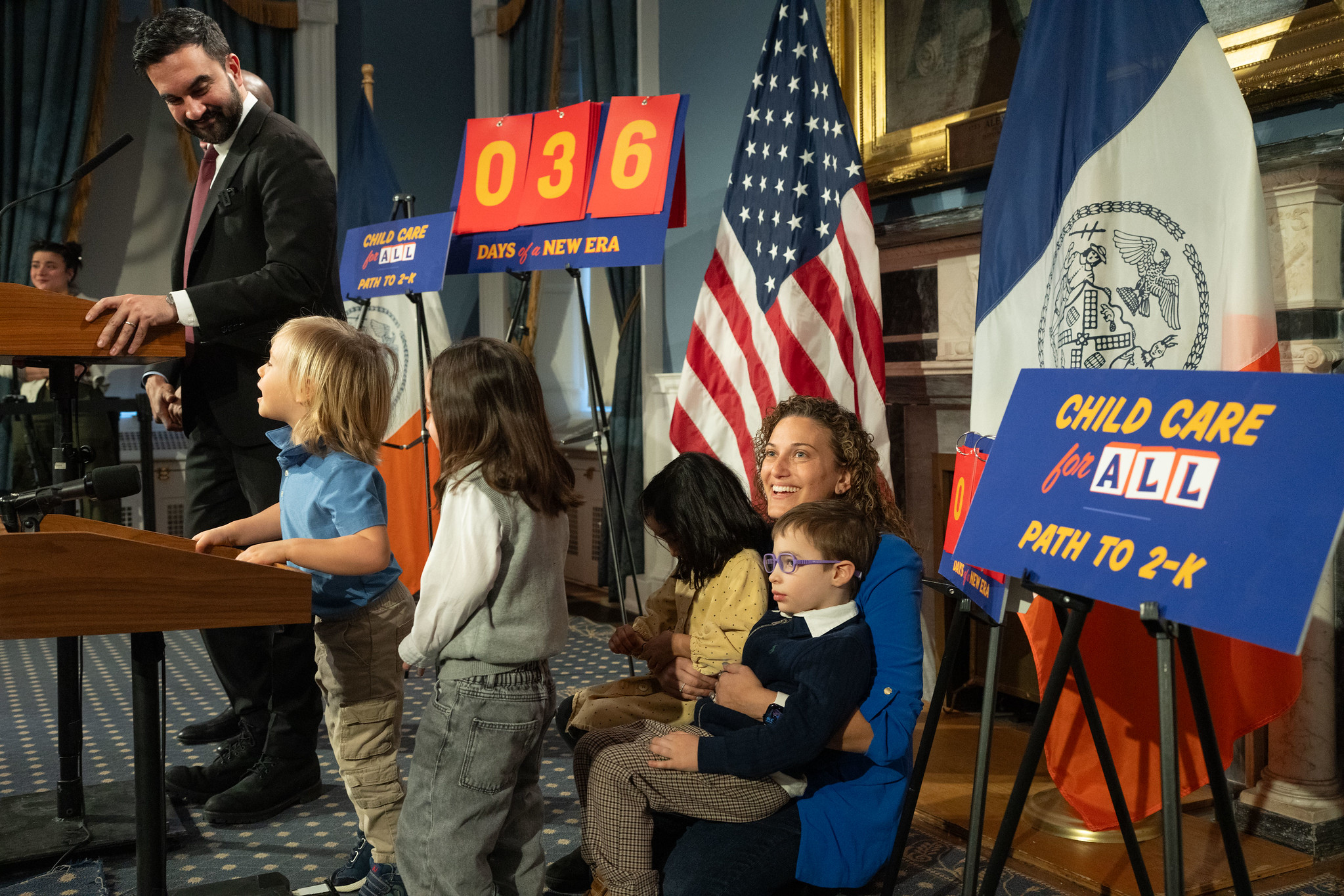
Universal early childhood education remains one of New York City’s most potent levers for equality and economic relief—but persistent barriers bedevil even the most ambitious outreach.
“Twenty-six thousand dollars.” That is, according to City Hall, the average annual windfall for a New York City family whose child secures a spot in the city’s free 3-K or Pre-K programme, compared to out-of-pocket private childcare costs. Yet, as another February deadline looms—for applications due by the 27th—the city’s efforts underscore not just the promise of universal early education, but the obstacles that remain stubbornly in its path.
This week, Mayor Zohran Mamdani, joined by Congresswoman Alexandria Ocasio-Cortez, delivered an unmistakable message in Spanish: enrol now, regardless of language, immigration status, or zip code. At stake are thousands of free 3-K and Pre-K spots for children who turn three or four this year, with the promise of more to come. Any family applying before the deadline is promised a slot for their child, and help is available at ten Family Welcome Centers, over the phone, or through a trilingual online portal. In a city where more than 200 languages compete for elbow room, translation and assistance abound—at least on paper.
The administration, keen on defusing awareness gaps in immigrant-heavy precincts, has deployed advertising on LinkNYC kiosks, ferries, and public housing elevators. The high-minded rhetoric is matched by a practical barrage of robocalls and text messages, especially targeting districts with historically low uptake, such as School Districts 4, 9, 14, and 17. The intent is clear: no family should miss out because of bureaucratic hurdles or linguistic isolation.
At first blush, the push hints at a City Hall eager to fulfil the original de Blasio-era promise of universal early childhood education. Access is genuinely meant to be for all—regardless of passport or proficiency in English. By extending even further, the mayor pledges the first 2,000 slots for 2-K (education for two-year-olds) this autumn, charting a path to universal coverage by 2029.
To New Yorkers, the short-term stakes are anything but abstract. In a city where median monthly childcare costs can easily exceed $2,200, these programmes amount to what some reckon is the largest in-kind subsidy a working family could hope for. The promise of $26,000 in “returned” yearly value per child is anything but puny—especially to those living paycheck to paycheck in a city where rent bobs ever higher.
More subtle, but as consequential, are the to-be-seen effects on the luckless parents who otherwise split shifts, juggle “gray market” child-minders, or watch their career prospects stunted by lack of affordable childcare. With universal Pre-K, the city hopes, more parents can rejoin the workforce, boosting both family incomes and the city’s strained labour pool. Kindergarten readiness, too, is portentous: early childhood education narrows achievement gaps that otherwise begin to yawn by grade one.
Yet bedevilling the city’s efforts is a stubborn trinity: space, staffing, and trust. Though the mayor promises every applicant a place, the practical question is less whether there’s theoretical entitlement and more whether there are enough seats where people live. Staffing—rarely abundant in early education—remains lean, especially in outer-borough and lower-income zones. Distrust, meanwhile, lingers among undocumented families, who still hesitate to hand over personal details, regardless of City Hall’s re-assurances.
Gaps across America, lessons from abroad
Outside New York, the concept of universally free pre-kindergarten remains aspirational. Few American cities rival New York’s scale or ambition. While Chicago and Boston have expanded similar programmes, their coverage is but a fraction of Gotham’s and rarely immune to budget shortfalls or provider attrition. Nationally, universal pre-K enjoys bipartisan lip service but paltry follow-through; President Biden’s proposals remain stalled in Congressional gridlock.
Across the Atlantic, many European capitals put New York to shame—at least in terms of universal nursery access. In Paris, Berlin, and Stockholm, places in subsidised creches or kindergartens are nearly guaranteed by age three. However, even in these bastions of the social safety net, issues of equity, distribution, and quality persist—albeit at a less harrowing scale than in American metropolises.
Despite the municipal bravado (and, some would say, self-congratulation), New York’s experiment is, by American standards, both gargantuan and imperfect. It does not take a cynic to note that, each year, thousands of eligible places go unclaimed, particularly in ethnic enclaves or among recent arrivals. The city’s data-driven push into outreach is a sensible response, but may prove insufficient without expanding physical capacity and investing more seriously in early educators’ salaries.
What, then, are the lessons to draw? Firstly, that policy announcements—even flamboyantly inclusive ones—must contend with reality on the ground: geography, staffing, trust, and a cityscape riddled with disparities. Secondly, that universalism in principle often founders on the rocks of implementation. Finally, that the city’s slow, stubborn march from 3-K to 2-K and beyond requires not only cheery PSAs but cold-eyed attention to logistics and resourcing.
Our assessment is one of measured optimism, tinged with the usual New York caution. The city is ahead of the American pack but well behind its global peers. Its attempt to address gaps through multi-lingual outreach, political star-power, and steady incrementalism is welcome, if overdue. The economics are undeniable: every budget-conscious family that gets a leg up through free early education is less likely to face privation or inflict knock-on costs on the rest of the system.
But aspirations—however buoyant—must keep pace with capacity, lest universal promises become an exercise in managed disappointment. A city that aspires to be the world’s most welcoming for families must reckon with dry numbers, not just glossy flyers. If New York can match its ambitions with delivery, it may yet earn the title its politicians want: the city that works for every child, in every language, from every zip code. ■
Based on reporting from El Diario NY; additional analysis and context by Borough Brief.