Albany Sends $1.5 Billion Lifeline to City, Queens Sees $60 Million Public Health Win
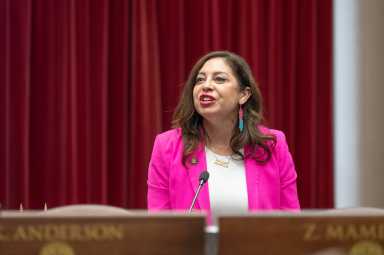
Albany’s largesse steers $1.5 billion to New York City, mending a gaping budget hole and partially correcting persistent inequities in public health funding.
Seldom do New York’s budget numbers inspire appreciation, let alone cheer, but this week offered a flicker of both. Under a deal negotiated by Governor Kathy Hochul and Mayor Zohran Mamdani, the state will hand over an additional $1.5 billion in operating support to New York City during the next two years. Among the several line items rolled into this relief package, a $60 million boost for the city’s strained public health system—long shortchanged by Albany—stands out.
The announcement, made on Monday, represents yet another effort to stave off fiscal calamity as the city navigates a $7 billion budget deficit for 2026, itself a notable improvement from the originally projected $12 billion chasm. Wall Street’s surprisingly sanguine bonus season and a raft of savings measures have softened the city’s fiscal headache, but not cured it. Governor Hochul’s pledge allots $1 billion for fiscal year 2026 and $510 million for fiscal year 2027, deploying state resources to help plug the capital’s most persistent budget gaps.
For New York City, the news offers short-term respite. Crucially, $510 million has been earmarked as recurring relief, reversing a slow but punishing cost-shift that has weighed on the five boroughs. About $300 million is set aside for youth programmes, $150 million will restore city sales tax receipts, and the long-neglected $60 million for public health marks an incremental effort to address fiscal imbalances first codified in Albany’s own ledgers.
Elected officials were keen to tout their advocacy. Assemblymember Jessica González-Rojas—who, alongside State Senator Gustavo Rivera, had sponsored legislation targeting the opaque and archaic “Article 6” funding formulas—saluted the agreement as long overdue. Article 6, a provision in New York’s Public Health Law, had long guaranteed that the state would pick up 36% of every municipality’s health care tab. In 2019, city dwellers saw their share plunge to 20%, sowing a $90 million annual shortfall and thrusting the city’s public clinics and epidemic response further onto the fiscal precipice.
This new deal claws back $60 million of that lost ground. Councilmember Lynn Schulman, chair of the City Council’s Health Committee, described it as a “critical step”—not transformative, perhaps, but essential. As the city recovers from the shocks of covid-19, the case for robust, predictable public health funding is unambiguous. Local clinics and surveillance infrastructure remain both the first and last bulwarks against outbreaks (the omicron spike, it bears remembering, cost the city nearly $1 billion in emergency response and lost productivity).
The relief package is, however, more palliative than curative. New York’s overall fiscal trajectory remains tepid. The new support covers a spectrum of needs but leaves untouched the underlying liabilities: the city’s ageing infrastructure, a still-perilous public housing stock, and chronic pressures from its swelling shelter population. Moreover, the $60 million for public health replaces only two-thirds of the $90 million excised in 2019, an inconvenient fact noticed by many in local government but left unaccented by their press teams.
Economically, the timing is apt. Despite a buoyant spring on Wall Street, tax revenues remain volatile, and the city government faces a multitide of cost pressures—rising wage bills, migrant-shelter costs, and court-mandated investments in education. The additional sales tax receipts return to city coffers a much-needed cushion. Yet, as ever, state largesse is cyclical and politically contingent. Mr. Mamdani, the mayor, and Ms. Hochul must both reckon with outstate critics who grumble that the metropolis, home to 8.5 million, already receives special treatment.
Nationally, budget bailouts for big cities are de rigueur in 2024. New York’s $1.5 billion may look paltry compared with the federal pandemic-era infusions to San Francisco, Chicago, or Los Angeles. But the principle is much the same: statehouses, leery of the social and political costs of urban collapse, prefer to paper over their cities’ deficits rather than risk further deterioration. It is telling that little of the new money is truly “new”; most restores cuts made in less flamboyant fiscal epochs.
Partial repair, persistent risk
For New Yorkers, this relief is likely to avert the most extreme of looming service cuts, from libraries to school nurses, at least for now. Public health advocates will welcome the step toward redressing the Article 6 inequity, though few expect Albany generosity to become perennial. Civil society, too, can breathe easier—reliable public health funding undergirds everything from pandemic preparedness to mental health outreach.
Yet the partial nature of the fix bodes caution. We reckon that recurring budget tensions will persist as health care costs continue their inexorable climb and tax revenues wobble with the fortunes of Manhattan financiers. A 2023 analysis from the Independent Budget Office estimated that, absent further reforms, the city’s repertoire of fiscal contortions will be exhausted by 2028. The signals from Albany portend more transactional, brinkmanship-driven bargaining rather than structural realignment.
Internationally, New York’s predicament is hardly unique; major cities from London to Toronto have also seen upper governments shuffle costs downward in the name of “efficiency”. Each has found that leaving cities to foot a disproportionate health bill eventually prompts a noisy correction. What differs is the scale, and the history: New York’s public health system is perhaps the most complex in America, tested more regularly than most.
We are inclined to be mildly optimistic, if only in the New York sense—relief is always temporary, but even temporary is better than nothing. Absent political theatre or fiscal brinkmanship, the city’s safety net for the vulnerable is a hair sturdier than it was last week. Still, in the city where budget holes tend to swallow promises whole, to call $1.5 billion “transformative” would be to invite irony.
Albany’s manoeuvre to plug City Hall’s holes is prudent politics and prudent policy; but, as always in Gotham, there is more patch than repair.■
Based on reporting from QNS; additional analysis and context by Borough Brief.