Ali Jamenei Killed in US-Israel Strike, Upends Iran's Power Structure—For Now
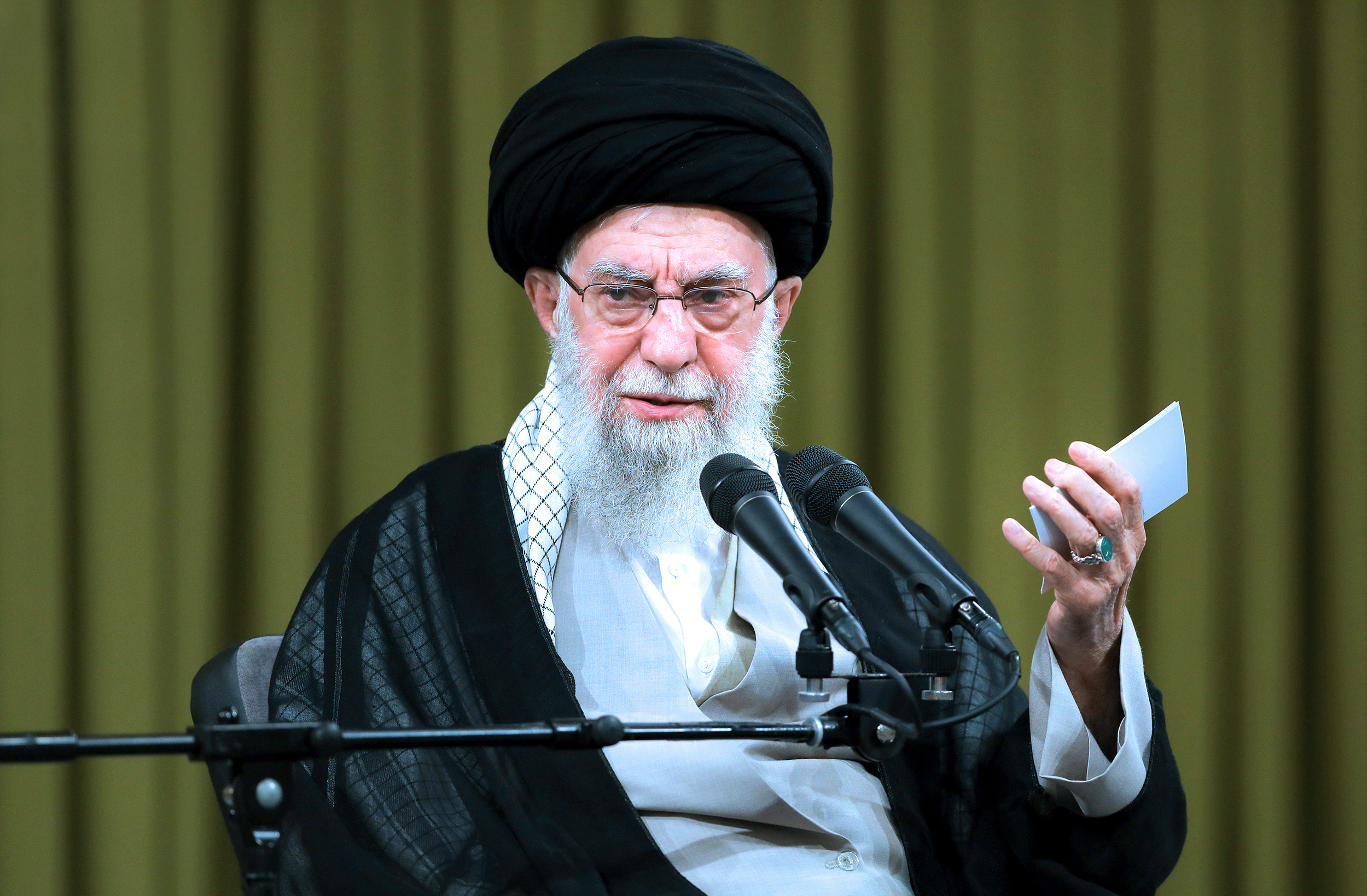
The sudden demise of Iran’s most powerful man in a joint US-Israeli strike sets New York abuzz—and could reshape security, geopolitics, and economics from the Middle East to Manhattan.
The death of a foreign despot seldom sends ripples across all five boroughs. Yet on a rain-soaked Thursday morning, news that Ali Khamenei—Supreme Leader of Iran since 1989—was killed in a rare joint American-Israeli strike sent shockwaves through city hall, Wall Street, and the city’s Persian enclaves alike. Few New Yorkers could pick the late ayatollah out of a lineup, but his passing portends a momentous shift in global risk, with consequences that touch even those idling on the N or the J train.
The drama came, perhaps fittingly, not cloak-and-dagger but brash and public. Donald Trump, of all people, broke the news on Truth Social, declaring the attack a triumph of American intelligence and a blow against “one of the most evil men in history”. Israeli brass confirmed their own role, as if keen to demonstrate their military prowess to friend and foe. What is clear: after decades as Iran’s real power broker—dwarfing even presidents—Khamenei is gone, leaving a region (and not a few Iranian-Americans with family back home) in profound uncertainty.
Just as the ayatollah’s reach was global, so too will be the repercussions: for New York’s vast financial sector, the city’s restive Iranian diaspora (estimated at 60,000 strong in Greater NYC), and the persistent specter of international terrorism. Washington’s jubilant tone belies a complex reality. Khamenei was no friend of the West, let alone Israel, but also no simple Bond villain. Under his iron rule, Iran became both a pariah and a regional powerhouse—bolstering militias, exporting oil through shadowy channels, and shaping the fate of neighbours from Baghdad to Beirut.
For the city’s most globally entangled industries—finance, shipping, energy—Khamenei’s absence bodes a new volatility. Oil futures, already jittery, spiked over $6 per barrel within hours, as traders braced for Iranian reprisals or internal chaos. Wall Street, which has always viewed Middle Eastern risk as a distant but occasionally existential threat, must now reckon with how a power vacuum in Tehran might embolden the “Axis of Resistance”—Hezbollah, Syrian proxies, Yemen’s Houthis—all tentacles gestated by Khamenei’s regime.
Security services in New York moved swiftly to a heightened alert. The NYPD and federal agencies quietly increased surveillance and patrols around synagogues, mosques, and other likely soft targets, aware that Iranian-linked actors have on occasion threatened Jewish and Israeli interests abroad. The city’s police commissioner invoked “an abundance of caution”—an established euphemism for a bump in overtime costs and weekend briefings, but also a signal that New York, global crossroads that it is, remains perennially in the line of fire when the world’s tectonics shift.
But the aftershocks will not be felt equally across all New Yorkers. Persian restaurants in Astoria and Great Neck, haunts for émigrés and exiles, hummed with anxious conversation as news filtered in. Many in the community—often secular, sometimes quietly pro-reform—view the regime with icy detachment at best. Yet few relish the prospect of a destabilised homeland, ripe for further oppression or a hardline military takeover (the Revolutionary Guard, whose power ballooned under Khamenei, eye the succession hungrily).
Beyond the ethnic enclaves, City Hall and Albany will watch oil prices with some trepidation. The last time Middle East tumult drove up the cost of crude, ride-hails and food deliveries became more expensive, transit agencies warned of budget holes, and heating bills spiked for millions. The city’s economic fabric—delicate in its interdependence—remains uniquely exposed to distant, oil-fueled shocks. Union leaders and restaurateurs alike have grown wary of “headline risk.”
Nationally and abroad, the demise of an autocrat might once have heralded the dawn of liberal democracy—a hope sometimes entertained by deluded Westerners during the Arab Spring. Few policymakers today harbour such naïveté. Khamenei’s Iran was never a monolith, but power now passes into a vacuum presided over by generals, hardliners, and shadowy clerics, all schooled in the dark arts of survival. If past precedent is a guide—from the death of Stalin in Moscow to that of Stalinist Kim Jong Il in Pyongyang—any transition will be neither velvet nor swift.
Even so, Iran’s regional posture—its support for proxy forces, its truculent stance on the Gaza war, and its nuclear ambitions—will bear close scrutiny. The shadow conflict with Israel frays at the edges of world order; the possibility, however puny, of direct Israeli-Iranian conflict goes up, not down, as leadership passes unsteadily from hand to hand. American presidents, including the incumbent, now face the thankless task of calibrating between celebration and preparation: instability may gratify short-term hawks, but bodes ill for the longer arc of nuclear diplomacy.
No peace dividend for New Yorkers yet
Nor should New Yorkers expect a peace dividend. The city’s Iranian-American students, professionals, and asylum-seekers—often pillars of their communities—live with the uneasy knowledge that home can become more dangerous, not less, when old guard repression gives way. New York remains a magnet for those fleeing autocracy; human rights organisations here are already bracing for what comes next, as regime insiders close ranks or factions jostle with unpredictable consequence.
International comparison is instructive. London’s Iranian diaspora, Paris’s energy markets, and Berlin’s intelligence agencies are all adjusting their playbooks. But the scale of challenge is starker here: New York’s web of global finance, UN headquarters, and dollar diplomacy means it is at once exposed and influential. A convulsion in Iran may seem far away, but the city’s fortunes are forever entangled with distant despots’ rise and fall.
Equally, now is not the moment for premature triumphalism. The brutal logic of Middle East politics rarely rewards the naïve. Back in Tehran, the rivalry between the Revolutionary Guard and the clerical old guard could yet unleash a new, more volatile permutation of authority. As Khamenei so often proved in life, and as his legacy may continue to prove in death, power in Iran is neither benign nor entirely predictable.
From our vantage point on the East River, we reckon that the death of any leader of this magnitude offers possibilities as well as perils. A period of recalculation will follow, as global markets, American policymakers, and New York’s own diverse communities brace for what comes next. For all the chest-thumping rhetoric from Washington and Jerusalem, most city dwellers would prefer a little less global melodrama and a great deal more stability—in oil prices, subway service, and peace of mind.
Yet this is the price of global interconnection: when a leader falls in Tehran, it is never just someone else’s problem. The reverberations reach even the city that never sleeps. ■
Based on reporting from El Diario NY; additional analysis and context by Borough Brief.