As Private Renewables Stall, NYPA’s Public Projects May Be Our Quiet Power Play
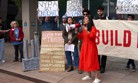
As New York’s private renewable energy pipeline falters, the state faces a reckoning—and a renewed push for public solutions that may reshape how millions of New Yorkers power their lives.
Few things evoke New York exceptionalism quite like the city’s nightscape: a prodigious blaze of light that serves 8 million people, illuminating everything from co-ops in Riverdale to bodegas in Elmhurst. Yet behind the coruscating skyline, the very machinery that powers it wobbles. Solar developers now threaten to pull the plug on more than 20 major green energy projects, enough to supply electricity to some two million households, according to recent warnings shared by state lawmakers and environmental advocates.
The looming cancellations, blamed on surging input costs, Trump-era tariffs, and sclerotic grid interconnections, portend a bruising setback for New York’s vaunted climate ambitions. For those who have tracked the city’s headlong push away from fossil fuels, this moment feels nothing short of precarious. More than one million New Yorkers are already delinquent on their energy bills, owing at least two months of back payments—evidence, if any were needed, that high prices and supply vulnerability have profound human costs.
The malaise is as much economic as environmental. As international crises drive up fossil fuel volatility—both via commodity shocks and supply bottlenecks—the city’s stubborn reliance on natural gas exacts a toll in the form of unpredictable, and increasingly unaffordable, bills. Meanwhile, the private sector, once heralded as the engine of clean energy progress, is now recoiling in the face of narrowing margins and daunting obstacles. “Profits,” as Assembly Member Sarahana Shrestha dryly put it while rallying for public renewables, “are no longer a given.”
Profits may be the problem. Plummeting returns, aggravated by inflation and rising construction costs, have dimmed the allure of private investment. And when developers walk away, so too do the promised jobs, emissions savings, and the hope of clearing a path to the city’s legally-mandated climate targets. Without an intervention, today’s shortfall will soon metastasize into an outright shortfall in megawatts—a deficit that could force New Yorkers to either pay more or breathe dirtier air.
Into this breach has stepped a robust, if somewhat old-fashioned, solution: state-led development. The New York Power Authority (NYPA), born out of Franklin D. Roosevelt’s Depression-era drive for public hydropower, is being recast as a vehicle not just for cheap power, but for economic renewal. Under the 2023 Build Public Renewables Act, NYPA has acquired authority to build, own, and operate renewable projects directly—including the option to salvage privately initiated developments that otherwise risk withering on the vine.
Last year’s state budget allocated a modest $200 million for NYPA to double its renewable holdings. Legislators and advocates argue that another $200 million this fiscal year could accelerate the march toward 15 gigawatts of public renewables by 2030—a threshold necessary to meet the state’s statutory goals. Crucially, public power, unlike private investment, need not siphon off profits to shareholders, and so can stretch each dollar further—or so its backers contend.
The stakes feel suitably gargantuan. Advocates reckon that robust public investment could create 20,000 to 30,000 union jobs, dampen utility bills through the REACH program, and begin shuttering the peaker plants whose emissions still blight communities from Red Hook to the South Bronx. Supporters evoke a rosy vision: cleaner air, more equitable bills, and greater resilience against future energy shocks.
Yet New York’s predicament is not unique. California, too, has stumbled in its quest to decarbonise using private incentives, with project cancellations and missed timelines. Across Europe, governments jolted by the upheavals of Ukraine and a mercurial gas market have similarly turned to state-owned or subsidised renewables to assure energy sovereignty and affordability. The New York experiment thus forms part of a broader rethinking, on both sides of the Atlantic, about the boundaries of public and private endeavour in critical infrastructure.
Public ambition meets political reality
What, then, bodes for New York and its denizens? Enthusiasm for public renewables will surely encounter political and logistical friction. While the NYPA has accumulated fresh authority, large-scale project delivery has long vexed even the best-run public agencies—especially amid permitting delays and not-in-my-backyard protests. In a city renowned for its tortuous bureaucracy, speed will prove elusive.
Opponents, among them utilities and private power interests, caution that government-built energy is not immune to overruns or mismanagement. Some bristle at the prospect of the state “crowding out” private investment, arguing that a politicised grid risks lumbering New Yorkers with further costs down the line. Scepticism is not unfounded: one need look no further than the chronic delays plaguing other public megaprojects, from transportation to housing.
Still, the arithmetic is inescapable. The private sector’s tepid appetite, stymied by narrow returns and regulatory headwinds, can no longer bridge the gap between climate promises and real electrons feeding the grid. If closing that gap requires bolder public action, it will fall to the NYPA to show that the costs—political and fiscal—can be managed, and that its track record in hydropower can translate into the wind and sun.
For New York, a successful pivot to public renewables would not merely underpin a cleaner skyline but could offer a model for other states beset by the same dilemmas. Conversely, if public power fails to deliver, the city risks deeper energy precarity—and a humbling lesson in the limits of grand designs. As with so much of New York’s governance, the margin between ambition and reality will be measured in bills paid, jobs created, and greenhouse gases abated.
It is tempting, in times of adversity, to seek salvation in the past: to believe a state authority can succeed where the private sector has faltered. Whether New Yorkers will soon see their lit windows powered by turbines and panels built by public hands—rather than financiers—is an experiment now gathering wattage.
For the sake of the city’s future, we suggest that it is an experiment well worth watching. ■
Based on reporting from City & State New York - All Content; additional analysis and context by Borough Brief.