Blizzard Wallops All Five Boroughs With Over a Foot of Snow, Plows Race Mother Nature
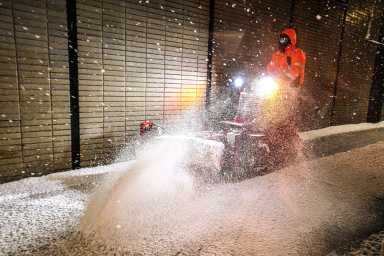
New York’s historic snowstorm has frozen normal life, testing the city’s infrastructure, resilience and climate preparedness.
New Yorkers pride themselves on stoicism and grit, yet even the most unflappable were brought to a halt as nearly a foot and a half of snow blanketed the city overnight. By 7am on Monday, blizzard conditions had deposited a whopping 18 inches in Crown Heights, Brooklyn—transforming familiar streets into glacial thoroughfares and reducing the world’s busiest metropolis to a muffled, tentative hush.
The so-called Blizzard of 2026, foretold by meteorologists but underestimated by many residents, did not disappoint the Cassandras. Beginning in earnest midday Sunday, the storm accelerated into the night with wind gusts reaching 47 mph in Midtown Manhattan—enough to whip even the sturdiest umbrella into submission and limit visibility to mere yards. By early morning, the National Weather Service confirmed what snow-shovelers already knew: nearly every neighborhood from Mott Haven in the Bronx (17.9 inches) to Coney Island (16 inches) was cocooned in snowdrifts.
Mayor Zohran Mamdani, sounding grim, imposed a rare citywide travel ban Sunday evening, effectively shuttering the city to all but essential movement. The ban, running through at least noon Monday, was a blunt instrument—yet given the snarled conditions and zero visibility, few quibbled. Public schools closed, proffering children an old-fashioned snow day, while most New Yorkers, if they could, traded office commutes for calls from cramped apartments.
The city’s herculean snow-removal apparatus creaked into action. More than 5,000 Department of Sanitation plows and salt spreaders—by far the largest such fleet in North America—methodically criss-crossed the five boroughs. By 8:15am, the PlowNYC tracker suggested most streets had at least been attacked once, if not yet properly cleared. Yet even municipal muscle faces limits: with snow accumulating at rates up to three inches per hour in spots, sidewalks and bus shelters remained treacherous, and mass transit slowed to a crawl.
Disruption has both immediate and delayed costs. For businesses, particularly small shops and restaurants that anchor neighbourhood economies, closure means a lost day’s takings—more keenly felt in a city still recovering from pandemic bruises and buffeted by vacant storefronts. Food and parcel deliveries, now the lifeblood of many households, faltered; grocery contingents ran thin. Essential workers—nurses, cleaners, emergency crews—either braved the drift or risked hunkering down, never quite sure if the city’s machinery would match their resolve.
For the city’s poorest, storms like these render already-precarious shelter situations positively bleak. Advocates fret about homeless New Yorkers exposed to the elements, especially with shelters frequently operating at capacity and transport to warming centres impeded. The effect of a day’s lost wages, or even a delayed benefits cheque, lands with more force when streets are impassable. Public housing residents, beset by unreliable heating in even the best conditions, find little amusement in meteorological spectacle.
A chill beyond city limits
Winter tempests are hardly unknown in Gotham, yet this storm is noteworthy both for its ferocity and for its timing. Rarely in the last decade has the city experienced such heavy snowfall: 2016’s record 27.5 inches is not so distant in memory, but in recent years, milder winters and rainier storms had lulled many into forgetting the caprice of the climate. The 2026 event—dumping more than a foot and a half in multiple boroughs—disrupted air and rail travel across the Northeast, grounding flights at JFK and LaGuardia and causing ripple effects as far away as Chicago.
Other American cities notice New York’s handling of such crises. Chicago and Boston, used to periodic whiteouts, have often fared worse with less snow, while Europeans shake their heads that life does not grind to a halt more quickly. In contrast to many municipalities, New York’s sanitation force is, at roughly 10,000 strong, unusually robust. Yet compared to Tokyo’s nimble street heaters or Oslo’s heated sidewalks, the city’s reliance on brute manpower and ploughs feels faintly archaic.
From a national perspective, episodes like these revive debate about how American cities prepare for infrequent but punishing climate events. Blizzard responses strain city budgets, with each foot of snow costing an estimated $1.5 million to clear in overtime, salt and maintenance; a protracted winter can ravage fiscal discipline as quickly as any ambitious spending plan. Equally, the disruptions test the city’s digital services—witness the steady clicks on the PlowNYC tracker, a modest innovation applauded by data evangelists.
Policymakers must reckon with climate volatility where the only certainty is surprise. New York, for all its bluster, will need to invest—strategically, not profligately—in continued upgrades. That may include smarter street sensors, hybrid snow-removal vehicles, and incentive structures credible enough to coax both private and public actors into rapid response. The city’s vast inequality complicates matters; disruptions rarely fall equally and tend to worsen fissures underneath.
Still, even as predictable grumbling bubbles on social media, New Yorkers have shown that old adage—“the city that never sleeps”—is mostly true, even if sometimes it snoozes under a snowy eiderdown. The streets will return to their usual cacophony sooner rather than later. But the blizzard serves as a nudge: climate, in all its volatility, does not negotiate with municipal bravado. Each snowdrift is both inconvenience and omen—a call to upgrade, adapt, and not merely plough through.
With the modern city only ever a few hours from immobility, preparedness, rather than pluck, ought to be the watchword for the next storm. ■
Based on reporting from amNewYork; additional analysis and context by Borough Brief.