Bronx MTA Buses With Brake Issues Kept Rolling as Mechanic Shortages Bite
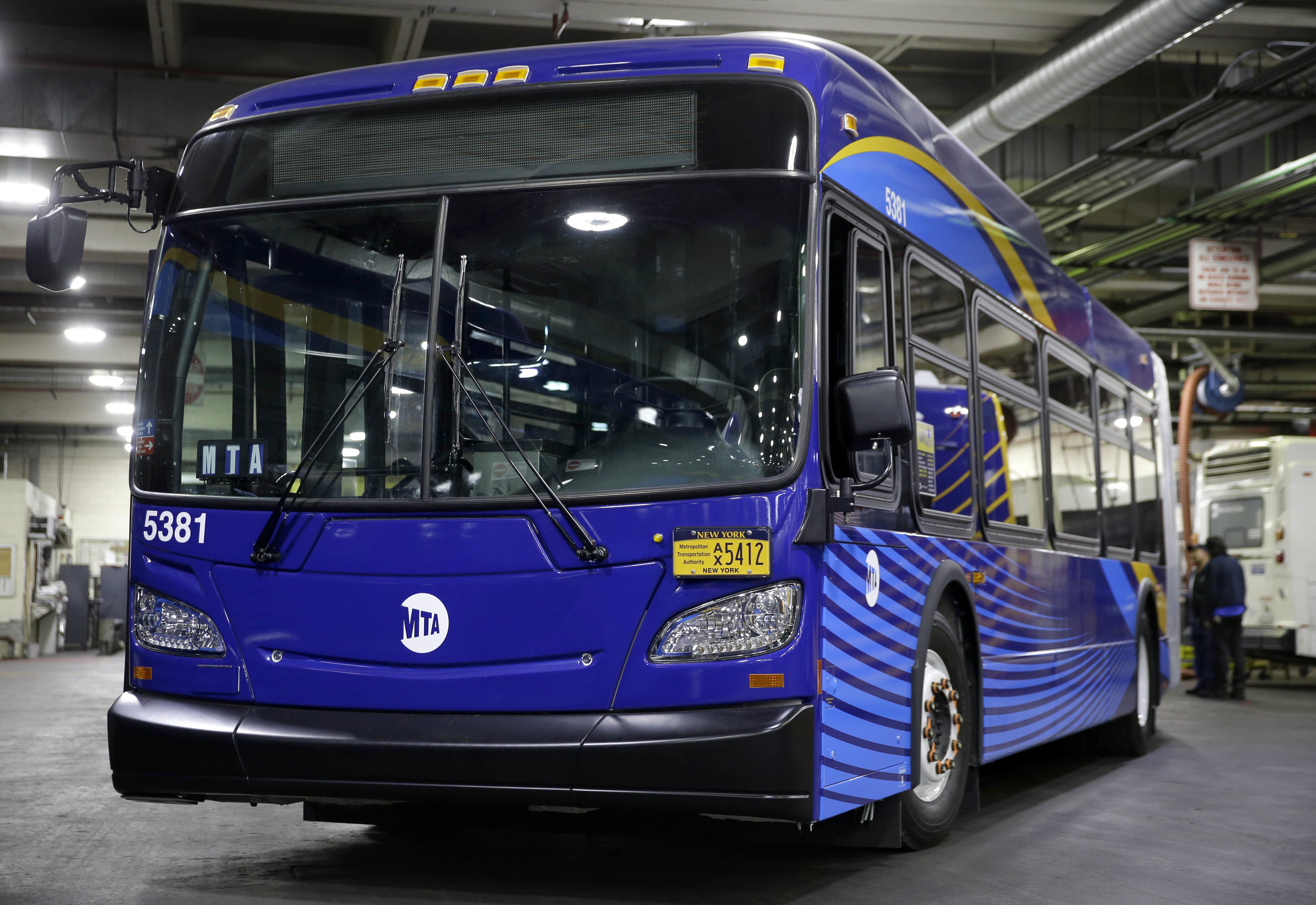
Mechanical failures in New York City’s bus fleet spotlight the fraught calculus between public safety and operational imperatives.
It is an unfortunate fact that more than 2 million New Yorkers begin and end their days on a bus—a reality made more uneasy by recent revelations that, for some, the brakes may be as worn as their patience. The Transport Workers Union Local 100, which represents the city’s bus workers, has sounded the alarm: dozens of Metropolitan Transportation Authority (MTA) buses, crucial to the city’s daily workings, have allegedly been dispatched into traffic with dangerously degraded mechanicals, particularly in their braking systems.
The union contends that at least 23 buses, marked by mechanics as unfit for service or “redlined,” continued to operate despite urgent repair needs. In one vivid case from Gun Hill Road depot in the Bronx, union representatives displayed brake pads ground down to the metal—a state so dire that stopping the bus suddenly becomes a matter more of hope than hydraulics. According to the union’s internal audit, all 23 implicated vehicles were running with pads teetering below acceptable thickness, yet formal work orders were lacking.
The MTA, for its part, rejects the charge that vehicles with critical safety defects are ever knowingly put into service. It claims that their inspection, monitoring, and dispatch protocols are robust. Yet the evidence offered by workers on the ground—showing fleets kept moving by cannibalising barely functional vehicles, sometimes with multiple unresolved faults—casts a pall over the agency’s assurances.
For the city, such silent mechanical wagers have first-order consequences. Buses remain the circulatory system of New York’s farthest-flung boroughs—especially the Bronx and Queens—where subways often fail to reach and car ownership rates are puny. Any lapses in safety are not mere abstractions but existential risks for millions of riders and the pedestrians and motorists sharing those congested streets.
The union’s most troubling claim lies in the numbers: on a recent morning, out of the 256 buses the West Farms depot needed to meet demand, a paltry 74 sat out of action for repairs—yet 246 buses rolled nonetheless. The implication is stark: either the MTA conjured an unlikely mechanical resurrection, or vehicles with open maintenance issues were pressed into service to avoid service gaps. With New York’s leadership touting “Vision Zero” traffic fatalities for over a decade, the notion that compromised buses are plying its avenues is more than an embarrassment—it is an indictment.
Beneath these immediate anxieties lurks a deeper disquiet: staff attrition and budgetary scarcity. Since 2019, Local 100 estimates the MTA’s mechanic workforce has shrunk by roughly 10%, whittled by retirements and a dearth of new recruits willing to labor under current conditions. Parts shortages—hardly unique amid global supply chain disruptions—mean that even when faults are discovered, buses often return to service with ad hoc fixes or none at all.
The economic implications reach far beyond the MTA’s $17 billion annual outlay. Unreliable or unsafe buses erode public trust, making the city’s much-vaunted modal shift away from private vehicles ever more remote. Each incident—actual or narrowly averted—invites legal liabilities, insurance hikes, and costs harder to tally: lost time, commuter stress, and the occasional spasm of public outrage. The politics are not much better. Operators’ unions, vital to Democratic city politics, are now in open confrontation with the agency, even as state and city budgets face daunting gaps.
Nationally, New York’s struggles echo those in Boston, Chicago, and Los Angeles, where legacy fleet maintenance has grown ever thornier. Deferred maintenance, staff shortages, and cost inflation combine to form a hydra difficult to slay. Yet compared to London, Paris, or Tokyo—cities with near-obsessive respect for transit system reliability—New York’s approach occasionally seems slapdash. The instinct to keep the wheels turning at all costs bodes poorly for the claims of world-class transit that the city’s leadership so loves to make.
Operational pressures versus public risk
An uncomfortable truth emerges: running an efficient, punctual service and a scrupulously safe one are sometimes competing priorities. The temptation to skirt the edges of safety protocol becomes almost irresistible under staff constraints and the tyranny of timetables. Until agencies reconcile their performance targets with the realities of their maintenance capacity, the pattern is bound to repeat.
One can feasibly argue that the union, each time it brandishes a worn brake pad before the press, is not merely protecting riders but defending workers’ liability and bargaining power. Nevertheless, disclosure of such failings does the public a considerable service. Like so much in municipal governance, sunlight remains the best if most uncomfortable disinfectant.
The question now is whether embarrassment transmutes into reform. Achieving incremental change—in hiring mechanics, fortifying supply chains for parts, or tightening inspection—will require unspectacular but steady investment, political will, and above all, honest reporting. Reforming procurement and maintenance might lack the glamour of ribbon-cutting a new subway extension. Yet, for the daily rider, the tedium of predictable, safe braking may be more valuable still.
New York’s transit system once prided itself on its gritty competence. The current predicament, more the product of administrative drift than malice, nevertheless imperils that reputation. The city owes its residents candour and a firm commitment that its public vehicles are not mobile dice throws across crowded intersections.
Such moments force New York, and cities like it, to confront an awkward reality: public safety is not costless, nor can it be indefinitely deferred in the service of on-time performance. As the summer heat rises and subway shutdowns drive more riders to the roads, the city would do well to remember that trust, like brake pads, is easier to wear down than to replace. ■
Based on reporting from El Diario NY; additional analysis and context by Borough Brief.