Brooklyn, Queens Owners Push Back as Mamdani’s Property Tax Hike Looms Over Budget Gap
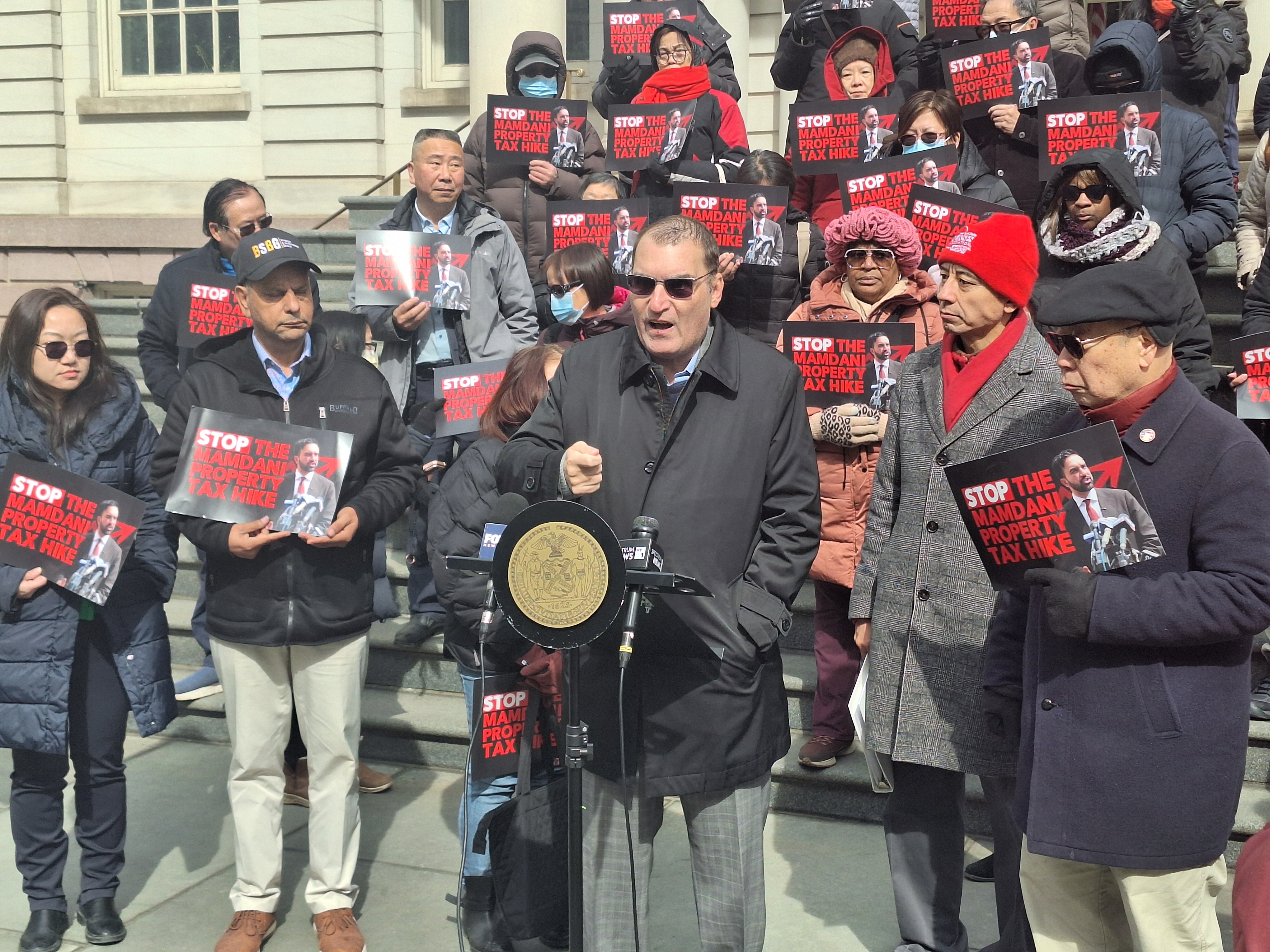
A proposed double-digit property tax rise in New York City is stirring rare unity among landlords, tenants, and small business owners—portending wider battles over who will bear the cost of budget shortfalls in America’s most expensive city.
On a drizzly morning outside City Hall, the spectacle of retirees linking arms with shopkeepers and tenant associations might seem, at first glance, a matter for anodyne local reporting. But the resolve animating the crowd was inversely proportional to its size. Their cause: protesting the possibility of a 9.5% property tax hike—floated by Mayor Zohran Mamdani as a last resort to plug a gaping $5.4 billion hole in the city’s $127 billion fiscal 2027 budget.
The mayor’s trial balloon, released this spring, has united a curious coalition of opponents under one banner of exasperation. At issue is not just the check that owners such as Cristina Blackmore, a retired Brooklyn homeowner, might soon be forced to sign. More than three million residential units and over 100,000 commercial properties would face higher levies, with knock-on effects radiating to renters and customers citywide.
In effect, property taxes underpin the city’s finances—generating roughly 30% of municipal revenues. The increases, if ever enacted, would not discriminate between multimillion-dollar brownstones and modest co-ops. Nor would higher costs for commercial landlords spare bodegas, salons, or beloved luncheonettes already under strain from pandemic-era losses and sticky inflation.
The politics are as untidy as the policy merits. Mayor Mamdani’s predicament is familiar: New York’s coffers, battered by pandemic costs, migratory high earners, and swelling social spending, must be replenished. His preferred option—a tax rise for those earning over $1 million, and for corporate entities—would require a nod from Albany and Governor Kathy Hochul, approvals that are anything but assured.
For now, Mamdani’s property tax gambit remains an open threat rather than a tabled bill, but city stakeholders are primed for combat. The Association of Multiethnic Chambers of Commerce has announced a “front” to fight the proposal; elected officials like council member Susan Zhuang have staked political capital on blocking it. They argue that higher taxes will inevitably be passed on to tenants via rent hikes and to ordinary consumers through price rises on food and basic services.
Behind the headlines, the basic arithmetic bodes poorly for affordability. New York’s property tax rates, though lower as a percentage than many suburban counties, are levied on eye-watering assessed values. Even a seemingly paltry rate hike translates to real dollars lost—raising the spectre of small landlords squeezed between capricious costs and stagnant rents, especially in rent-regulated buildings.
Stalemate in Albany, unease in the boroughs
Should the legislature reject city hall’s entreaties on income or corporate taxation, Mamdani’s “last card” may swiftly become the only card left to play. Here lies the rub: property tax increments are a blunt instrument. They do not differentiate between the asset-rich but cash-poor retiree and the fleet-footed global investor; both pay, regardless of margin or liquidity.
At issue is the question of fairness—who should shoulder the burden of keeping New York solvent? It is an argument that echoes beyond city limits. In Chicago and Los Angeles, mounting deficits have forced leaders into similarly fraught choices, triggering local backlash. Cities across the United States have entered fiscal triage, hoping federal largesse outlasts fiscal reality.
For New Yorkers, who already face the steepest cost of living in the country, the prospect of yet another upward creep in compulsory payments is met with open derision. The major risk is an acceleration of out-migration, as those with means—especially younger families and retirees—decamp for lower-tax climes. That trend, only recently stabilised after pandemic flights, could once again blunt the city’s tax base.
The proposed hike also has unpalatable downstream effects. With commercial rents already stubbornly high, pass-through taxes may hasten the closure of marginal businesses—eroding the economic vitality of street corridors from Astoria to Flatbush. The city’s vaunted diversity of small enterprise risks dilution, replaced, if at all, by corporate chains better positioned to absorb fiscal shocks.
Zooming out, the city’s predicament is neither unique nor unprecedented—but it is a harbinger. Globally, cities from London to Toronto have begun revisiting the delicate balance between raising revenues and retaining their crucial middle tier—families, small firms, civic institutions—without whom urban vibrancy wanes. The challenge is to mollify short-term budgetary shortfalls without eviscerating the local character or rendering the metropolis inhospitable to all but the wealthy and the subsidised poor.
We contend that the current debate is a proxy for a much larger dilemma: America’s great cities, engines of innovation and growth, now face a persistent mismatch between their ambitions and their tax base. Shrinking federal support, a more mobile professional class, and a swelling roster of obligations—from migrant care to public safety—portend chronic budget gaps that cannot forever be patched with ad-hoc tax rises.
The impulse to raise property taxes, neat as it may seem to fiscal accountants, is anything but sophisticated economic policy. Efficiency and fairness would demand a broader overhaul: closing loopholes, rationalising assessments, and lobbying—however quixotically—for a more progressive mix of city and state taxes. In the meantime, the risk is that those New Yorkers who least can afford to pay will end up shouldering a disproportionate burden for the city’s indefatigable appetites.
The property tax brawl may yet prove a momentary skirmish in the ongoing contest of priorities between state, city, and citizen. But it underscores a truth that should give civic leaders pause: balancing budgets on the backs of embattled homeowners is, at best, a stopgap. More creative, and equitable, solutions beckon—if only the political will could match the necessity. ■
Based on reporting from El Diario NY; additional analysis and context by Borough Brief.