Buy America Rules Stall Affordable Housing Projects as Costs and Delays Stack Up Citywide
Well-meaning federal rules intended to bolster domestic manufacturing are now holding up affordable housing in New York City and elsewhere, deepening the metropolis’s most acute social dilemma.
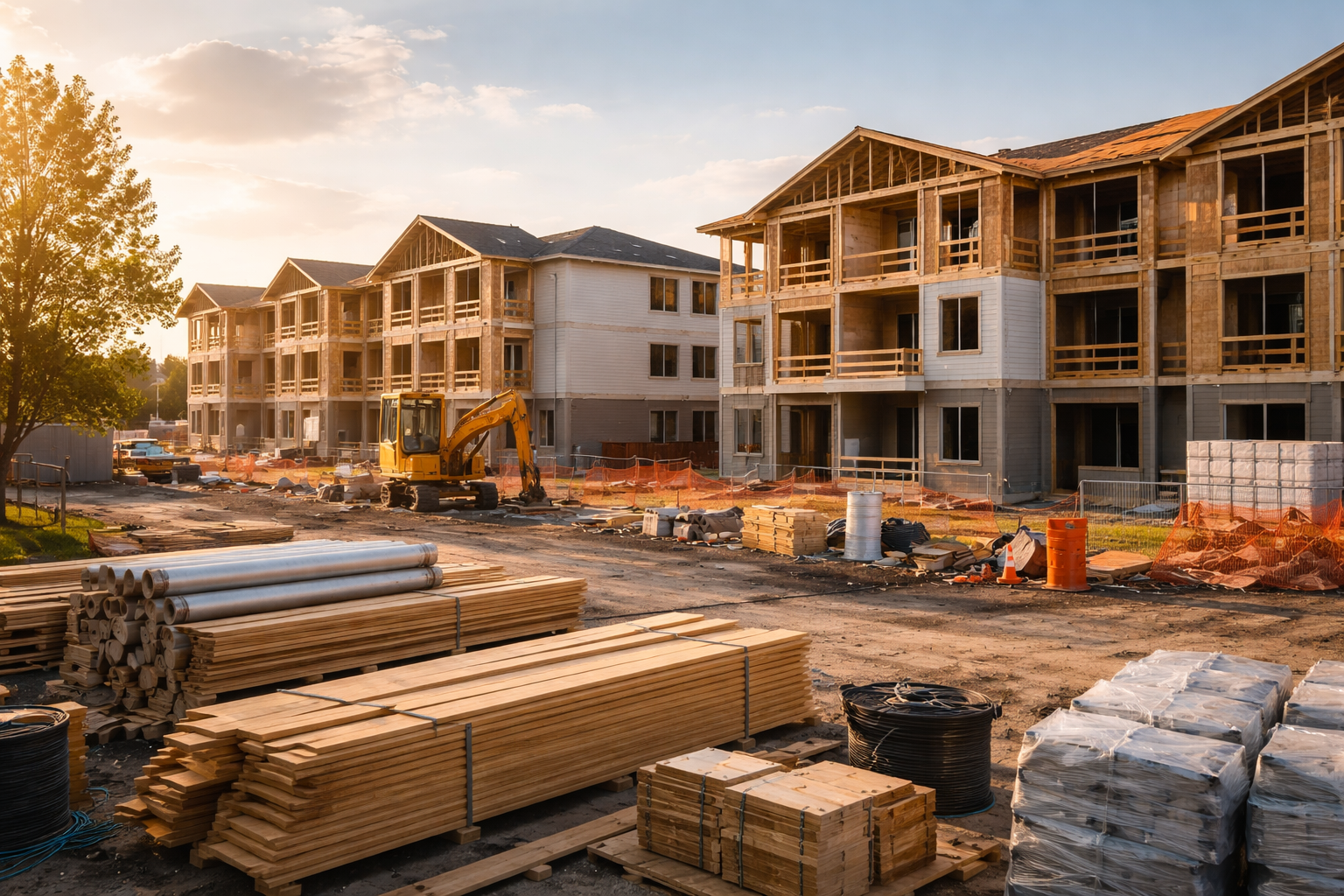
High above New York’s Ridgeline, skeletons of half-built affordable housing complexes dot the cityscape—a testament to a regulatory headache choking progress, not for lack of money or enthusiasm but for want of the right screws and air conditioners. Hundreds of units, mapped out to shelter those squeezed by the city’s housing crunch, languish unopened as materials grow scarce or simply dearer by month. The culprit, somewhat paradoxically, is a federal law intended to help, not hinder.
Enacted as part of President Joe Biden’s $1.2 trillion Infrastructure Investment and Jobs Act (IIJA) in 2021, the “Build America, Buy America” (BABA) provision aims to ensure federally funded projects rely primarily on American-made materials. The rationale was simple enough: boost local manufacturing, reduce foreign dependence, and create jobs onshore. Yet, as so often with Washington’s best-laid plans, complications abound at the level of implementation, especially in a city already buckling under the weight of its housing shortage.
Where developers once sourced heating, ventilation, and air conditioning (HVAC) systems from global suppliers, many now find the “100% American-made” requirement a logistical labyrinth. HVAC units, electrical buses, and elevator components are increasingly prone to shipment delays or outright unavailability, as foreign-made parts remain integral to even the most “local” machines. Developers report waits of months and price premiums ranging from 20% to 35% over imported alternatives—painful sums when every dollar can mean an extra habitable room.
New York’s affordable housing pipeline, always leaky, is now in full drought. According to the NYU Furman Center, less than 16,000 affordable units broke ground in 2023, meeting only a fraction of the city’s need. Build America, Buy America, for all its patriotic flourish, is held partly to blame for the slowdown, with stalled projects mounting as developers scramble for compliant materials—or simply give up.
The implications are immediate and bleak for renters. Median rents in Manhattan linger above $4,000, and citywide vacancy rates hover near a paltry 1.5%. With delays stacking up, the projected supply of affordable apartments contracts further, leaving would-be tenants squeezed between prolonged waits and spiraling costs. Already, applications for subsidized units in the city exceed 400,000, a testament to persistent unmet demand.
Second-order effects ripple across the urban economy and the political scene. Construction jobs—those the law sought to protect—risk evaporating as projects stall and budgets balloon out of feasibility. Politically, progressives and moderates alike confront a formidable policy knot: how to reconcile the imperative for domestic industry with the city’s most pressing social need. Government waivers (“exceptions” that allow use of non-U.S. materials) exist, but the process to secure them resembles British queueing tradition—long, uncertain, and rarely expedited.
Meanwhile, developers speak of “project redlining”: redesigning buildings to skirt troublesome requirements or mothballing proposals entirely. Small community-based non-profits, with neither the legal firepower nor the financial cushion of large developers, find themselves most exposed. The net result is a sort of supply-chain-induced paralysis, each additional compliance hurdle translating directly into fewer homes built.
Other American cities—Los Angeles, Boston, Houston—are not immune. National housing starts for subsidized units are down sharply year-over-year, echoing New York’s own malaise. Urban advocates warn that even a short interruption now compounds into years of pent-up demand, with especially harsh consequences for minority and immigrant communities that disproportionately rely on subsidized housing.
A global city meets a parochial rule
From Shanghai to London, no other global commercial centre chains affordable housing so closely to domestic procurement. European or Asian metropolises, while hardly immune from delays, tend to operate under looser material-origin rules or exploit streamlined exemptions out of practical necessity. America’s playbook, by contrast, blends populist intent with bureaucratic ardour.
We see logic in the original impulse behind Buy America—America has long neglected its industrial base, and the pandemic’s shocks made clear the pitfalls of over-reliance on foreign supply chains. Still, good intentions can ill-serve complex urban realities. New York is a textbook case: a city facing “gargantuan” demand for affordable homes, forced to endure bottlenecks over the nationality of copper wiring or control panels. Inadvertently, the law risks doing more for price protections than for people.
Some adjustments are underway. The White House, facing growing complaints, recently announced “targeted waivers” for certain housing projects, trimming some of the most egregious delays. Yet piecemeal waivers risk weakening the law’s credibility without alleviating its core problems—namely, blunt inflexibility and bureaucratic inertia. Without a systematic, data-driven approach to procuring vital components, delays are likely to persist.
What does this portend for New Yorkers? Unless federal and local policymakers move beyond slogans to practical triage, it is renters, especially those on city waiting lists, who will bear the brunt. Ambitious targets for new affordable units—a million statewide by 2030, according to Governor Hochul—bode ill unless supply chains and regulatory regimes catch up.
America must decide which challenge it values more: bolstering domestic industry or sheltering its most vulnerable. For New York, pragmatism rooted in data and global best practices will do more than any single slogan. Policymakers should recognise that in a city as interconnected as this, there is little virtue in local content rules that leave its poorest out in the cold. ■
Based on reporting from El Diario NY; additional analysis and context by Borough Brief.