Cost of Living Climbs Over 13 Percent for New York Latinos, Wages Stubbornly Trail
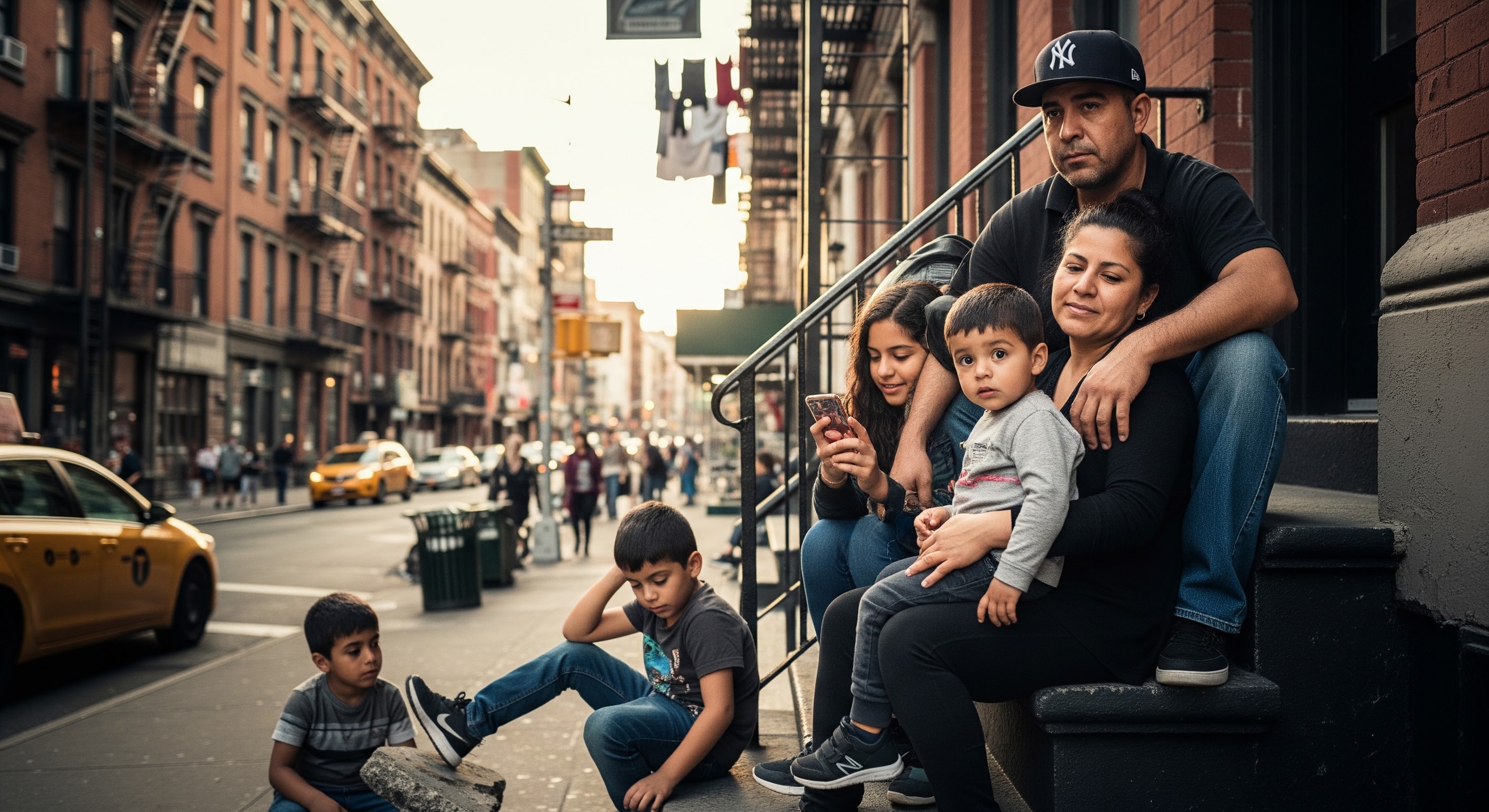
As inflation edges up and utility costs leap, the economic squeeze on New York’s Latino families threatens to widen social divides and test the city’s inclusivity.
In a city justly famed for its resilience and diversity, numbers sometimes tell a less reassuring tale. Walk through the lively streets of Jackson Heights or the Bronx, and beneath the hum of entrepreneurship and the scent of cafecito, the anxiety is quietly palpable: the average Latino household in New York earns nearly a third less than its white counterpart, and the rising cost of living now gnaws with fresh intensity.
These anxieties are not misplaced. According to “El Estado de la Familia Latina,” a recent study released by the Hispanic Federation, the cost of essentials has ratcheted up across the board: in 2025 alone, the Consumer Price Index increased by 2.7%, housing costs rose by 3.2%, while home operations registered a 4% uptick. Notably, electricity bills jolted upward by over 13% in New York, far outpacing the national average of 7%, and gas prices marched ahead by a hefty 10.8%. The cumulative effect is a strenuous monthly reckoning for families already stretched thin.
Latino New Yorkers, who make up nearly 30% of the city’s population, find themselves disproportionately at the mercy of these economic headwinds. The median annual income for a Latino worker hovers around $40,000, while their white, non-Hispanic peers take home upwards of $60,000. Even minor increases in utility costs thus reverberate sharply through family budgets, forcing difficult choices between groceries, rent, and keeping the lights on. As Yesmín Vega, the Hispanic Federation’s Director of Economic Empowerment, implies, for communities with lean earnings, every tick up in prices bodes ill.
Recent policy shifts only compound the challenge. The federal Low Income Home Energy Assistance Program, long a lifeline for utility-burdened families, has tweaked its calculation of “income.” Energy-assistance dollars may now be counted as earned income, nudging the poorest households just above eligibility thresholds for other forms of public aid, such as SNAP. Ostensibly a statistical footnote, this change risks a domino effect: help with one bill may imperil help with another, as federal bureaucracy’s left hand undoes what its right hand gives.
The knock-on effect is especially acute for the city’s Latino entrepreneurs, many of whom steer family businesses or side hustles, sometimes as documented residents. In a further blow, a rule enacted this spring bars non-citizens from certain forms of local business support—with immigrant-owned bodegas and nail salons left to fend for themselves while costs escalate. The result is a stubborn sense of precarity, even among the city’s vaunted small-business class.
For New York City, these trends portend not merely individual pain but real risks to the social fabric. The city’s famed vitality is underwritten by its patchwork of immigrant communities: when their progress sputters, broader economic dynamism falters as well. Consumer demand softens, new business formation droops, and the relentless churn of upward mobility—source of so much urban élan—threatens to stall.
This tepid outlook is unlikely to stay confined to the five boroughs. Across America, inflationary pressures interact variably with local utility costs and housing strains, but the vulnerable remain the same: urban minorities, immigrants, and families on the margins. California’s Latino communities, too, have seen their electricity bills jump by 9% or more; in Texas border cities like El Paso, the leap reaches a punishing 23%. The particulars vary, but the through-line is clear.
The federal government’s decision to curtail access to timely data—on food insecurity, gender identity, and crime victimization—has not aided matters. A lack of updated metrics risks muddling responses from city agencies or charitable organizations, who must guess at problems that should instead be systematically mapped. In an era of ever-swifter decision-making, this opacity seems peculiarly self-defeating.
Rising costs, falling safety nets
Local policy choices could yet blunt the rough edge of inflation. But city government faces its own fiscal pinch, and state coffers have little appetite for new largesse. Addressing utility costs could involve more targeted subsidies or public-private partnerships to green the aging grid—though such ambitions inevitably run aground on the shoals of budgetary caution and NIMBY sentiment. For low-wage New Yorkers, salvation—if it comes—looks likely to be incremental, not transformative.
Comparisons with cities abroad add both consolation and forewarning. Urban working classes from Toronto to Madrid are similarly beset by climbing rents and energy prices, but some municipalities have responded with rent freezes or expanded transport subsidies. In this, New York appears less bold, perhaps constrained by its byzantine governance and acute budgetary anxieties.
We are, as ever, sceptically optimistic. The city’s history offers some solace: a genius for muddling through, and for engineering bursts of productivity and inclusion after periods of strain. Nonetheless, hope is a poor substitute for policy. The slow squeeze on Latino New Yorkers offers a cautionary tableau of how broad-based city growth can founder on the rocks of persistent inequality—data holes, misfiring safety nets, and a cheery official narrative that elides the kitchen-table realities of too many families.
To ignore the gathering pressures is an error New York cannot afford. For a city that touts itself as a beacon of opportunity, the growing cost burden on Latino households is more than just a statistical blemish; it is a clarion warning. Household economics are the daily referendum on policymakers’ promises—one that, for thousands of hard-working New Yorkers, yields an answer equal parts dogged and dubious. ■
Based on reporting from El Diario NY; additional analysis and context by Borough Brief.