Democrats Press Trump to Drop Citizenship Question From 2026 Census Test, Citing Risk to NY Funds
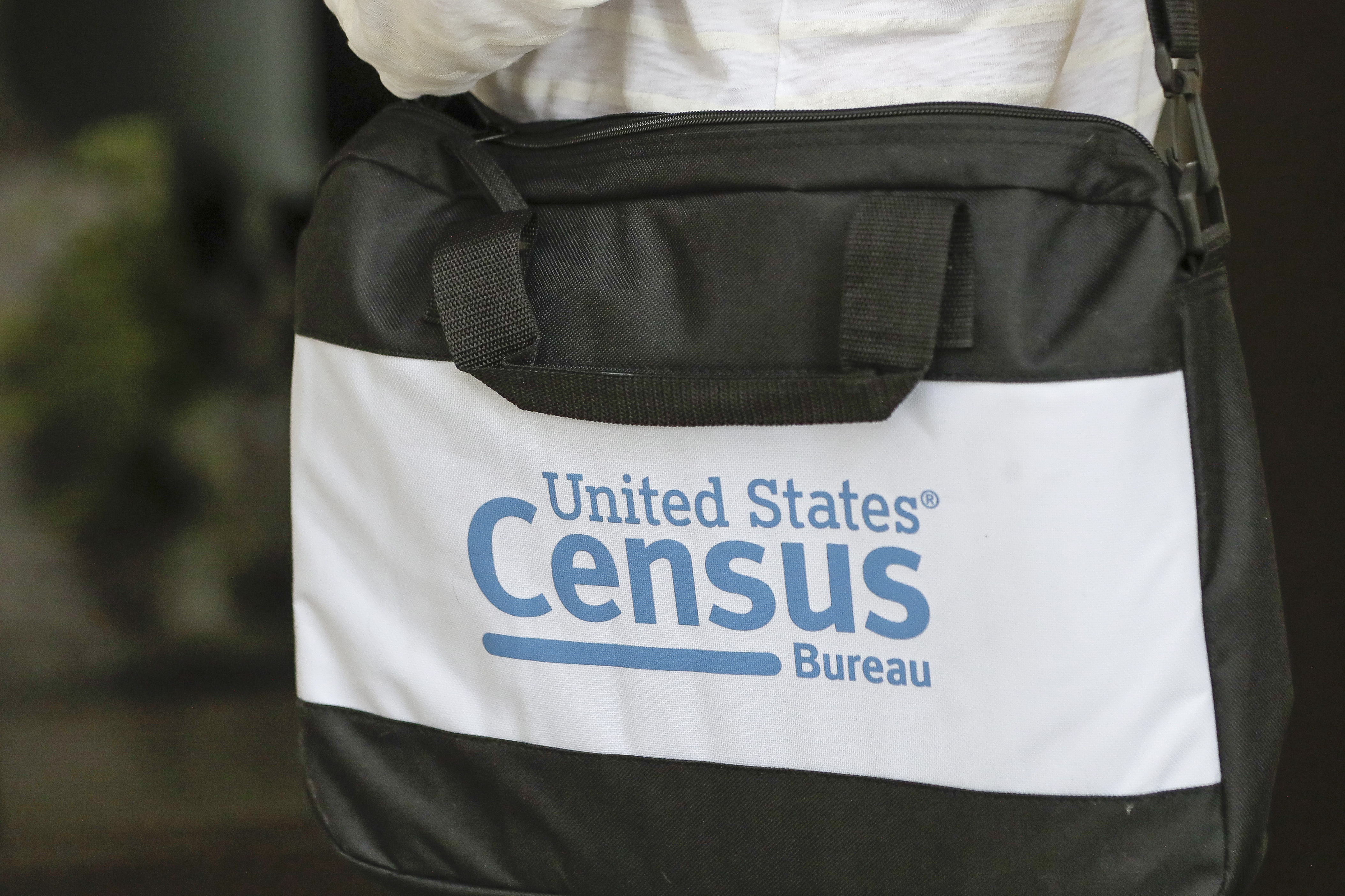
Plans to test a citizenship question on the 2026 Census have rekindled fraught debates that bear huge consequences for New York’s representation and funding.
There are close to three million foreign-born residents in New York City—more than the total population of Chicago. This vast, diverse cohort looms large in the city’s demography and its destiny. So when, on June 26th, a coalition of 90 House Democrats led by Robert Garcia called on President Donald Trump to withdraw a planned citizenship question from the upcoming 2026 Census test run, it rang alarm bells across the five boroughs.
At issue is a seemingly bland piece of bureaucracy: whether to include a question on individual citizenship status in the “Prueba del Censo” ahead of the 2030 full count. The Department of Commerce and the Census Bureau have signalled intentions to test this question, reviving a bruising fight from the 2020 cycle. Supporters—mostly Republicans—argue the move fortifies voter protections. Critics, including many New York lawmakers, warn that it will depress response rates in mixed-status and immigrant-heavy areas, triggering an undercount with costly reverberations.
Their worry is anything but abstract for New Yorkers. Census data determines not just Congressional district lines but also the allocation of upwards of $1.5 trillion in annual federal aid for things like transport, schools, and health services. An undercount by even a few percentage points in immigrant-dense neighbourhoods—from Corona in Queens to Sunset Park in Brooklyn—could mean punier budgets and less sway in Washington for a decade.
Neither is the threat wholly hypothetical. The Trump administration made a concerted push to add a citizenship question in 2020, only to be rebuffed by the Supreme Court in Department of Commerce v. New York (2019). Notably, that lawsuit was spearheaded by New York State itself, joined by a parade of local advocacy groups and city governments. Now, with the 2026 field test acting as a potential stalking horse for fresh litigation, some reckon the city is destined for another season of legal wrangling.
The practical effects—if such a question becomes entrenched—would likely cascade beyond mere arithmetic. New York’s immigrant communities already show lower response rates due to language barriers, housing instability, and, above all, fears around data misuse by federal agencies. The memory of pandemic-era ICE raids and draconian border rhetoric has scarcely faded. Even lawful residents in “mixed status” families might view any inquiry into citizenship as a harbinger of trouble.
City agencies are not sanguine about what this portends. The New York City Department of City Planning estimates that a material undercount in 2030 risks draining hundreds of millions from annual education and Medicaid allocations. For a city already wrestling with budget gaps—a projected $7 billion shortfall in 2025—such losses would bite, conspiring with already tepid economic recovery post-pandemic. The politics, too, would skew: any significant undercount almost certainly means fewer Congressional seats for New York and a bolstered share for more homogeneous states.
A second-order effect is psychological: a Census that millions view as an apparatus of surveillance rather than a neutral tally will erode trust, perhaps for decades. This bodes poorly for civic engagement, from jury service to vaccine campaigns—downstream effects with a price tag not simply measured in dollars.
To be sure, the citizenship question is not novel. The decennial Census has steered clear of it since 1950, though the Census’s sibling survey, the American Community Survey, collects such data annually with less fanfare and lower stakes. No other advanced democracy conditions national head-counting on citizenship status; doing so has become associated with exclusionary impulses everywhere from Hungary to India, rarely to salutary effect.
Conservatives, for their part, maintain that collecting citizenship data helps enforce the Voting Rights Act and inform policy. In this telling, the worry over self-reporting is overblown, or at least manageable with robust outreach and confidentiality guarantees. (Title 13 of the U.S. Code, as the defenders note, criminalises disclosure of individual Census data.) Yet past rounds have demonstrated that legal safeguards offer only tepid reassurance when trust in government is at a nadir. In an age when data privacy is a constant anxiety—from Cambridge Analytica to government leaks—even well-meaning laws offer thin shelter from public concern.
Legal skirmishes and public trust: history rhymes in a new decade
Nationally, the legal battle lines have already begun to form. Civil rights groups such as the ACLU and the Mexican American Legal Defense and Educational Fund have telegraphed their intention to challenge the question anew, should it survive the testing phase. Several state attorneys general, likely including New York’s Letitia James, are massing their arguments for what promises to be months or years of litigation.
The Biden administration had previously reversed Trump-era directives on the 2020 Census, but with an election year brewing and political control of Washington in flux, the permanence of those policies is anything but assured. The proposed field test in 2026 sits in this foggy legal and political landscape—statistically a minor exercise, but symbolically gargantuan.
For New York, the broader stakes extend far beyond budget spreadsheets. As America’s archetypal city of immigrants, its cosmopolitan spirit—and its fiscal health—hinge on accurate representation. The risk, should a chilling effect set in, is a city rendered politically anemic and with resources diluted at precisely the moment when urban America faces myriad pressures: sheltering new arrivals, rehabilitating creaky transit, and revitalizing commercial corridors post-Covid.
Stepping back, we note that the inclusion of a citizenship question is not merely a technical tweak but a potential inflection point: a gauge of American pluralism. How the Census is conducted both reflects and shapes the nation’s attitude toward its residents, citizens and immigrants alike.
On the merits, we remain sceptically optimistic that—assuming courts and Congress act with prudence—accuracy and participation will prevail over partisanship. But vigilance is warranted. Census-taking, too often dismissed as a mundane administrative exercise, is in fact a crucible of American democracy. For New York, fresh skirmishes over the 2026 test are a reminder that old battles are seldom definitively won.
For the city that built itself atop wave after wave of migrants, the question before it is existential, not just statistical. Its answer will echo for years to come. ■
Based on reporting from El Diario NY; additional analysis and context by Borough Brief.