Feds Charge Two Pennsylvanians With ISIS-Inspired Gracie Mansion Bomb Plot, No Injuries
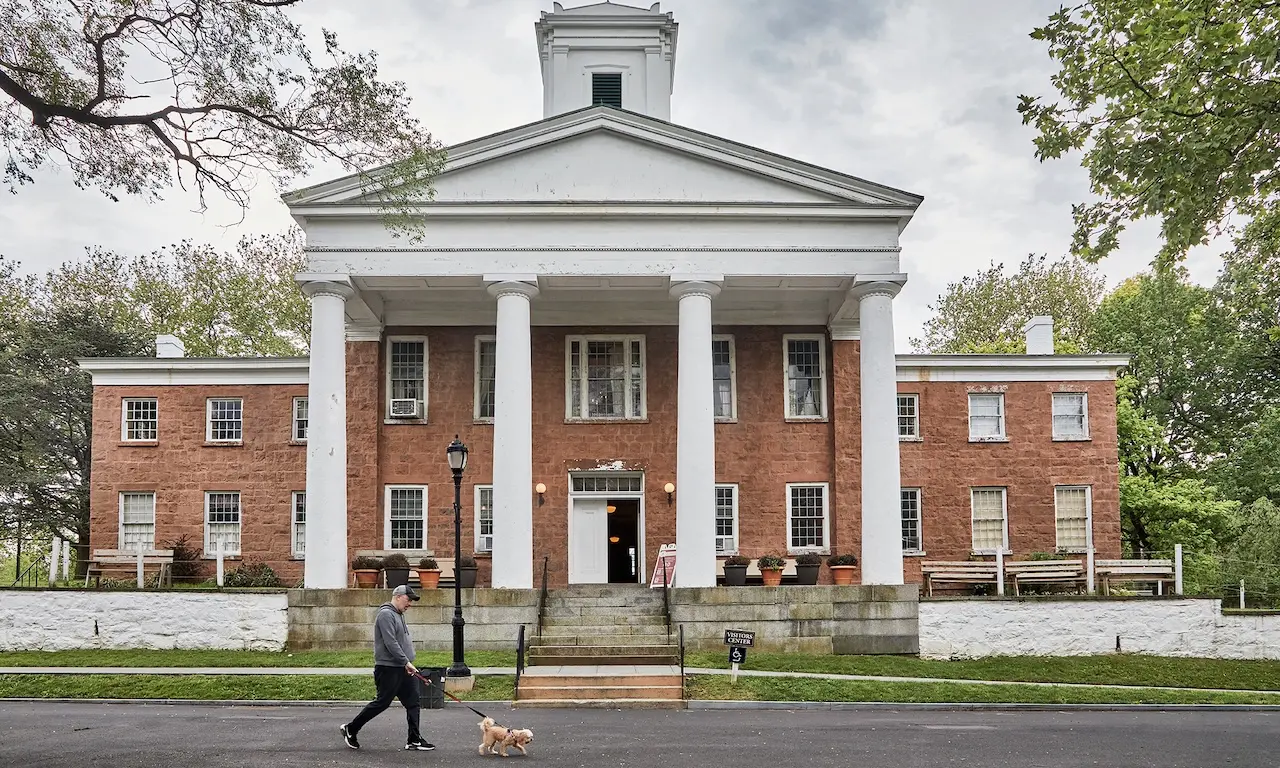
An attempted terror attack near the official mayoral residence has reignited New York’s perennial debate over extremism, free speech, and urban resilience.
Violence, or the prelude to it, visited Gracie Mansion on a spring weekend that New Yorkers will not soon forget. On May 4th, federal prosecutors charged Emir Balat and Ibrahim Kayum, both 18, with attempting to use a weapon of mass destruction and providing material support to ISIS after lobbing improvised explosives at a protest outside the mayor’s residence. That none were harmed owed more to fortune than planning: the crude bombs, laced with the notorious compound TATP used in the Paris attacks, fizzled. But the city’s nerves did not.
The facts are both straightforward and chilling. Balat and Kayum, recent arrivals from Pennsylvania, declared their allegiance to ISIS upon arrest. According to the Justice Department’s charges, the pair transported explosives across state lines and sought—albeit clumsily—to inflict mass casualties at an anti-Muslim rally. Balat, in a statement to law enforcement, mused about an atrocity “even bigger” than the Boston Marathon bombing of 2013. The boldness and ideological clarity of their plot have set off alarms across the security establishment.
Yet the attempted attack, while incompetent, portends troubling implications for America’s largest city. The New York Police Department’s commissioner, Jessica Tisch, minced no words: “This was a planned attack motivated by extremist ideology.” Law enforcement remains on high alert. Investigators are laboriously tracing the provenance of the explosives and any links, real or imagined, to international terrorist networks. In the city’s delicate climate—where crowds and manifestos routinely jostle for space—the spectre of a near-miss fuels anxiety and bureaucratic mobilisation in equal measure.
The event has already tempted political actors to appropriate its meaning. Mayor Zohran Mamdani, in a notably pointed statement, called the act “a heinous act of terrorism.” The intended target, a protest convened by the conservative agitator Jake Lang under the banner of “Stop the Islamic Takeover of New York City,” lends a further layer of irony: it was Lang’s anti-Muslim rhetoric, itself condemned by City Hall as “rooted in white supremacy,” which served as a magnet for the ISIS-inspired suspects. The city finds itself, once more, at the epicentre of the paradoxes that define 21st-century urban life.
First-order consequences are already evident. City agencies have stepped up visible security at public events, especially those touching on race, religion, or foreign affairs. The attempted attack, though ultimately thwarted, has provided the NYPD and FBI with a sobering reminder of post-9/11 vigilance fatigue. Counterterrorism budgets, which had seen stagnation in recent years, may yet attract a new infusion of federal largesse. At street level, however, the real test will be how quickly—or uneasily—New Yorkers resume their carnivorous appetite for unregulated speech in public squares.
Second-order effects, more subtle but far from trivial, now loom. The case risks polarising political discourse around civil liberties and religious identity. Social media, perennially a petri dish for grudge and grievance, has erupted into familiar skirmishes over who constitutes a threat to the city’s pluralistic fabric. This mirrors a national mood in which suspicion and solidarity ebb and flow in erratic, news-driven tides. In some quarters, calls to restrict provocative rallies are matched, almost tempo for tempo, by warnings of slippery slopes toward censorship.
Economically, the event is unlikely—barring escalation—to rattle Gotham’s status as a magnet for commerce and cosmopolitanism. But there is no denying the psychological cost. New York’s $44bn annual tourism earnings rest, in part, on the perception of safety in vibrant public spaces. Each attack, foiled or successful, chips at civic confidence and feeds a risk calculus that is as much emotional as actuarial. Security contractors and private event organisers will no doubt seize on the new pretext to peddle their wares, ushering in another round of “visible preparedness”—a time-honoured, if tepid, ritual.
Societal aftershocks and global reverberations
The attempted bombing recalls a wider trend: the stubborn persistence of homegrown radicalism well after the defeat of ISIS’s caliphate. American cities, no less than their European peers, must reckon with the real and perceived threat posed by alienated youth. The materials—TATP, a recipe a mere web search away—are global, even as the actors are local. Compared with Europe, America’s security agencies are perhaps more inclined to attribute lone-wolf attacks to “self-radicalisation” than to coordinated plots; the real challenge lies in distinguishing amateurish nihilism from professional conspiracy.
Meanwhile, a comparison with Paris, Boston, or even London reveals that while Western metropolises remain inviting targets, their residents’ tolerance for both risk and overreaction is uniquely elastic. New Yorkers are, if anything, conditioned to keep tragedy in a wider frame: the city’s 8.5 million residents go about their business, while political and policing elites trade in earnest pronouncements. The pendulum, as ever, swings between resilience and fatigue.
It would be tempting to overstate the “new normal.” Data suggest that concerted terrorist plots against Manhattan remain vanishingly rare, and most are disrupted long before perpetrators can inflict harm. The response, both official and ad hoc, is efficient if somewhat ritualised. Threat, as a currency, is both overtraded and routinely discounted by the public. As for Balat and Kayum, their legal fate appears sealed by the robustness of the charges; whether they are remembered as significant threats or tragicomic footnotes will depend as much on future events as on the present furore.
Still, the case exposes the ongoing tension—central to American urban democracy—between defending open expression and protecting public safety. That the episode began at a rally drenched in anti-Muslim invective is a fact not lost on the city’s fractious public. New York remains, in John Lindsay’s old phrase, “a city where the future comes to rehearse,” and every such rehearsal lays bare the unfinished work of balancing liberty and order.
For now, the city endures, testing anew the hypothesis that diversity, while a strength, is not immune to exploitation by the disaffected or the dangerous. If the history of New York teaches anything, it is that vigilance and openness are inevitably intertwined—rarely comfortable, but perhaps inseparable. ■
Based on reporting from Section Page News - Crain's New York Business; additional analysis and context by Borough Brief.