Gateway Tunnel Crews Return Wednesday After Court-Unblocked $235 Million; Billions Still in Limbo
Progress on New York’s critical rail artery resumes after a fraught federal funding freeze, underscoring the region’s dependence on 20th-century infrastructure and 21st-century politics.
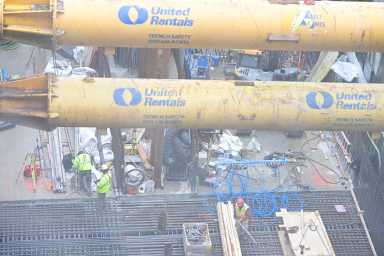
On a frigid morning this week, beneath the snow-laden streets of Manhattan and New Jersey, a phalanx of hard hats and fluorescent vests finally reported back to work. After a near month-long freeze, both literal and bureaucratic, construction has resumed on the Gateway Tunnel—the $16 billion rail lifeline slated to replace the rickety, century-old tubes beneath the Hudson River. For nearly 1,000 labourers, the call to return marked more than a fresh paycheque; it was the latest twist in the region’s decades-long, stop-start affair with essential infrastructure.
The Gateway Development Commission, or GDC, announced on Tuesday the return to activity after much gnashing of teeth. The snow had to be cleared first—no small task after a recent blizzard buried work sites—but the real thaw came courtesy of the judiciary. Earlier in the month, U.S. District Judge Jeannette Vargas compelled the federal government to release $235 million in funding, forcibly ending a fiscal blockade that began last October.
The project had ground to a halt on February 6th when Washington, under the previous presidential administration, froze critical funds, leaving the GDC with little choice but to lay off staff and suspend progress. Attorneys General Letitia James of New York and Jennifer Davenport of New Jersey swiftly sued, arguing that to neglect Gateway was to play Russian roulette with the daily commute of hundreds of thousands. The old tunnel—clapped together in 1910, battered by hurricanes, and harried by corrosion—remains the solitary pulse carrying Amtrak’s northeast corridor and a fair slug of NJ Transit into Manhattan.
This week’s judicial intervention was as much a respite for commuters as for the project’s balance sheet. The $235 million will reanimate stalled preparations: constructing the “launch box” for tunnel-boring machines, assembling the first behemoth boring rig in North Bergen, and readying for a second, yet-to-be-delivered sibling. Yet if shovels are finally moving again, GDC’s Alicia Glen, co-chair and New York commissioner, notes the long road ahead. Of the roughly $16 billion price tag, nearly $15 billion—$11 billion in federal grants and $4 billion in loans—remains outstanding.
For New York, the restart is both relief and warning. Without Gateway, the only link for most of the region’s rail commuters would be the decrepit existing tunnel, a gambit growing riskier by the year. Were a single tube to fail completely, the region’s train capacity could plummet by 75%, sending 200,000 additional bodies each workday scrambling for already-strained subways, snarled highways, and ferries. Economically, a prolonged outage bodes ill: economists at the Regional Plan Association estimate daily losses north of $100 million if both tubes go dark.
Jobs, too, hang in the balance. Infrastructure construction injects both high-wage blue-collar work and revenue for local suppliers. The one thousand workers returning represent more than paycheques—they embody New York and New Jersey’s appetite for capital projects that still, just, underpin the city’s global competitiveness.
But the political standoff lingers. Two major Gateway procurements—each vital—are still on hold, as federal funds remain only partly unshackled. The Biden administration, having inherited these legal and logistical quagmires, still battles out two court cases: one brought by the two states’ attorneys general, another filed by the GDC itself. Buck’s passing from agency to agency mirrors broader dysfunction over American infrastructure projects—chronically late, eye-wateringly expensive, and ensnared in political gamesmanship.
America’s creaking arteries
Compared with its global peers, America’s approach to vital transportation links seems penny-wise, pound-foolish. Europe, more practised in cross-border megaprojects, pairs rigorous public scrutiny with something America often lacks: political consensus to maintain what it has already built. Paris’s Grand Paris Express, Berlin’s U-Bahn extensions, and London’s Crossrail have all suffered delays and overruns, yet none hinge quite so precariously on the outcome of mutually suspicious lawsuits.
Gateway is, to some extent, a microcosm. Its fate may portend that of other projects from Baltimore’s rail tunnels to Boston’s bridges, each entangled in funding squabbles and bureaucratic inertia. Yet its significance dwarfs most: the Northeast Corridor ferries more than 800,000 daily riders, generating roughly a fifth of America’s GDP along its spine. Should this artery sneeze, Wall Street, Midtown, Newark, and beyond may catch cold.
For New York itself—often vaunted as the global city par excellence—the reliance on such geriatric infrastructure is more than a technical embarrassment; it is an affront to its self-image. The Hudson tunnels’ original tiles and steelwork have lasted far longer than their creators expected. That endurance has bred both complacency and avoidance, as politicians on both sides of the river kick crumbling ballast further down the track.
We reckon that the resolution of the current impasse—however temporary—should intensify debate on the city’s infrastructure future. Piecemeal victories and stop-gap judicial orders stave off crisis, but do not constitute a serious strategy. If Manhattan’s skyline is to retain its magnetism, reliable networks beneath street level matter as much as those glittering above.
Gateway remains a necessary, if not glamorous, investment—a $16 billion bet that 22nd-century New Yorkers will not be consigned to the same century-old bottleneck their great-grandparents bequeathed. Whether Washington can break free of its cyclical derailments and fund the rest of the project is a question commuters, unions, and capital markets will watch with wary interest.
In the end, the saga over the Gateway Tunnel is neither triumph nor debacle—merely a symptom of a nation whose appetite for grand projects too often exceeds its managerial digestion. New York, as so often, leads because it must; one hopes the rest of America is still paying attention. ■
Based on reporting from amNewYork; additional analysis and context by Borough Brief.