Gateway Tunnel Work Restarts as Feds Release $235 Million; Now About That Other $15 Billion
The resumption of New York’s Gateway Tunnel project after a federal funds freeze marks a crucial, if belated, step for the region’s economic mobility and America’s tattered rail ambitions.
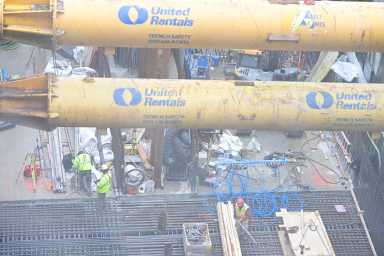
The sight of hard hats reappearing along the windswept banks of the Hudson River this week is a modest sign of progress in American infrastructure—one too often measured by stops and starts. More than 1,000 laborers, recently sidelined by snowdrifts and bureaucratic intransigence, are filing past the half-assembled tunnel boring machines at the Gateway tunnel site, marking a tentative end to the month-long pause that threatened to derail the Northeast’s most critical rail artery.
On Wednesday, construction officially restarts on the $16 billion Gateway Tunnel, a project designed to replace a skeletal, 116-year-old pair of tubes connecting New York City to New Jersey. The pause began on February 6th, after the Trump administration halted reimbursements and froze fresh inflows, leaving the Gateway Development Commission (GDC) with little choice but to lay off workers while winter blizzards compounded the delay. Only a federal judge’s restraining order, secured by New York’s and New Jersey’s attorneys general, finally pried loose $235 million in locked funds earlier this month.
The tunnel, which may not sound glamorous, is vital for the roughly 200,000 daily commutes that converge on Penn Station—America’s busiest transit hub—over the battered span of the Hudson. Infrastructural decrepitude is no longer a hypothetical risk: with century-old wiring corroding under the river, the tunnels now handle regular patchwork repairs and frequent delays, with every failure threatening a logistical crisis for the city and the wider region. GDC’s Alicia Glen, now able to summon crews to clear snow and prepare launch boxes for massive boring equipment, rightly calls the resumption “great news” for workers and riders alike.
For New York City, reassurance arrives in the form of job security for construction crews and, prospectively, fewer nightmares for the mass of morning commuters who propel the city’s economic engine. In an era of hybrid work and decanted weekday crowds, the need for reliable infrastructure seems only to grow: as companies experiment with office returns, snarled transit may well be the difference between a full-throated revival and a sluggish recovery.
The sudden work stoppage, caused not by a natural disaster but by bureaucratic hesitation, portends deeper risks for the city’s economic buoyancy. While the $235 million release ensures shovels are in the ground again, the project’s full funding is still in limbo. GDC and the state attorneys warn that some $15 billion remains in the balance—largely federal grants and loans yet to be unblocked. Two major procurement contracts remain on hold, potentially slowing the project’s overall progress and stretching New York’s legendary patience even further.
Infrastructure as political football is hardly new, but the Gateway saga exposes America’s curious aversion to building big and fast. For all the hand-wringing over crumbling bridges and outmoded rails, even the country’s marquee transit corridor faces regular seizures from shifting political winds. Previous bottlenecks, including cancelled federal commitments under the Christie administration in New Jersey, have delayed momentum for more than a decade. In the current moment, laborers may have their jobs back, but the underlying wrangling—in federal courts and in Washington—bodes ill for project managers seeking stable, predictable cash flows.
What is at stake is more than just the uninterrupted movement of Manhattan office workers. The Northeast Corridor, which carries some 800,000 passengers a day from Boston to Washington, accounts for a tenth of America’s GDP. If the Gateway Tunnel remains hostage to piecemeal funding, the region’s fragility will weigh down the national economy. The existing tunnel’s chronic vulnerabilities, brought into sharper relief by Superstorm Sandy’s flooding in 2012, threaten systemic breakdown with consequences for supply chains stretching hundreds of miles.
The global laggard
In international perspective, America’s tunnel travails cut a sorry figure. Europe and Asia have streamlined the construction of their own high-speed links—Paris to London, Tokyo to Osaka—while American projects like Gateway lurch from pause to restart. China, which has built more than 25,000 miles of high-speed rail in less than 20 years, outpaces America several times over, both in project execution and cost control. Progress in New York, by contrast, resembles a relay run by litigators and political appointees, not engineers.
There are lessons, if not silver linings, for those committed to America’s urban vitality. First, lawsuits and court orders remain an imperfect but effective bulwark against capricious policymaking. That the attorneys general, Letitia James and Jennifer Davenport, had to sue the federal government to free mere reimbursements signals a system where legal remedies substitute for institutional reliability. Second, the persistence of regional alliances—across New York and New Jersey, long-standing rivals at budget time—shows that shared peril can force cooperation, at least temporarily.
We reckon that competence in public works is measured less by ribbon cuttings than by the quiet absence of catastrophe. The Gateway project, still a dozen years from full completion, is likely to encounter fresh snares: environmental reviews, “buy American” mandates, evolving local opposition, and, inevitably, cost overruns. Yet the alternative—to limp along an antiquated tunnel until “the big one” closes it for months—remains too dire to contemplate. The stewards at GDC are right to be wary; a single court order guarantees only tomorrow’s work, not next year’s progress.
The Gateway saga is, in microcosm, America’s transportation dilemma: aspirations grand, execution tepid, results both indispensable and constantly in jeopardy. If New Yorkers can secure the elusive full funding—they still await $15 billion in grants and low-cost federal loans—there remains hope that America’s busiest, and most battered, transit corridor might one day resemble its peers abroad. Whether Congress, the White House, and their many agents can manage this feat is a wager we have learned not to place lightly.
For now, as snow gets cleared and work sites buzz anew, the region extracts a fragile optimism from what amounts, in truth, to simply the restoration of status quo ante. That this minimal progress counts as newsworthy only underlines how far New York, and America, has fallen in the art of building for the future. ■
Based on reporting from amNewYork; additional analysis and context by Borough Brief.