Grand Army Plaza Redesign Finally Advances—Time to Plan for a More Ambitious Brooklyn Future
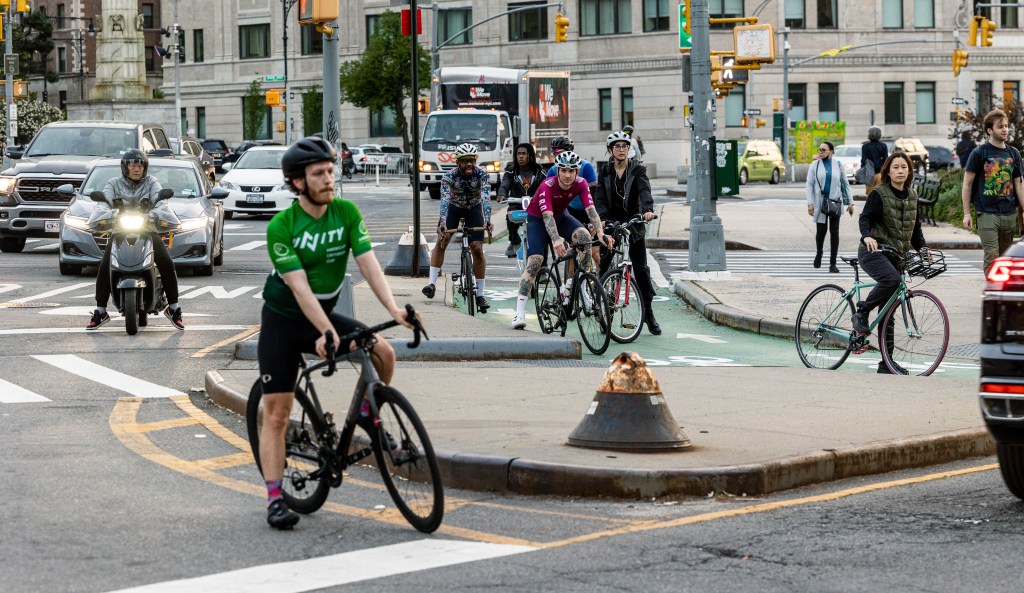
In a city famed for its improvisational capacity, redesigning Grand Army Plaza invites an overdue reckoning with New York’s ambitions for public space and mobility.
On any fair-weather Saturday, Grand Army Plaza thrums with the paradoxes of modern New York: phalanxes of cyclists swirl around the arch; frustrated drivers honk through the gridlock; strollers dodge errant delivery vans. The famed gateway to Prospect Park, envisioned as Brooklyn’s front porch, has long served as both a civic stage and a harried traffic funnel. Now, after decades of fitful tinkering, City Hall is poised to reimagine this storied hub—yet many worry that the plans remain mired in the car-centered thinking of yesteryear.
The announcement of a fresh redesign marks the most consequential overhaul of public streetscape since Times Square’s pedestrianisation in 2009. City officials, led by Mayor Zohran Mamdani and the Department of Transportation’s Mike Flynn, trumpet the project as a chance to restore grandeur and safety to one of the city’s historical nexuses. The details, though, betray a certain conservatism: key arterial roads, such as Flatbush Avenue and the Vanderbilt corridor, will endure as high-volume conduits for car traffic, their character largely unimproved.
This incrementalism is perhaps understandable. New York’s streets—byzantine, busy, and beset by passionate constituents—rarely lend themselves to unambiguous transformation. Yet the scaling back of aspirations here carries broader significance. Grand Army Plaza is not just a roundabout: it is the symbolic heart of Brooklyn, drawing straphangers, dog walkers, and demonstrators alike from across the borough. In an era when public space is at a premium, missed opportunities here reverberate far beyond the tangle of lanes and hedges.
The implications for New Yorkers, practical and philosophical, are not trivial. On the most literal level, timid changes portend another generation in which pedestrians and cyclists must cede precious territory to the combustion engine. Planners concede that Flatbush Avenue will retain its role as a “traffic sewer,” pumping vehicles through residential Brooklyn. Vanderbilt will remain a conduit for cross-borough commuters, sustaining both congestion and collision risks.
Socially, this means the Plaza will continue to exclude the very populations whose needs are rising: families with children, older adults, and the urban cyclists and commuters whose numbers remain buoyant. Culture, too, is at stake. Thus far, the plan offers little to cement Grand Army Plaza’s role as a stage for civic ritual, from protest marches to impromptu concerts. Instead, the auto-centric design persists—a relic of 1960s priorities resurrected in 21st-century livery.
There are economic ripples, faint perhaps but not negligible. European studies suggest that pedestrianised plazas, far from hobbling commerce, tend to invigorate nearby retail. A more ambitious redesign could yield higher real-estate values, draw foot traffic, and nurture the growth of street-level enterprise—a boon to the area’s merchants, whose storefronts have weathered pandemic-era headwinds and shifting habits.
Politically, the saga exposes the soft power of New York’s urbanist vanguard. Mayor Mamdani, elected on a platform of just such boldness, has until now enjoyed the reputation of a civil engineer on two wheels. His DOT Commissioner has even mused, uncharacteristically for the post, about the absurdity of free curbside car storage—hinting at a long-needed change in bureaucratic weather. Critics argue that merely dusting off a decades-old plan does scant justice to this mantle of possibility.
Nationally, the city’s approach looks cautious, if not outright tepid, when mapped against rivals. From Paris’s “15-minute city” experiment to Barcelona’s verdant superblocks and Amsterdam’s omnipresent fietsstraat (bicycle streets), the direction of travel in peer metropolises is unmistakably away from the dominion of the car. American cousins such as San Francisco or Boston have, with varying success, sought to reclaim public space by subordinating private vehicles, sometimes even successfully.
Why Brooklyn’s moment now matters not just to locals, but to cities everywhere
The Grand Army Plaza story, in microcosm, reveals the difficulties—political, procedural, cultural—of future-proofing America’s urban crossroads. New York still makes gestures at grandiosity, but too often contents itself with minor tweaks. The city’s foot dragging contrasts sharply with the dynamism elsewhere; to plan “as if it were 2007” is not just backward, but wilfully parochial.
To be sure, a car-free utopia, conjured ex nihilo, is no panacea. Delivery vehicles, disability access, and the slog of day-to-day congestion require practical concessions. Yet the allure of bolder interventions—dedicated cycling loops, fully realized pedestrian axes, continuous busways—need not remain the preserve of northern Europe. The city, famously inventive, surely possesses the capacity to build streetscapes that induce awe rather than mere accommodation.
What is lacking is less engineering acumen than political audacity. Every borrowed traffic lane or widened sidewalk triggers gnashing of teeth from entrenched interests. Yet, if New York wishes to again lead its peers in urban innovation, it must rebalance the scales from vehicles to people—transforming background grumbles into broad consensus, and resistance into pride.
For all the palpable nostalgia in the current plans, the city still finds itself at a threshold. The “Plaza” need not be just an echo of past grandeur, but rather a living canvas, attuned to the needs (and ambitions) of 2050’s New Yorkers. The gap between what is and what could be remains both a rebuke and a challenge.
Boldness, in this context, is not mere bravado. It is a rational wager that the next two decades will be shaped by climate pressures, demographic shifts, and growing impatience with the primacy of the automobile. Brooklyn’s heart deserves nothing less than a future-proof vision—one that will not just satisfy today’s advocacy groups but captivate its inheritors.
Grand Army Plaza stands on the cusp of transformation. Whether the city seizes the opportunity to match rhetoric with deed, or contents itself with incremental improvement and deferred ambition, will speak volumes about what kind of city New York wishes to become. For now, the verdict is unresolved. ■
Based on reporting from Streetsblog New York City; additional analysis and context by Borough Brief.