Hochul Signals Possible Rollback of New York Climate Law as Energy Costs Bite
New York’s governor signals retreat from ambitious climate targets, rekindling debate over the costs and pace of the green transition.
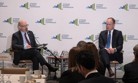
The sum of $3,000 may not buy much in Manhattan, but, as New York’s budget director laid out last week, it is the average extra cost each New Yorker could shoulder under the state’s climate law. At a breakfast hosted by the Citizens Budget Commission, Blake Washington, Governor Kathy Hochul’s fiscal right hand, told the room that the price tag for the clean energy transition is fast becoming what he called an “own goal.” In public-finance circles, that is about as sharp a rebuke as one hears.
Such a take marks a decisive change in Albany’s tone. Less than five years ago, state leaders were boasting of the Climate Leadership and Community Protection Act (CLCPA) as a model for other states—a statute requiring a 40% cut in emissions by 2030 and 85% by 2050, and mandating that electricity generation turn fully to renewables by 2040. Progress, as officials now concede, is off schedule. Ms Hochul’s administration is openly pondering how to rewrite the rules.
The argument, as Washington framed it, is pure hard-nosed arithmetic. Keeping the CLCPA’s trajectory, he reckons, will ratchet up utility bills, with the poor and middle-class footing much of the increase. The conceptual charm of rapid decarbonisation has, in economic reality, collided with spiky inflation numbers and a palpable “affordability crisis” roiling the city. This is not confined to New York alone, but here, with its elevated cost of living and dense population, such costs sting more keenly.
Energy, both its supply and price, remains the lifeblood of Gotham. The city relies overwhelmingly on imported gas and power, and its transmission grid is already frayed. The prospect of pushing harder on the exit from fossil fuels, at the expense of reliable and affordable electricity, presents a daunting risk. As temperatures drop, calls to prioritise an “all of the above” strategy—keep some natural gas, extend pipelines, shore up older plant—find a more sympathetic public audience.
Nor is it merely financial pain causing officials to reconsider. A growing cadre of political actors—including unions, landlords, and small businesses—are quietly nudging Albany to soften the statutory pace. Even well-meaning objectives can impoverish voters and erode economic competitiveness; outcomes that are, as Washington put it, “not something the governor’s willing to tolerate.” The friction between climate aspiration and lived affordability has turned from a whisper to a broad concern, especially with city utility arrears approaching $2bn and pandemic-era subsidies drying up.
The symbolic force of pace-setting climate ambition is, to be sure, familiar. California, the other American colossus, clings publicly to its green mandates despite facing analogous cost overruns and missed milestones. Germany, earlier this decade, scaled back its “Energiewende” schedule as costs ballooned and energy security wobbled. Britain, a vanguard of legal carbon budgeting, quietly pushed back the petrol-car ban as economic calculations shifted. Even for the most climate-forward places, the price of speed is steep.
A reckoning for green targets
If Ms Hochul does propose to ease the statutory goals as part of her budget package, the move would follow her tendency for last-minute interventions—she has, after all, previously thrown late curveballs on far thornier issues like bail reform. Embedding such changes in the annual fiscal plan would all but force the state’s progressives and environmentalists onto the defensive, pitting them against both the governor’s office and powerful budget hawks.
Should New York recalibrate its ambitions downward, the implications will ripple nationwide. The state’s law—often invoked at federal climate summits—served as a beacon for many blue-state lawmakers seeking to outdo one another in emissions-cutting zeal. A partial retreat by the most populous Northeastern state, especially on the grounds of affordability, could legitimatise similar reversals in other high-cost urban regions from Boston to Seattle.
For the city’s politics, such a step is fraught. Environmental groups are loath to relinquish leverage earned over a decade of legislative wins. Progressives, especially those staking careers on hammering fossil-fuel firms, will resist vigorously. Yet polling suggests even greener-than-average voters are muttering about bills. Republicans, perennially thin on the ground in city and state government, may delight in the optics of “common sense” prevailing over green excess.
There are, of course, credible arguments for compromise. Half-finished climate schemes that lack political support seldom endure. Overambitious targets that fuel public backlash can erode trust in both green policy and government itself. Cleaner New York buildings and transit are indisputably desirable, but blind fealty to past pledges—crafted in the comparative calm of 2019, before inflation and war convulsed markets—serves neither the planet nor New Yorkers well.
We judge, then, that some reassessment is in order. The environmental cost of delay is real, but so is the social risk of pricing out broad sections of the city. The challenge remains as it always was: bending the emissions curve without impoverishing voters or undermining public legitimacy for further progress. Flexible realism, not legislative maximalism, will serve New Yorkers better.
The great transition’s balance between urgency and affordability, between hoping for the best and preparing for the worst, is once again up for debate in New York. Experience abroad and closer to home suggests any solution that ignores either side is unlikely to fare well with voters, or the planet, for long. ■
Based on reporting from City & State New York - All Content; additional analysis and context by Borough Brief.