House Transit Bill Slashes New York Funding, Highways Win—Active Transport Gets Lukewarm Nod
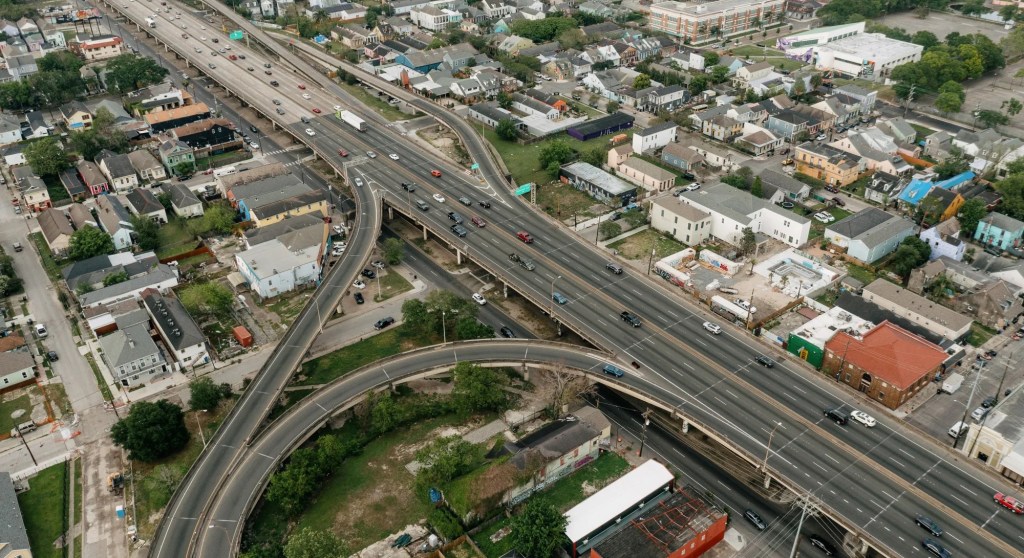
The latest federal transportation bill could determine whether New York commuters face a leaner, less connected future—or just a familiar pothole-ridden one.
Tallied at a lean 1,005 pages, the House’s new BUILD America 250 Act arrives with a vengeance on transit funding and a thumping echo for highways. Its $580 billion price tag over five years, barely half the haul of its predecessor, portends an era of more austere ambitions. For New York City, a metropolis whose transit backbone supports 8.5 million in daily dance, the shape and size of federal largesse is not mere budgetary quibbling—it could dictate the metropolis’s viability as its denizens recalibrate for a still-uncertain post-pandemic era.
Released in late June by the House Transportation and Infrastructure Committee, BUILD 250 launches the next marathon to reauthorize federal transportation funding before September 30th. Gone is the bipartisan spending spree of 2021, replaced by a bill that slashes funding for mass transit formula programs by 20 percent ($43 billion less over five years) even as it bestows highways with an 8 percent increase. For subways, buses, and regional rails in the Big Apple, this is more than belt-tightening; it marks a worrying drift from the multi-modal policies that have propped up urban America.
Transit advocates had braced themselves for worse. Compared to the Trump administration’s zero-for-transit ambitions, BUILD 250’s cuts appear almost generous—if one squints hard enough. Yet advocates in New York, from the Riders Alliance to Tri-State Transportation Campaign, reckon such comparisons set a puny bar. “Boosting highways while gutting transit is a formula for more congestion, not less,” remarks Sarah Kaufman of NYU’s Rudin Center, echoing anxieties that the bill’s bent would make commutes slower and city air grimmer.
The pain for active transportation—bike lanes, pedestrian paths—proved less severe than feared. Chairman Sam Graves’s vow last year to nix “bike paths or walking paths” did not fully materialise in the final draft. Even so, the “mixed bag” of proposed funding does little to move the needle. For a city with Vision Zero aspirations but a litany of cycling fatalities, the lack of decisive incentives for non-car mobility is a meagre consolation.
First-order impacts for New York City are stark. The MTA, already rattled by COVID-era revenue shocks and ever-tepid state aid, faces a future where federal dollars shrivel just as its capital plan begs for generational investment. Average subway ridership last month hovered at 75 percent of pre-pandemic highs, meaning every buck lost to DC must be scraped from local wallets—or sacrificed as deferred maintenance, slower trains, and patchier service.
The knock-on effects swiftly ripple outward. A weakened MTA could cast a pall over job growth and deepen inequities—those forced into longer, costlier commutes tend to be poorer, browner, and more reliant on public transport. More highways mean more cars, more sprawl, and stubbornly stagnant emissions, all while housing costs spike near what remains of desirable transit.
Politically, the bill’s priorities are a litmus test for federal seriousness about decarbonisation and equity. New York’s delegation, led by Rep. Jerrold Nadler and Rep. Grace Meng, lambasted the shift toward highway funding, warning that “urban America risks returning to the era of ‘roads to nowhere’.” Meanwhile, billions in discretionary grants from the last infrastructure law remain frozen, held in limbo by bureaucratic foot-dragging and what cynics attribute to White House politics. This legislative uncertainty bodes ill for multiyear planning.
Elsewhere, the bill’s passage portends a familiar American exceptionalism: lavish highways, starved mass transit, and “crumbs for cyclists,” as one wag at Streetsblog noted. While Paris and London double down on trams and “superbuses,” the American habit is to patch potholes and build fresh lanes. The sclerotic pace of federal grantmaking, combined with tepid support for repair over expansion, leaves New York hamstrung even as its European peers sail forward.
Betting on yesterday’s journey
Viewed through a national lens, BUILD 250 is an unvarnished statement of priorities. Infrastructure law in America is less a lever for economic transformation than a sop to entrenched interests—above all, the highway lobby. For cities like New York, with century-old subways and repair bills that would make a highway contractor blanch, this means planning for a future with less.
The contrast is especially poignant given Americans’ stated preferences. Poll after poll finds that voters in dense metros crave better transit and safer streets, but the statute books bend in the direction of car dependency. When federal dollars chase flashing tail lights instead of farebox receipts, the consequences land disproportionately on cities who simply cannot pave their way out of gridlock.
BUILD 250’s boosters argue that “fiscal discipline” necessitates these cuts, yet the benefits appear lopsided. Road expansions are notorious for yielding ballooning costs and fleeting congestion relief—a familiar foe in New York’s outer boroughs. As the city contemplates congestion pricing and a clean energy grid, the omission of bolder urban transport reform seems willfully obtuse.
Still, it is not all calamity. The mere fact that active transportation funds survived at all, in the teeth of opposition, reflects some residual bipartisan commitment to “complete streets.” Moreover, the legislative process is fluid: advocates from Transportation for America and the MTA alike hope for restoration of cuts—or at least, sensible guardrails to block further mischief—before final passage.
New York’s fortunes have ever been entwined with federal policy, sometimes for better, too often for worse. As Congress dallies and the city’s curbside lanes buckle under the weight of SUVs, the lesson from BUILD 250 is how legislative inertia, dressed up as prudence, may condemn the city to more of the same—slightly better than the worst, a far cry from what is needed.
In the end, BUILD 250 is a document of compromise, not conviction: eager to appease rural and suburban sceptics of big-city projects, but unable to envision a transport system suited to the 21st-century metropolis. If the bill as written becomes law, New Yorkers risk getting exactly the infrastructure they pay for—and, in some cases, rather less. ■
Based on reporting from Streetsblog New York City; additional analysis and context by Borough Brief.