ICE Agents to Staff JFK and Other Airports as TSA Pay Lags, Shutdown Drags On
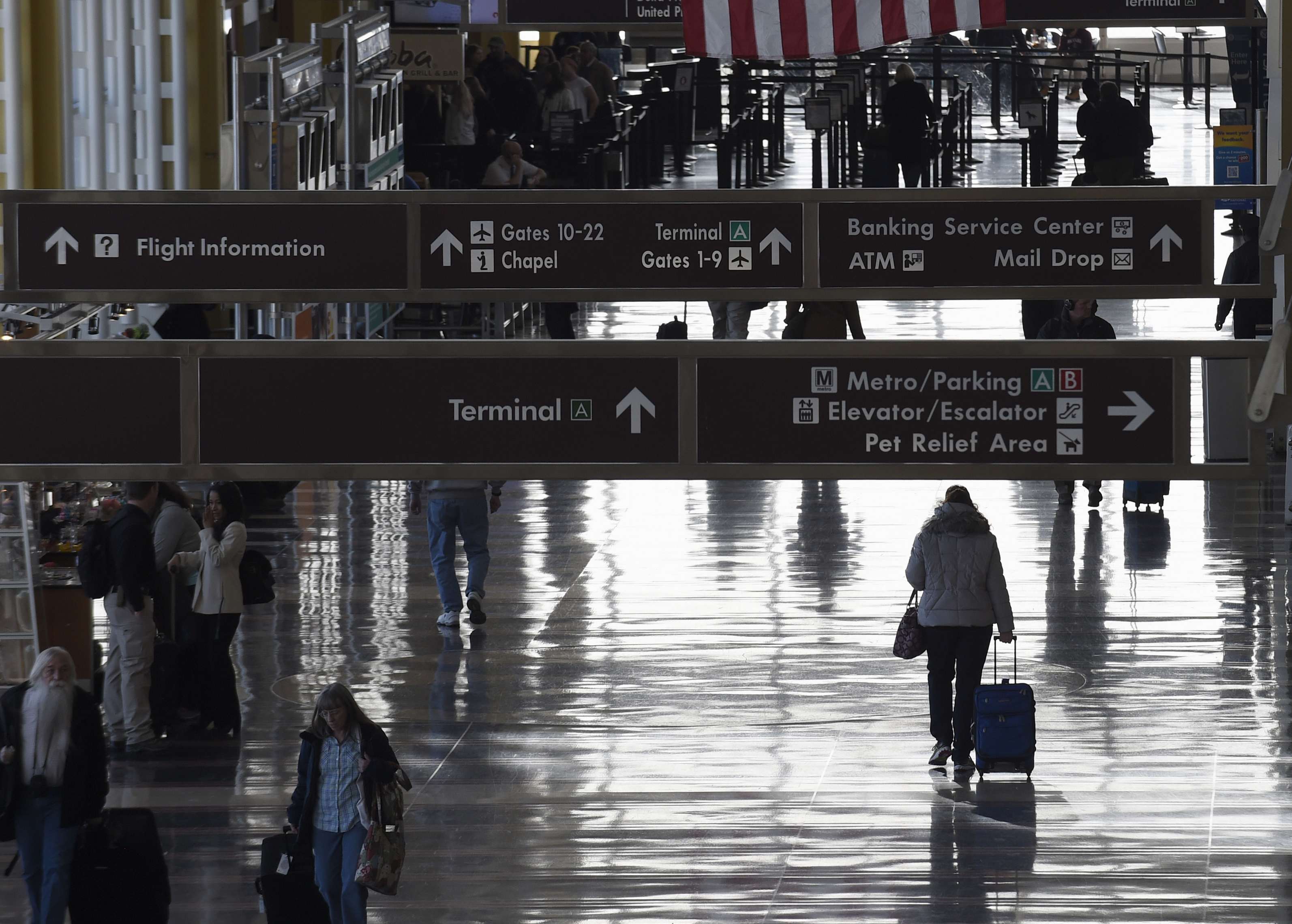
The deployment of federal immigration agents to New York’s airports, amid a funding standoff, highlights the uneasy intersection of budget brinkmanship and the everyday functioning of critical infrastructure.
Travelers at JFK, ordinarily harried by security bottlenecks, have lately faced snaking lines that test the patience even of New Yorkers. The cause is not the usual seasonal rush nor a sudden terror alert, but a protracted failure to pay Transportation Security Administration (TSA) staff. As of March, these employees—numbering in the thousands—have been working without pay for five weeks, a casualty of Washington’s latest funding deadlock.
On Sunday, Tom Homan—the White House’s border security czar and a familiar face from the Trump administration’s more muscular immigration policies—announced the imminent deployment of Immigration and Customs Enforcement (ICE) agents to major airports, including John F. Kennedy International (JFK). Their mission: to alleviate TSA’s mounting backlog by taking over “non-essential” duties, theoretically permitting trained screeners to return to scanners rather than babysitting exits or monitoring luggage belts.
This strategy, unveiled on CNN’s “State of the Union,” is touted as a stopgap solution. On the surface, it is a faintly pragmatic application of available federal muscle to a pressing labour shortage. Yet the very need to conscript immigration agents as ersatz airport security is itself a sign of a governmental malaise that runs deeper than logistics.
The proximate cause is a refusal by Senate Democrats—now in its fifth iteration—to advance funding for the Department of Homeland Security, the umbrella under which both TSA and ICE reside. Their resistance is rooted in the White House’s aggressive approach to immigration enforcement, notably a spate of deadly ICE raids in Minnesota that reverberated through headlines in January. For New York, a crosstown battleground in the nation’s immigration debate and a hub for air travel, the politics are more pointed and the disruption, more acute.
Airport delays have spread like a slow-moving contagion, with absenteeism rising among unpaid TSA staff. Many have quit outright, seeking steadier pay for less thankless work. At last count, security wait times at JFK have doubled during peak hours, imperiling everything from business travel to the city’s lucrative tourist trade. Even as international arrivals flicker upward—a small mercy for hotels and restaurants—the experience is, by all accounts, less brisk and more bruising.
Second-order effects are beginning to accrue. Airlines fret about snarled connections and missed slots. Unions, hardly naive about leverage, are warning of further slowdowns if pay is not restored. New York’s political establishment, usually loath to side with the White House, finds itself sandwiched between outraged constituents and the pragmatic need to keep the city moving. For several thousand blue-collar workers, the impasse has meant unravelled living budgets and mounting debts.
Substituting immigration agents for specialists portends mixed results
The notion of ICE agents moonlighting as airport security staff is, almost by design, suboptimal. While law enforcement personnel are doubtless well-versed in the arcana of airport protocols, few possess the fine-grained training needed for TSA’s daily rituals: the reading of travel documents, the operation of X-ray and CT scanners, and the subtle business of distinguishing a harried tourist from a courier for contraband. Mistakes, we warrant, are likely.
International observers may look askance at this patchwork solution. America’s airport security apparatus has long been a byword for both intrusiveness and, at times, glacial inefficiency; yet it is no stranger to under-investment and sudden improvisation. Europe, by contrast, tends to treat airport security as a semi-military function—amply funded, poorly loved, but reliably staffed. That New York must now borrow agents from elsewhere in the federal archipelago is not a sign of nimbleness, but administrative malaise.
Elsewhere in the country, from Atlanta’s Hartsfield-Jackson to New Orleans’ Louis Armstrong, delays have proved similarly intractable, though only in a city as intricately connected as New York are the effects so rapidly diffused. The Port Authority has offered tepid reassurances, but it, too, lacks the purse strings.
Plainly, airport queues are a symptom. The real disease is a budgetary culture prone to recurring shutdowns—each side seeking tactical advantage, vital services shuffled like pawns. Federal pay disputes in the US are nowhere near as common as strikes in Europe, but their effect is more total: the work goes on, unpaid, until the political logjam breaks or exhaustion prevails.
The White House, never one to shun brinkmanship, has used the TSA payroll crisis to prod opponents on immigration policy, hoping perhaps to force their hand or at least assign blame for the mounting public inconvenience. For their part, Democrats cite deadly ICE raids and a climate of fear as justification for resistance. Meanwhile, regular New Yorkers miss flights and miss paychecks; the city’s global image, always a concern, suffers from the kind of media coverage it can ill afford.
Our view, shaped by much official shilly-shallying, is that deploying ICE agents in the place of trained screeners may stem logistical bleeding in the short term, but it will do little to heal the underlying wound. Airports are not only gateways for goods and people; they are signals of political competence or its absence. Nothing, save a return to regular funding, will suffice to restore confidence or allure. Over-reliance on law-enforcement overlap, while expedient, is a salve, not a solution.
For New York, the costs are real, if difficult to tally: lost commerce, eroding public trust, and a mounting sense that the city’s daily workings are hostages of distant partisans. If there is any silver lining, it is that New Yorkers—seasoned in endurance—will tolerate a good deal. But even their legendary patience is not inexhaustible.
Federal workers, in this city more than most, form the invisible scaffolding of daily life. Employ them, or risk a city that works less and worries more. The burden should not fall on those charged with keeping millions safe as they shuttle through what remains, for now, the world’s gateway. ■
Based on reporting from El Diario NY; additional analysis and context by Borough Brief.