Latino New Yorkers Join ICE Racial Profiling Suit as Legal Gray Zones Multiply
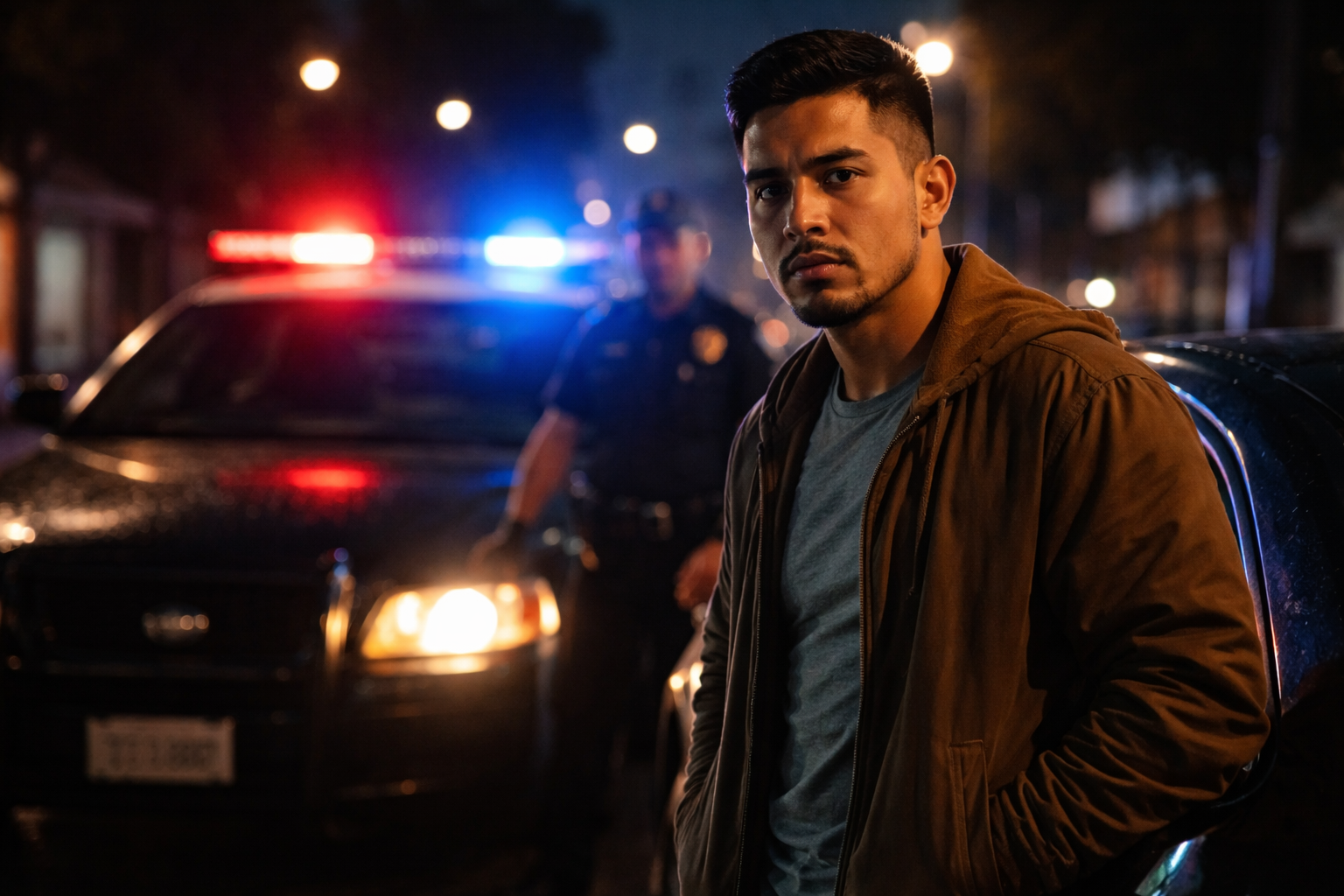
As allegations of racial profiling surge across New York, the battle between public safety and civil liberties again enters sharp relief, with implications that extend far beyond city limits.
The city that does not sleep too often finds itself stopped in its tracks. In recent months, a growing number of Latino New Yorkers complain they have been pulled over, questioned, or investigated without clear cause—save, they say, for their appearance, accent, or surname. These reports have reignited rancorous debate over “racial profiling”, that uniquely American oddity in policing that simmers beneath the surface of urban life.
At its most basic, racial profiling is the practice by which authorities subject individuals to stops, searches, or investigations not on the basis of concrete evidence, but rather on skin colour, language, or perceived national origin. Though the term has haunted US political discourse for decades, New York’s immigrant communities, particularly Latinos, now claim the spectre grows more tangible. The matter reached the courts in recent weeks: a group of city residents filed a lawsuit challenging the legality of alleged Immigration and Customs Enforcement (ICE) detentions made, they allege, on little more than the shape of a nose or the sound of a last name.
The implications for New York City are immediate and bitter. Home to more than three million foreign-born residents (a third of its population), the city owes much of its dynamism to migrants who fill kitchens, build towers, and fill entire boroughs with life. For many, the fear of being singled out by police or federal agents is hardly new, but the return of aggressive tactics—more stops, more questions, more uncertainty—corrodes hard-won trust between law enforcement and the communities they serve. Anxious residents may hesitate to report crimes, fearing any encounter could spiral from witness to suspect with the slip of an accent.
Problems do not stop at community relations. At street level, advocates from the American Civil Liberties Union, Make the Road New York, and similar watchdogs warn of a persistent pattern: Latinos, particularly young men, are stopped for minor infractions—real or imagined—and subjected to further questioning. The evidence that this is systemic is compelling in anecdote, if not yet robust in statistics; yet, perceptions alone can shape a city’s social fabric. The discomfort, as one resident described it, is to “feel judged before you’ve said a word.”
If these are the first-order effects—frayed trust, chilled cooperation, trembling nerves—the second-order ripples are more insidious. Data from years past bodes poorly: under the NYPD’s notorious “stop-and-frisk” regime of the early 2010s, Black and Latino New Yorkers made up close to 85% of stops, despite being a smaller share of the population. Though court rulings curbed the most egregious practices, civil society remains rightly skeptical of promises of reform. Financially, the cycle compounds itself: lawsuits mean mounting costs to taxpayers, while declining trust undermines the city’s economy by dissuading participation in commerce, employment, and civic activity.
Politically, the issue has become a wedge. Hardliners argue robust enforcement is necessary to keep the peace, especially amidst concerns over border security and rising crime. Civil libertarians, meanwhile, distrust blanket powers that, they say, too often result in discrimination, humiliation, and unwarranted detention. Mayor Eric Adams’s administration, caught between these hawkish and dovish impulses, favours “precision policing”, yet acknowledges the real harm when entire demographics perceive themselves under siege.
Meanwhile, some of the legal complexity arises from the “grey zone” in which these stops occur. Federal and local law sometimes lack clarity: police may demand identification for a litany of infractions—jaywalking, tinted windows, the feeblest of contrived suspicions. Proving a stop was based solely on appearance rather than behaviour is formidable: few officers admit as much, while official paperwork, when it exists, rarely records idle suspicions. The result is a world in which many New Yorkers feel, if not always actually, less equal than others.
A perennial American headache
New York is hardly alone. In Arizona, notorious for its S.B. 1070 law compelling police to inquire about immigration status after any stop, studies found fear and resentment seeping into daily life. Nationally, opinion is split: a 2023 Pew Research Center poll showed that while 68% of Americans disapprove of racial profiling, a significant minority (29%) deem it justified to preserve order. Globally, America’s struggles with police discrimination are echoed, albeit more quietly, in France, the UK, and parts of Latin America, though the US penchant for litigation makes its own mess uniquely public.
It would be glib, and incorrect, to suggest that all official suspicion is unwarranted. New York’s diversity brings both vibrancy and complexity, and the city’s police—like those elsewhere—walk a tightrope between vigilance and overreach. Nor is racial profiling the exclusive preserve of federal agencies; it seeps downward, fostered by local incentives, political rhetoric, and at times, simple laziness.
Still, the evidence suggests that casting so wide a net catches too little and alienates too many. Public safety, economists remind us, arises less from mass stops than from focused, intelligence-led policing and attention to root causes. The damage inflicted by discriminatory practices, on the other hand, is all too real. Each high-profile lawsuit or viral video erodes not only the NYPD’s credibility, but also the city’s global reputation as a sanctuary for strivers.
Ultimately, New York’s future as an economic engine and haven for talent depends on more than the elimination of crime; it demands the confidence of all who call it home. If residents must glance over their shoulder while navigating daily life, the city stands to lose more than lawsuits. It loses the not-so-secret sauce that built it: the willingness of millions to pursue opportunity unencumbered by the baggage of fear.
The city’s leaders, then, should resist the false dichotomy between order and equality. They must reckon, as past missteps have shown, that successful cities are those where diversity is not just tolerated, but trusted. The uncomfortable debate over racial profiling will not vanish soon; but a vigilant public, rigorous data, and clear standards may slowly move the needle away from suspicion by stereotype, and toward policing worthy of a superdiverse metropolis. The price of failure is paid not merely in disenchantment, but in squandered promise. ■
Based on reporting from El Diario NY; additional analysis and context by Borough Brief.