Latino Students Lead US Enrollment Gains as Advocacy Groups Press for Equitable Public Education
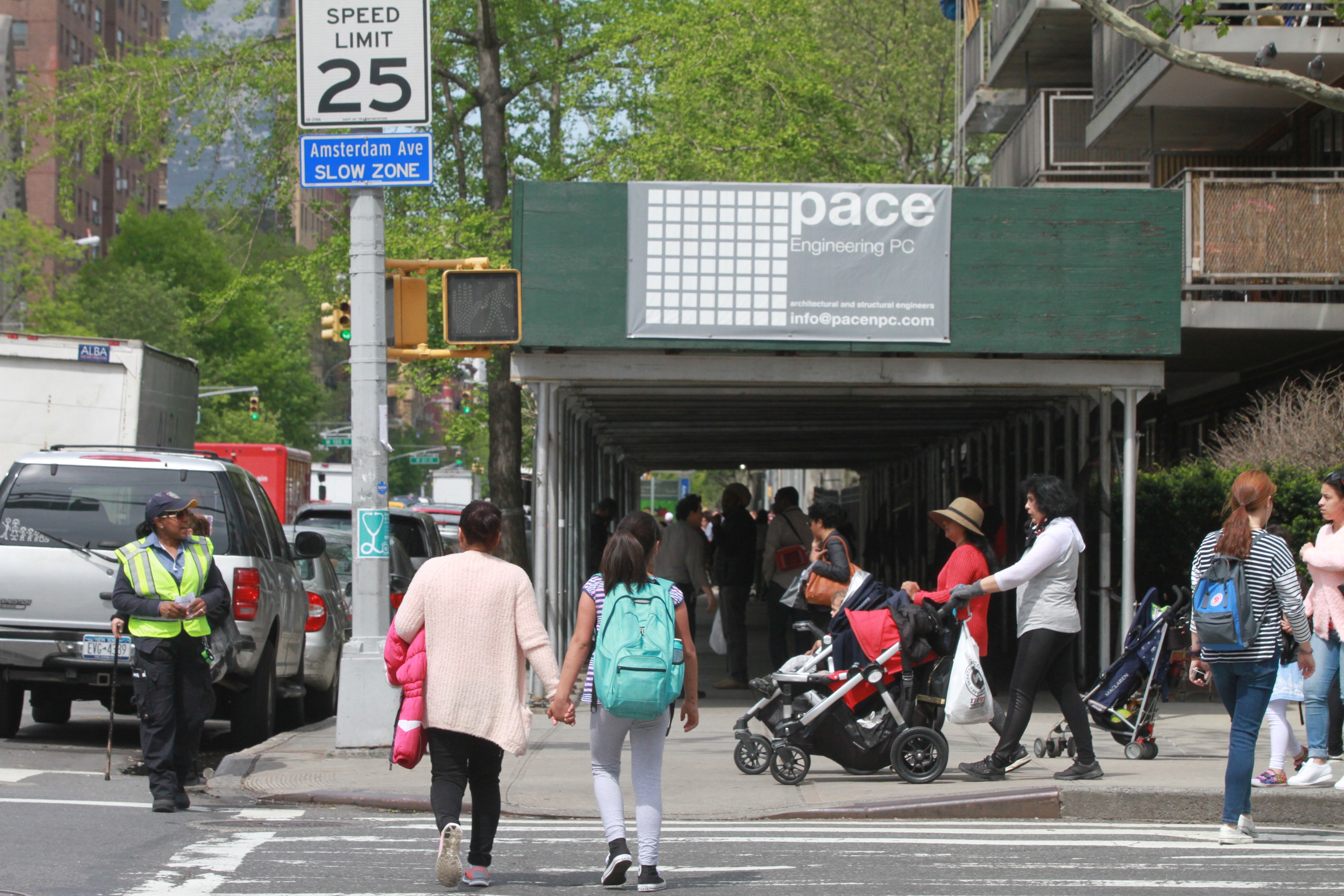
As Latino students become the fastest-growing share of New York’s classrooms, the city’s future prosperity hinges on turning demographic growth into educational and economic progress.
Walk into nearly any New York City public school classroom, and odds are you will hear Spanish—if not from the teacher, then in the laughter, questions, and quiet determination of the students. Latino pupils now make up around 41% of the city’s 900,000-strong public school enrollment, a buoyant increase that outpaces the growth of any other demographic group, according to the Department of Education. Yet this swelling presence masks a stubborn gap: Latino students continue to graduate at lower rates and attend college less frequently than their peers.
This month, the Hispanic Federation, a national advocacy group with deep New York roots, released its latest study as part of its Federal Policy Series 2025–26. The timely report issues a plain call: without urgent and sustained investments in equitable education, America’s largest urban Latino population risks squandering its potential—and, by extension, the city squanders its own. The document argues that quality schooling is not merely a private good, but a public investment foundational to democracy and prosperity.
At the centre of the Federation’s recommendations is the insistence that access—from pre-kindergarten through university—must be broadened. Its prescription includes increased federal and state funding, a retooled curriculum that welcomes diverse histories, and support for first-generation students. The logic is compellingly simple: when educational attainment rises in a community, so do family incomes, civic engagement, and overall economic development.
The stakes for New York are hardly abstract. Hispanics now form nearly 29% of the city’s 8.3 million residents and are overrepresented among the city’s working poor. Even modest improvements in graduation, literacy, or college-completion rates would ripple through neighbourhoods stretching from Washington Heights to Sunset Park, transforming not just individual destinies but entire communities. The reverse, alas, is also true; entrenched disparities virtually guarantee cycles of diminished opportunity and wasted human capital.
Policy inertia, however, remains a formidable foe. School funding in America—including New York—is still mostly tethered to property taxes, perpetuating gaps between affluent and lower-income districts. While the city’s many immigrant families bet on education as the passport to the middle class, budget shortfalls, teacher attrition, and spotty access to language support beset the most vulnerable schools.
Nor are the challenges purely financial. Bureaucratic sclerosis and scattered reform efforts often dull the edge of well-intentioned initiatives. After years of pilot programmes and mayoral pronouncements, the results are mixed: the citywide graduation rate for Latino students stands near 76%, notably below the 89% rate for white students (per 2023 DOE data). College readiness, meanwhile, trails even further behind, perpetuating the familiar cycle.
These problems, of course, extend well beyond Gotham’s limits. Nationwide, Latinos account for nearly one in four K-12 students—a figure projected to climb inexorably by 2030. But the patterns are strikingly similar in other big cities, from Los Angeles to Houston. The crucial difference is scale: New York’s Latino student population is now so vast that local setbacks reverberate nationally. Conversely, successful models piloted here can offer templates for the country.
In this context, the Hispanic Federation’s report does more than catalogue shortcomings; it draws on decades of hard-earned experience running and evaluating educational programmes. The Federation and its member partners argue that community-based interventions—such as culturally responsive teaching, family engagement services, and mentoring for college-bound pupils—can yield outsize returns when matched by public funding and administrative willpower.
Political winds and generational bets
Yet advocacy alone cannot surmount broader constraints. Federal policy from Washington remains in its customary state of flux—oscillating between rhetorical commitments to “closing the gap” and the realities of partisan gridlock. While the Biden administration has promised increased aid for Title I schools (those with high concentrations of poverty), the sums on offer—$18.4bn nationally in 2023—remain a pittance relative to need. In New York, new money is rapidly swallowed by safety net services, special education, and rising costs.
Ironically, the city’s own diversity, long its boast and burden, means that reforms can be halting, diluted by competing interest groups and overlapping priorities. Efforts to diversify advanced courses, for instance, have sparked fierce debate over admissions to elite public high schools. Support for English Language Learners (ELLs)—the majority of whom are Latino—lags behind best practices, with too few bilingual educators and scant tailored curricula.
Globally, New York’s educational predicament has analogues—and useful contrasts. Cities such as Toronto or London, both with substantial immigrant populations, routinely post higher outcomes for students from minority backgrounds. The difference? Methodical investments in early-childhood education, sustained teacher training, and curricula that reflect students’ lived experiences. International studies suggest there is nothing inevitable about the achievement gap; political choices matter.
The question for New York is whether it can learn at the requisite pace. Demographics, as the adage goes, are not destiny. The numerical ascent of the city’s Latino students is undeniable. But turning a burgeoning presence into collective advancement is neither automatic nor assured.
On balance, we reckon that the Hispanic Federation’s blunt message is both timely and necessary. If lawmakers and school administrators can be cajoled to fixate less on technocratic tinkering and more on the brute arithmetic of equal funding, robust support, and rigour in the classroom, the dividend for the city—and the nation—would be considerable. New York’s storied vitality has always rested on the ambition of its newest arrivals and their children. If that energy is squandered, the fault will lie not with the students, but with leaders unable, or unwilling, to do their sums. ■
Based on reporting from El Diario NY; additional analysis and context by Borough Brief.