Mamdani Appoints Transit Advocate to Tackle Fast and Free Buses, Budget Still Stalled
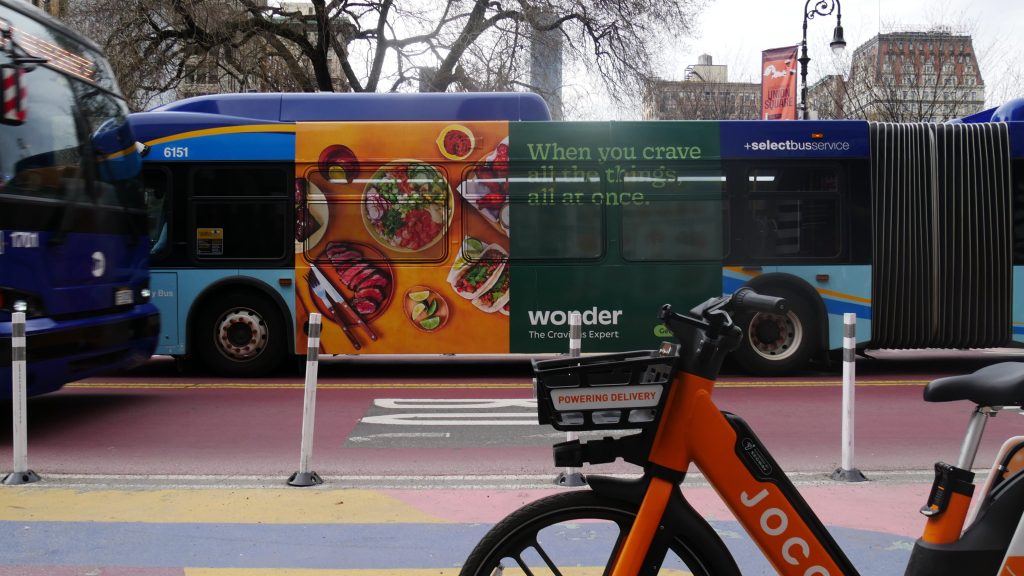
New York City’s ambitious “fast and free” buses plan, now under the guidance of a seasoned transit advocate, could redefine urban mobility and social equity—but the road ahead will require navigating both political gridlock and budgetary potholes.
If anything epitomises the laggard pace of New York’s surface transportation, it is the statistic that the city’s buses toddle along at an average of 7.8 miles per hour—nearly half the clip of London’s, and slower than an ambling cyclist or a brisk jogger. This plodding pace is matched, and perhaps exceeded, only by the sluggish progress of reform itself. Yet the city’s new mayor, Zohran Mamdani, has now installed a “Senior Adviser for Fast and Free Buses” to achieve what the city has failed to do for decades: liberate its slowest transit mode from both congestion and fares.
Elizabeth Adams, a former public–affairs chief at Transportation Alternatives, assumes this distinctively American version of a “bus czar.” Her task is formidable: to lead the charge on Mamdani’s cornerstone campaign pledge, which pairs efficiency with economy—speeding up city buses and eventually abolishing fares altogether. Adams touts her campaign acumen and cross-government connections, tools she claims are well suited to negotiating inter-agency skirmishes and political recalcitrance that have previously stymied bus improvement schemes.
The “fast and free” vision resonates in part because it is blissfully simple. As Adams put it, “transportation is the great equaliser in our city”—and at $2.90 per ride, what was once the city’s most democratic mode has become, for many, a punishing drain on finances. With over 2 million daily users, most of them lower-income and non-white New Yorkers, even marginal improvements could deliver disproportionate social benefits.
First-order changes are already afoot. In the Bronx, the once-moribund Fordham Road busway is being revived with offset lanes that promise a 20% boost in velocity, and crosstown service along 161st Street is finally due for an upgrade. Downtown, the Madison Avenue stretch will see its reserved bus lanes extended, an overdue break from the arrested development of the previous mayor’s administration. These efforts represent the “fast” component, and, if the figures hold, would render life tangibly more bearable for commuters resigned to 90-minute slogs to work.
Yet the “free” element, for all its populist appeal, presents a far knottier challenge. Banishing fares could tack a cool $1 billion onto the annual transit deficit. The mayor, in an echo of left-leaning urbanists, wants to bankroll this with levies on the ultra-wealthy—a proposal giving Albany’s budget hawks the vapours. Governor Kathy Hochul has already swatted down tax hikes on high earners, although she has signalled willingness to chip in via a “pied-à-terre tax” targeting absentee homeowners and second apartments valued at $5 million or above.
If Mamdani’s campaign narrative is to be believed, the fusion of speed and zero fares is mutually reinforcing. Economist Charles Komanoff’s much-cited report projects fare-free buses would, by slashing forbidden-boarding times, whittle down route times and woo an additional 170 million annual riders—enough to allow for increased frequency without extra cost. This could produce a virtuous circle: faster buses attract more users, reducing car trips and further unclogging the city’s serpentine streets.
The second-order effects are tantalising for proponents and daunting for critics alike. Free and prompt buses hold out the prospect of fuller access to work, education, and cultural life for the city’s most economically vulnerable. The MTA, which already sees greater ridership on routes that sport dedicated busways, might finally shed its reputation as a system best suited for subway-centric commutes. But the costs cannot be magicked away. Unless new revenue sources are forthcoming, riders could find themselves trading one form of congestion—at the farebox—for another, in the form of jampacked, underfunded buses.
There are also economic and political cross-currents to consider. Fare abolition would effectively redistribute resources from wealthy Manhattanites to working-class outer-borough dwellers—an equity argument with real teeth. But such redistribution inevitably provokes opposition, especially from those who see the city’s bus woes as an inefficiency problem rather than a resource problem. Business groups fret about the knock-on impacts for city budgets already stretched by rising pension, housing, and care costs.
New York’s ambitions should not be viewed in splendid isolation. Globally, fare-free bus policies remain the exception, not the rule, and where they have been implemented—from Tallinn to Kansas City—results have been mixed. Cities with more moderate levels of auto usage and lower transit demand, such as Dunkirk in France, report ridership gains but also higher operational costs and maintenance headaches. The concern is that New York’s uniquely intense transit environment could magnify both the benefits and the burdens.
Autobuses as an emblem of civic priorities
There is, nonetheless, a certain logic to prioritising bus transit. Buses are, bluntly, the only mode of public transport that can be rapidly improved at scale with minimal physical infrastructure. The relatively paltry cost of installing dedicated lanes stands in marked contrast to the eye-watering price tags attached to new subway lines. And the political symbolism of free transit—a city unbarred by tollbooths or means-testing—dovetails with prevailing sentiments about urban inclusion and mobility justice.
Yet we must deflate the buoyant rhetoric with a dose of metropolitan scepticism. Without bold enforcement—ticketing lane blockers, dethroning double-parkers—new bus lanes risk becoming little more than lines on the pavement. And fare-free policies, if implemented without concurrent funding streams, threaten to saddle the MTA with a gaping revenue hole, dryly reminiscent of the city’s 1970s-era fiscal misadventures.
Still, the appointment of an assertive “bus czar” signals that City Hall intends to do more than convene yet another task force. If Adams and her team can cajole disparate agencies, marshal the data, and corral political support, they may well overturn decades of inertia. But for now, New York’s experiment in “fast and free” remains just that: an experiment, rich with promise and pregnant with risk.
In a city defined by, among other things, its capacity for reinvention, the success or failure of this new venture will stand as a bellwether for urban mobility policy well beyond Gotham. Whether Adams’ buses become a byword for equitable transit, or yet another lesson in urban overreach, remains to be seen. ■
Based on reporting from Streetsblog New York City; additional analysis and context by Borough Brief.