Mamdani Backs $70 Million City-Owned Grocers in Harlem as Food Prices Outpace Wages
With food prices in New York soaring above national averages, City Hall’s new plan for municipally backed discount grocery stores signals a return to activist government—pitting affordability against the city’s iconic small businesses.
In the persistent bustle of East Harlem’s La Marqueta, one hears the echo of New York’s shifting fortunes. Sonia Flórez, a Colombian immigrant and 15-year resident, summed it up bluntly as she eyed the day’s produce: “Even eating has become a luxury here.” Her frustration is not a solitary one. City data show grocery prices in the five boroughs have soared by a remarkable 66% over the last decade, outpacing both wage growth and inflation in most of the country.
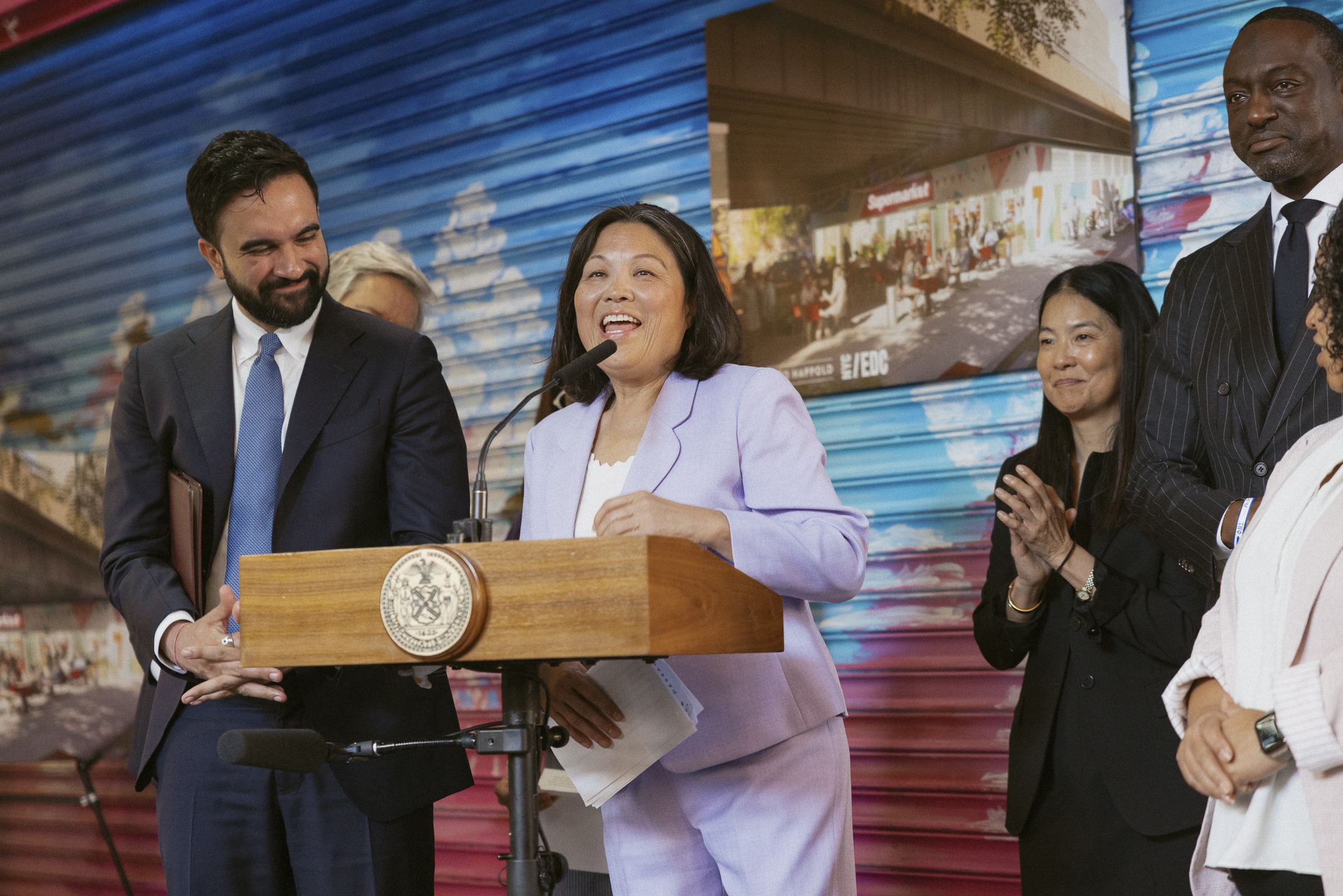
This week Mayor Zohran Mamdani—flanked by Deputy Mayor Julie Su—unveiled a $70m initiative to blunt the impact of such runaway prices. The city will fund five low-cost “marquetas públicas,” one in each borough, with the goal of giving New Yorkers struggling with “food insecurity” a much-needed alternative to the city’s expensive supermarkets. The first shop is slated to open next year, while the others will arrive by 2029. The plan: subsidise a basket of staple goods, appoint a private operator, and make it easier for families to buy basics like bread and eggs without gutting their wallets.
It is a sharp response to a growing crisis. According to city health surveys, one in seven New Yorkers experienced food scarcity at some point last year. Food banks are busier than ever; several report queues of two blocks or more during peak hours. Yet as the cost of living balloons, more low-income residents—especially newcomers and the elderly—slip through the mesh of federal assistance, which rarely keeps pace with local price indices.
Not everyone is cheering. Bodega owners, a mainstay of New York’s neighbourhood commerce, have greeted the plan with clatter and anxiety. Their trade association warns that municipally subsidised groceries could undercut their already-tepid margins, hastening the demise of shops that form the social and economic glue of many corners. The city’s willingness to intervene in the consumer market, critics argue, marks a contentious turn away from laissez-faire orthodoxy and endangers a retail ecosystem famed for diversity and entrepreneurial grit.
Proponents, by contrast, frame the policy as a vital experiment in urban resilience. Citing inspiration from the New Deal-era reforms of Fiorello La Guardia, Mr Mamdani argues that government must once again “respond to the challenge of unaffordable daily life” by direct intervention. City Hall’s logic is blunt: left to the oligopoly of private grocers—many now corporate chains—costs have diverged from both local incomes and the national average, foisting hard choices upon millions. The marquetas, supporters claim, will act as a “public option” for groceries, holding down prices citywide through both competition and transparency.
The economic questions are not trivial. On one hand, the city’s experiment may force established players to temper their mark-ups—to the benefit of all, not merely those who shop at the new stores. On the other, the scale is puny. Five shops in a metropolis of 8.3m will do little to budge aggregate supply or demand. For now, the $70m earmarked for subsidies is a relative pittance compared to the $11bn New Yorkers spend annually at the till, according to the Department of Consumer and Worker Protection.
Wider implications for the city’s political and social fabric loom. The plan comes amid growing calls nationally for a more interventionist municipal government, especially around everyday necessities. As partisans square off, the narrative sharper still: is city-led competition an overdue correction to market failure, or merely a bureaucratic sop that will create new distortions? For immigrant-heavy precincts like East Harlem, the symbolism is potent. A government store, located on the same historic spot where generations have shopped, proffers a modest bulwark against the city’s unease about disappearing affordability and fairness.
A beacon or a mirage? The risks of municipal groceries in a city of hustlers
International comparisons offer a sobering dose of realism. Paris and Berlin operate city-sponsored markets, but the model is far from panacea; both cities still grapple with food insecurity and persistent small business closures. Closer to home, New York’s experiment will invite scrutiny from advocates and critics nationwide, especially as inflation remains stubborn and urban mayors wrestle with public expectations for direct relief.
City Hall’s promises are, as ever, easier to announce than to fulfil. Much will depend on clever implementation. If subsidies flow only to select basics, will consumers feel meaningful relief—or simply see the city’s largesse offset by higher prices elsewhere? The risk of waste, inefficiency, or political patronage hovers. Likewise, the threat to bodegas—while not existential at this scale—could grow if the idea spreads, undermining the intimate, idiosyncratic retail culture that still defines much of the five boroughs’ daily commerce.
Still, the city’s boldness warrants some applause. New York’s willingness to pilot—and potentially scrap—initiatives is one reason for its enduring vitality. By targeting support at the bottom of the income distribution, rather than doling out broad-based (and more regressive) subsidies, the plan is intellectually defensible. If nothing else, it will yield data on where New Yorkers are willing—or unwilling—to shop when given a public option.
Yet history counsels humility. Government groceries are no silver bullet. Absent meaningful reforms to supply chains, rent costs, and the city’s Byzantine regulatory apparatus, efforts to lower prices—even by state fiat—will likely be at best a salve, not a cure. As with all experiments in New York, success is measured not in bombast but in details: transparent accounting, strict oversight, and a willingness to pivot or shutter underperforming ventures.
A return to activist government in a city so defined by hustle and private initiative may strike some as a retrograde gesture. But in a climate where “cost of living” now ranks as the main complaint in every zip code survey, it is not just politics but prudence to test new models. New Yorkers, ever the pragmatic, will judge by how quickly the price tag on their weekly shopping list falls—or, more pointedly, fails to do so.
Whether the marquetas públicas will become a beacon of municipal ingenuity or merely a symbol of the limits of civic ambition remains to be seen. Either way, the experiment deserves careful attention—not least from those who insist that, in New York, public intervention is always doomed and private hustle always wins. The city, as so often, may prove both right and wrong.
■
Based on reporting from El Diario NY; additional analysis and context by Borough Brief.