Mamdani Floats Tax Hikes to Close $5.4B NYC Gap but Data Say Options Remain
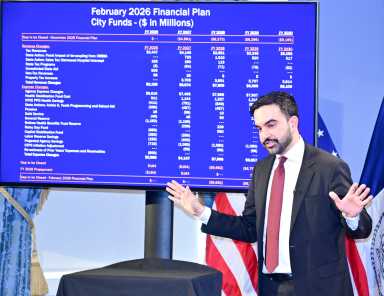
Facing a $5.4 billion deficit, New York’s leaders must decide whether higher property taxes or more creative solutions will chart the city’s financial future.
A $5.4 billion hole gapes in New York City’s public finances—a sum large enough to fund the entire sanitation department for a decade. Looming deficits seldom inspire poetry, but they do concentrate official minds. Mayor Zohran Mamdani, having unveiled a preliminary budget in February, now finds himself beset on all sides: by worried officials, recalcitrant state legislators, and business leaders who blanch at the prospect of tax hikes.
The mayor’s prescription is clear and, in his words, fraught. If Albany and City Hall cannot agree on new taxes on corporations and high-earners—a tough sell given Governor Kathy Hochul’s entrenched opposition—the city must contemplate its “last resort”: raising property taxes and dipping into rainy day reserves. The spectre of higher taxes, though, has already run into the crossfire of City Council Speaker Julie Menin, who has declared such a step “off the table”.
Yet the mathematics are punishing. The deficit spans two fiscal years; even after an extra $1.5 billion from the state, the city stares down a shortfall stuffed with mandatory salary increases, rising debt service, and persistent structural costs. No mere tinkering will suffice. Over 3 million homes and 100,000 commercial properties would bear the immediate brunt of any property tax hike—a constituency formidable both at the ballot box and in the city’s dense economic fabric.
Business groups are sounding klaxons of alarm. Jessica Walker of the Manhattan Chamber of Commerce, representing 125,000 businesses with $1 trillion in gross product at stake, calls property tax proposals “counter-productive and potentially harmful”. The logic is not obscure: businesses already scrounge for margins in a city where vacancy rates, though down from pandemic peaks, remain well above pre-2020 norms, and operating costs rarely budge downwards. Increased property levies risk squeezing not just building owners, but tenants, employees, and (ultimately) consumers.
Observers fret, too, over unintended consequences for housing. Andrew Rein of the Citizens Budget Commission points out that steeper levies would not just affect glitzy towers, but could “exacerbate fiscal insolvency and deterioration” in the city’s vast stock of pre-1974 rent-stabilised buildings. Owners, notably those of small multi-family dwellings, warn of a vicious circle: higher taxes spell higher rents, undermining the “affordability” Mr Mamdani championed while campaigning. “He ran on telling us he’s going to make everything affordable,” says Valentina Gojcaj of SPONY, who worries that a near-10% property tax hike could force sharp rent rises for market-rate tenants and cripple owners’ ability to maintain ageing buildings.
There are, of course, remedies short of tax increases. The city could drain its Rainy Day Fund and retiree health-benefits trust, as the mayor tentatively suggests: this would raise $1.2 billion over two years. Such measures would, at best, buy time rather than cure root causes. Dipping into reserves is addictive, and risks undermining future fiscal resilience; the city’s legacy of fiscal crises in the 1970s still casts a long institutional shadow.
Proposals to enhance efficiency or trim spending, meanwhile, find little purchase among politicians wary of backlash from service cuts. New York’s budget bloat is no recent phenomenon—repeated mayoral campaigns have promised “zero-based budgeting,” but the practical result has been inertia. Targeted reduction—say, trimming unfilled headcount, modernising procurement practices, or contracting redundant programmes—could certainly save a respectable sum, but such moves demand political courage rather than spreadsheets.
A national city in budgetary binds
Compared to peers, New York’s predicament is not unique but its exposure is acute. Other American cities, from San Francisco to Chicago, show early-warning signs of similar fiscal stress: ballooning pension obligations, rising debt service, and a post-pandemic reckoning as remote work and narrowing tax bases erode underlying revenues. One difference: Manhattan’s outsized reliance on property taxes (nearly 46% of city revenue, by the city’s own estimate) leaves few painless alternatives.
While many global metropolises—London comes to mind—have faced pandemic-era fiscal woes, the powers available to raise or reallocate revenue vary widely. In theory, the city could push harder for creative revenue: congestion pricing, more nimble tourist taxes, or commercial vacancy fees. In practice, each is politically fraught or administratively sluggish.
This confluence of troubles, while daunting, is hardly reason to lapse into “declinism.” History suggests New York, with its prodigious economic metabolism, often muddles through. Painstaking negotiations have, again and again, yanked insolvency back from the brink. Yet a chronic reliance on “temporary measures”—raiding reserves or counting on windfalls from Albany—portends that structural deficits will only be deferred, not dispatched.
Politically, the temptation to play brinkmanship is strong. Property-tax increases are repellent to all but the hardest-nosed fiscal hawks. Yet perpetual borrowing from future selves—in the form of depleted rainy day funds or deferred maintenance—risks sowing the seeds of a more severe reckoning down the line. As ever, New York’s strength lies in its adaptive capacity: provided politicians muster the will, a calibrated mix of efficiency gains, targeted (not blanket) revenue uplifts, and medium-term reform could restore budget stability without bludgeoning the economic engine.
For all the hand-wringing, the city remains a juggernaut of commerce, culture, and invention. Sober management, not magical thinking, is the order of the day. Closing the deficit while safeguarding services and keeping the tax burden competitive is a task too important to be left to the easiest lever. We reckon New Yorkers, and their leaders, are up to the challenge. ■
Based on reporting from amNewYork; additional analysis and context by Borough Brief.