Mamdani Pledges Citywide Trash Containerization by 2031, Funding Details Still in the Bin
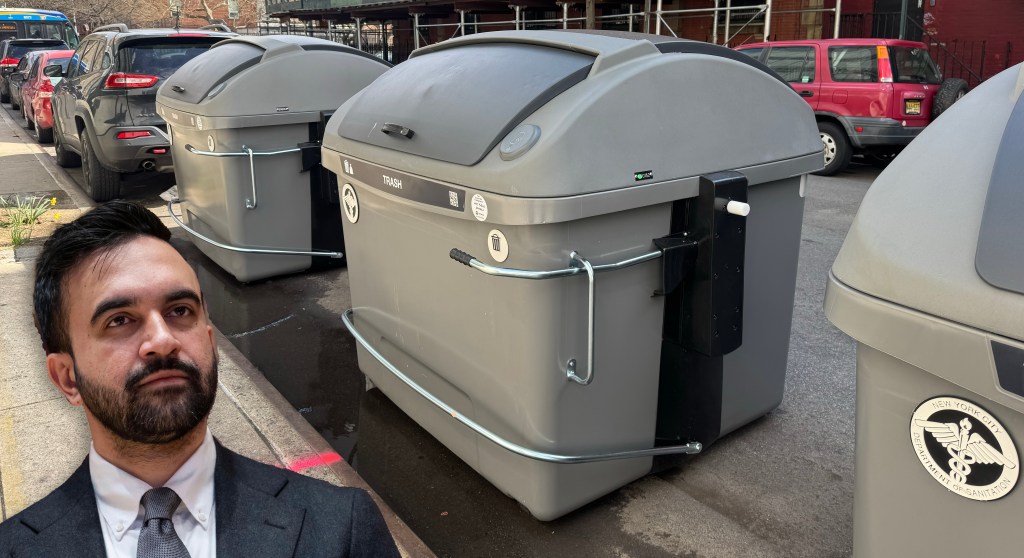
New York’s commitment to citywide trash containerization is a pivotal test of urban will, public space, and political follow-through.
Anyone who strolls a New York pavement after 5pm knows the city’s peculiar signature: a fetid phalanx of black bags stretching for blocks, perfuming the air and feeding an agile legion of rats. Today’s announcement by Mayor Zohran Mamdani hints that the city may, at last, trim its proverbial five-o’clock shadow.
The mayor, speaking at a rally in Maspeth to mark his first 100 days in office, proclaimed that the Department of Sanitation will sweep all residential rubbish off city sidewalks and into wheeled containers by the close of 2031. In a city notorious for grand promises—and inconsistent follow-through—the specificity and scope of Mamdani’s assurance is, by New York’s standards, bracing. Notably, the administration will begin the transformation by ensuring that each borough contains at least one fully containerized community district before next year’s end, with an “aggressive” citywide rollout to follow.
This new plan marks a decisive break with Mamdani’s predecessor, Eric Adams, whose foray into containerization amounted to a lonely experiment on one Harlem street and a subsequent retreat. Mamdani, whose rhetoric is seldom subtle, accused prior leaders of making “empty promises” and failing to fund expansion. The subtext, rarely voiced in New York politics, is clear: the era of sidewalk sacks and tepid pilots is to be swept aside.
For New Yorkers, the dividends could be considerable—if, that is, city hall manages the task it now claims as its own. Containerization, in theory, does what decades of sanitation campaigns have not: it deprives the city’s swelling rat population of its principle buffet, tames odour, and releases sidewalks once again to café tables, strollers, and dog-walkers. Council member Shaun Abreu, whose own West Harlem district piloted the bins, rightly remarks that “our streets don’t have to be an eyesore.”
Yet the devil—in New York, more often a rat—lurks in the details. To replace an archipelago of bagged trash with containers and new garbage trucks entails an investment of both capital and effort that dwarfs anything yet attempted. While the mayor pledged full funding, neither cost estimates nor revenue sources have yet emerged. One need only recall the 2023 container pilot, when grand designs shrank before the pressures of parsimony and bureaucratic inertia.
The potential societal effects, however, extend beyond mere sanitation. As in Paris, Madrid, and Barcelona—cities whose pavements are blissfully free of garbage mountains—containerization can transform public space, changing not just how streets look and smell but how they function. Sidewalk real estate, suddenly freed from bag-piles, becomes open to commerce, play, and civic life. Confidence in local government—a notably scarce commodity—may rise if the city delivers.
Still, the plan is a gamble. The economics are both daunting and tempting. Replacing nearly every residential trash pickup in a city of 8.3 million with new infrastructure will, by most outside estimates, run into the hundreds of millions, if not billions, of dollars. The city’s finances, while better than some had feared post-pandemic, are hardly buoyant. If Mamdani raided existing budgets to pay for bins, parks and libraries might find themselves with a punier slice of the pie.
Politically, Mamdani’s move seems shrewd. In 2024’s municipal election, trash containerization polled surprisingly well with voters, especially in districts where the scent of summer garbage is less romantic than ruinous. Residents long accustomed to official neglect seem to welcome tangible improvement over the customary cycle of study, pilot, and abandonment. Yet should the program stall for want of funds or logistical snafus, the mayor’s reputation could be lumped in with all his predecessors who promised cleaner streets but delivered only press conferences.
Nationally, New York’s ponderous pace stands in contrast to similar metropolises abroad, and even some within the United States. In Toronto, residents have deposited household waste in lidded curbside bins for over a decade; in San Francisco and Seattle, containerized waste is standard albeit covering smaller populations. International rivals, especially in Western Europe, often view New York’s “trash bag aesthetic” with disbelief; Paris switched to communal containers in the 1990s. For a city eager to claim global status, the continued reliance on plastic sacks portends not gritty authenticity but civic negligence.
A bottleneck or a springboard?
The challenge now is execution. The sanitation department, already stressed by worker shortages and a surfeit of mandates, will need a fresh fleet of trucks, rejigged collection schedules, and—perhaps most daunting—a patient partnership with building owners and residents. Experience suggests New Yorkers do not always embrace change lightly, particularly when it alters cherished inconveniences.
But as the mayor himself observed, civic pride should not be measured in GDP alone. The city’s “wealthiest” self-image sits uncomfortably alongside the detritus that lines its lowliest blocks. If even one borough can trade its reeking sidewalks for the relative orderliness of, say, Berlin, the impact on New Yorkers’ quality of life would be hard to dismiss.
We remain healthily sceptical. The city’s capacity for bold promises is nearly as infinite as its talent for stalling action. Yet, paradoxically, this may be why Mamdani’s declaration is worth more than a shrug. That New York continues to court containerization despite years of false starts suggests an underlying consensus that the trade-offs are worth it—and that, with determination, the city could put its trash, and its reputation, in a sturdier container.
Ever ambitious, New York claims to be exceptional. Delivering on this plan would help ensure its streets—and its governance—are exceptional for the right reasons. ■
Based on reporting from Streetsblog New York City; additional analysis and context by Borough Brief.