Menin and Mamdani Urge Albany to Tax the Rich, Hochul Unmoved by Billion-Dollar Gap
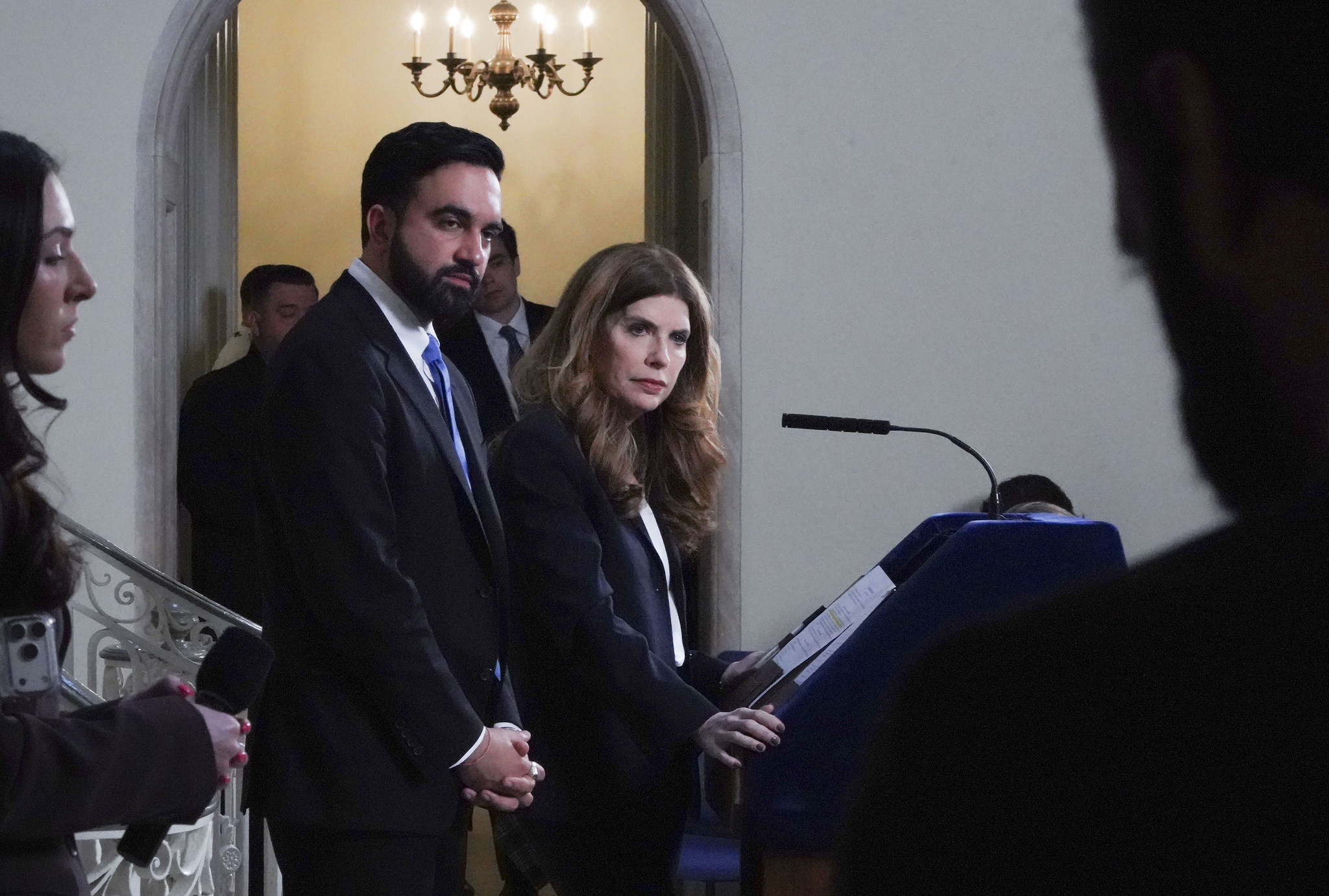
As New York City stares down a $5.4bn budget gap, city leaders are pressing Albany to extract more from the rich—testing long-running fiscal tensions between metropolis and statehouse.
New Yorkers have an instinct for money, and for fighting over it. This week, as the city confronts a gaping $5.4bn budget hole, an old rivalry returned to the fore. Once again, elected officials in the five boroughs are sparring with Albany over who pays, who benefits, and—ultimately—how to keep vital services afloat in America’s largest city.
On June 4th, City Council president Julie Menin and Zohran Kwame Mamdani, a prominent city lawmaker, put aside months of political difference to present a united front. In unusually coordinated remarks, they demanded that the state legislature revisit its school of fiscal thought: raise taxes on New York’s wealthiest and remit more funds back to the city that generates them. Their logic is simple arithmetic: New York City provides 55.6% of all state revenues, but receives only 41.7% back. The imbalance, they argue, can no longer be shrugged off.
Mayor Mamdani and Council president Menin favour reducing the city’s Pass-Through Entity Tax (PTET) credit from 100% to 75%, a move expected to generate almost $1bn in annual revenue by limiting a tax break that disproportionately accrues to city millionaires. The pair also want Albany to reconsider broader income tax structures to ensure, in Menin’s words, “the most affluent pay their fair share.” For some, these proposals feel overdue; for others, more red tape and higher rates could tarnish New York’s single greatest strength: its ability to attract and retain capital, talent and jobs.
For such a consequential juncture, Governor Kathy Hochul’s response was both swift and blunt. “That’s not going to happen,” she told reporters, claiming the state had already done plenty for the metropolis. Her chief spokesperson, Jen Goodman, enumerated $1.5bn in emergency assistance, boosted childcare support, and a forthcoming luxury pied-à-terre tax on second homes—all direct salves for city finances. In short: think again, and mind the line between Manhattan and Albany.
The divergence lays bare a chronic tension at the heart of New York’s budget process. The city is, in many ways, the engine of the Empire State. Since 2010, its economy has ballooned 110%—dwarfing the rest-of-state’s 68% growth—and remains one of the world’s vital commercial, financial and cultural nodes. Yet, year after year, the city’s share of the state’s fiscal largesse remains, by local measures, meagre.
The stakes are real: without further state help or new revenue streams, City Hall’s deficit threatens to upend social services, housing supports, and public safety spending. Cuts will not fall on the gilded Upper East Side but are likelier to hit the Bronx, Brownsville and other neighbourhoods where public programmes are not perks but lifelines.
An appeal for balance is understandable. The city’s politicians, eyeing constrained budgets, see the wealthy as a tempting wellspring of untapped funds. Indeed, the prosperity of hedge fund managers, corporate lawyers and high-earning techies has insulated the metropolis from deeper post-pandemic misery. Yet that prosperity is not immovable. High earners have options; New York already faces persistent out-migration of affluent residents and businesses to sunnier, lower-tax locales. Fiddle the dials too carelessly, and the flight could easily quicken.
For Albany, the calculus is different. The state government must reckon with economic disparities across upstate cities and rural towns, where growth is tepid, and dependency on transfers from Gotham is high. Redistribution is baked into New York’s revenue model—a structural fact that successive governors have used to temper city demands.
Fiscal frictions—New York and the world
Such disputes are not uniquely New York’s. Urban-rural fiscal misalignment bedevils most federal and large subnational jurisdictions, from London’s “levelling up” rows with provincial England, to Paris-Île-de-France’s perennial subsidies for the provinces. Big cities generate outsize wealth and thus tax revenue; understandably, they expect a proportional return, just as their hinterlands expect redistribution. In the politically fragmented United States, cities often have the least leverage in these contests.
Compared with other American cities, New York’s predicament is unusually stark. Chicago, Los Angeles, and Houston all face budget pressures, but none shoulder as large a mismatch between revenues remitted and funding returned by their state capitals. Nor are any home to such a concentrated class of ultra-wealthy residents, whose fiscal choices can move billions. The precedent for new surcharges on the rich is thus more fraught in Gotham than in most of the country.
Yet the city’s leaders are not wrong to question the status quo. The city’s economic vibrancy subsidises the state; expecting more reasonable reciprocity is hardly radical. Meanwhile, the city’s role as a global capital—drawing tourists, immigrants and investment at a global scale—requires a steady level of public investment that intermittent state largesse does little to secure.
Still, deploying more taxes as a fix-all solution bodes poorly. Taxing the rich may poll well with voters squeezed by housing costs and inflation, but it is not a panacea. History suggests marginal tax hikes can generate large revenue only briefly before triggering avoidance or exit. More promising, albeit politically fraught, are reforms to city-state revenue sharing and structural changes to how essential city services are funded, especially those—like mass transit—that benefit the whole metro region.
For all the rhetoric, a deal in Albany is unlikely this budget cycle. Governor Hochul’s resistance appears resolute, meaning city cuts will bite soon, and loudly. But the city’s electeds are, perhaps unintentionally, initiating a debate that will only grow sharper as federal pandemic aid runs dry and as cities struggle to chart a new equilibrium in the post-pandemic era.
The fight over who pays whom is as old as the city itself. New York endures not just because of the world’s rich, but because—when squeezed—its leaders remain loud, stubborn and creative in pursuit of solutions. Smart fiscal reforms, not just higher taxes or bolder handouts, will be essential if the world’s greatest city is to keep funding its ambitions. ■
Based on reporting from El Diario NY; additional analysis and context by Borough Brief.