Montefiore and Mount Sinai Nurses Reach Tentative Deal, NewYork-Presbyterian Talks Drag On
Tentative labor deals between striking nurses and major hospital systems in New York may set the tone for health-worker relations—and patient safety—far beyond the city.
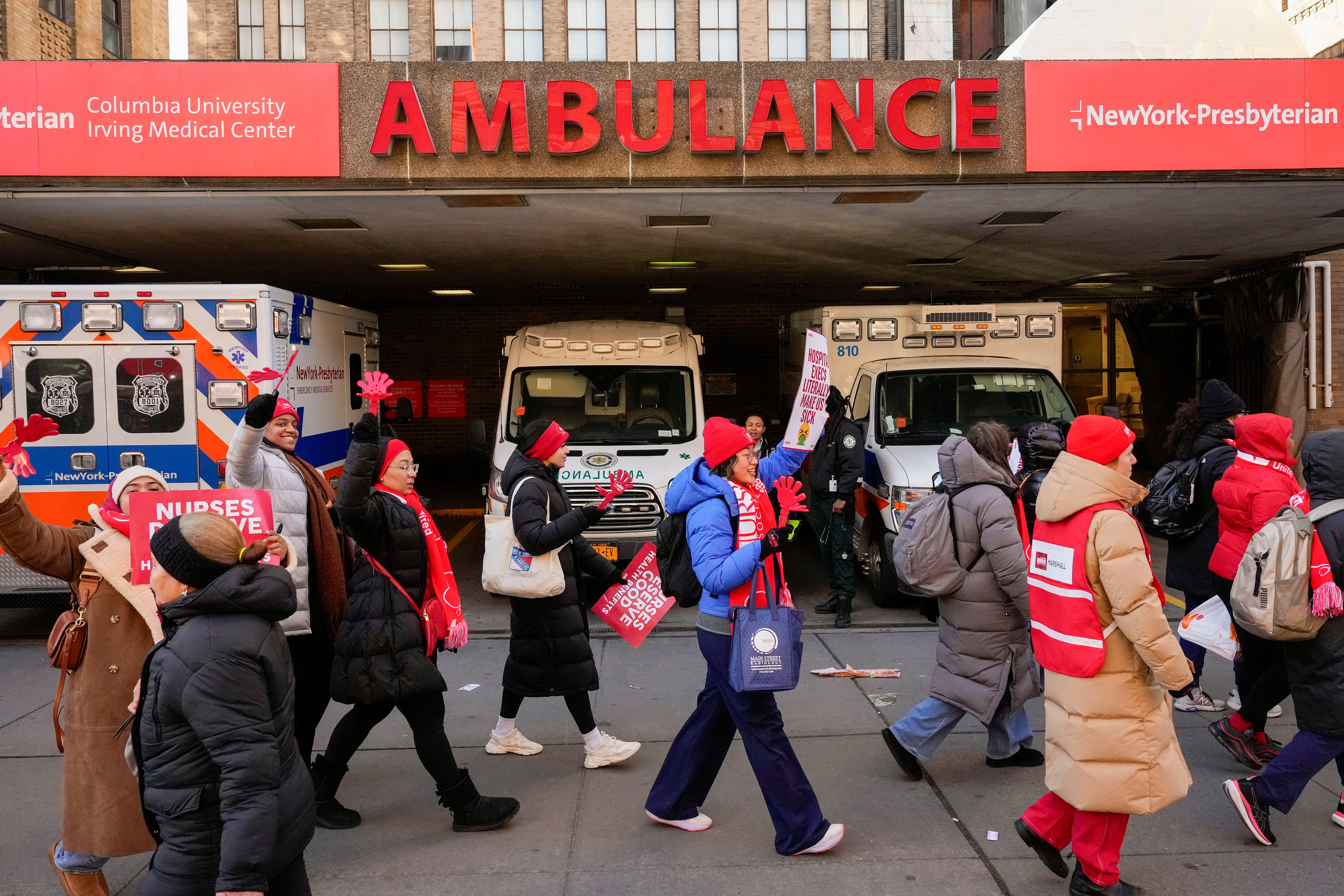
Amid the wintry winds that batter Manhattan in January, some 10,500 nurses found themselves on picket lines instead of hospital wards. By the time Montefiore and Mount Sinai, two of New York’s largest hospital systems, inked tentative agreements with their nurses, some strikers had weathered nearly five weeks of demonstrations and heated negotiations. The third major system involved, NewYork-Presbyterian, remains at an impasse, with 4,200 nurses still holding out, underscoring how fraught—and consequential—these disputes have become for the city that never sleeps.
The news is straightforward. On January 12th, nearly 15,000 members of the New York State Nurses Association (NYSNA) walked out, demanding better staffing levels, workplace protections, and pay rises after talks with management stalled. Now, Montefiore and two Mount Sinai hospitals—Morningside and West—have struck provisional deals. These would secure a 12% pay bump over three years, enhanced protections against workplace violence, guarantees for healthcare benefits, explicit staff safety standards, and—tellingly—limitations on the use of artificial intelligence in patient care. The unions’ rank and file must still vote to ratify the agreements, a prospect leaders hint is likely.
Should these votes pass, thousands of nurses will soon return to Manhattan, the Bronx, and beyond. The sticking point at NewYork-Presbyterian, say union representatives, is safe staffing: the make-or-break issue determining whether a single nurse supervises ten patients, or merely six. Managers there claim they have accepted an outside mediator’s proposal and implore the union to follow suit. But for now, lines of red-scrubbed nurses remain ensconced outside the hospital’s stately Columbia campus.
For New Yorkers, whose faith in their public services is often shaken, the tentative deals hold practical import. Nurse staffing levels are more than a technical detail: studies link them directly to outcomes such as infection rates, patient complications, and even mortality. The city’s emergency departments—already groaning under record patient loads this flu season—have reported longer waits and occasional ward closures during the strike. Budget-conscious as ever, New York’s hospital administrators now must reckon with the costs of higher pay, safer staffing, and stricter protocols—without simply passing these on to patients or gutting other essential services.
The outcome also reverberates outside of the inpatient wards. For one thing, New York’s nurses are part of a national tide: strikes and near-strikes have increased among healthcare workers from California to Minnesota. Mount Sinai’s new contract, with its explicit limitations on AI deployment, sets an early benchmark in a sector bracing for technological disruption. A nurse’s protest placard—“Safe patients don’t come from software”—may soon come to look less like sloganising and more like anticipatory regulation.
The political implications are not lost on local politicians or would-be union leaders elsewhere. Governor Kathy Hochul, whose office found itself the destination of marching nurses in week four of the strike, will be wary of being seen as dismissive of working-class professionals, especially as wage inequality becomes fodder for city and state elections. Meanwhile, administrations of hard-pressed hospitals across America will dissect New York’s contracts for signs of overreach—or replicable compromise.
The ripple effect of New York’s hospital labour dispute
Economic implications, as always, remain mixed. City analysts reckon the new contracts will cost the hospitals tens of millions over their course—paltry perhaps to the sprawling budgets of these institutions, but meaningful when many face razor-thin operating margins. Payouts, especially for extra staff and improved security, may squeeze capital budgets and test insurance reimbursement models. Yet if safe staffing reduces costly medical errors or staff turnover, some expenses may be offset over time.
For society, the symbolism runs deeper. The nurses’ resolve, especially under harsh weather and risk of employer retaliation, suggests a bracing reassertion of professional autonomy. Where other public-sector unions struggle, NYSNA has revived the traditional craft unionist’s lexicon—patient safety, professional dignity, non-automation—rather than mere wage gripes. This hints at a renewed appetite for industrial action among skilled workers nationwide, especially in sectors labelled “essential” during crises like covid-19.
Globally, New York’s struggles mirror those in cities from London to Melbourne, where nurses decry burnout, staff shortages, and artificial intelligence incursion. The city’s deal may be studied as a cautionary tale or a model, depending on one’s vantage. New Yorkers, not famed for patience with inefficiency, may complain about higher healthcare costs but will be less forgiving of subpar care; the balance between the two is delicate, and nowhere yet mastered.
What, then, should we make of this tentative truce? If ratified, it would represent an incremental, not a puny, victory—for nurses, patients, and, ultimately, the city. Raising pay while insisting on enforceable staff ratios and safeguarding against AI overreach signals canny bargaining on the union’s part. For hospital managers, who accepted a mediator’s intervention rather than risk extended disruption (or worse press), the agreements offer a manageable, if not buoyant, way out of reputational jeopardy.
Nevertheless, the episode exposes the fragile underbelly of American hospital care. Reliant on slim margins, repetitive federal bailouts, and a workforce at its breaking point, New York’s hospital systems risk future paroxysms if structural concerns—especially chronic underfunding and talent shortages—are not addressed. Politicians must resist the urge to meddle for quick wins, instead seeking scalable solutions that value both fiscal prudence and clinical outcomes.
In the end, the city that sees itself as a bellwether for American life is again a test case. If New York’s compromise holds, it will show how, in an age of soaring expectations and stubborn resource limits, work stoppages can yet yield results without tipping systems into chaos. But the lesson is not one of triumphalism—it is of the vigilance required to keep essential services staffed, safe, and, occasionally, even a little bit humane. ■
Based on reporting from El Diario NY; additional analysis and context by Borough Brief.