New York Could Tap City-Owned Air Rights for Billions and a Housing Boost
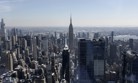
As New York faces twin crises in housing and public finances, a rethink of how it deploys billions in “air rights” above city property may prove unexpectedly lucrative and transformative.
On a cold Tuesday in January, the New York City Council quietly received figures suggesting the city faces a projected $7.1bn budget shortfall by 2027. Meanwhile, over 70,000 New Yorkers sleep in shelters each night—a record high, set against a backdrop of sky-high rents and an anaemic pipeline of new affordable homes. The city’s budgetary and housing woes, woven together like the steam and scaffolding that define its streets, have left officials and advocates desperate for solutions that avoid the usual diet of tax hikes and service cuts.
Into this fraught context comes a wryly simple suggestion: why not mine the value floating, quite literally, above our heads? The untapped asset in question is the city’s “air rights”—the ability under zoning rules to build higher than what currently exists on a parcel of land. For decades, these rights have languished, hobbled by arcane rules restricting transfers to only immediate neighbours, rendering much of their potential moot.
Andrew Rasiej and other advocates now argue for a wholesale shift. They envision a centralised City-run program to pool, market, and sell these unused development rights above city-owned buildings, much as the city once did to rescue its Broadway theatres. Proceeds would, in theory, address both urgent housing needs and the gnawing fiscal gap. This is no fringe notion. In the early 1990s, at the height of Manhattan’s developers’ zeal, the city carved out a Theater Subdistrict. There, distressed venues could flog their development rights to a broader stretch of Midtown, generating millions for cultural preservation while funnelling high-rise ambition to appropriate lots.
Applied more broadly, the returns could prove gargantuan. By some reckonings, city-owned air rights—spread across ageing libraries, firehouses, police precincts and public buildings—could fetch billions if untethered from their current geographical shackles. The city would not merely be selling vapours. Developers, hungry to go higher in select districts, would pay handsomely for the legal means to do so, particularly where market demand for density is buoyant.
Oversight is paramount if these sales are to do more than pad the general fund. Advocates urge that proceeds be ring-fenced for building deeply affordable housing—precisely the category imperilled by fiscal austerity. Temptations abound, however, for City Hall to patch potholes rather than pursue structural reform. The woeful recent history of the 421-a tax abatement, initially crafted to spur affordable housing but often commandeered for luxury towers, is a cautionary tale.
There are further second-order benefits. Federally, the city’s move could serve as a pilot for other metropolises with similar vertical ambitions and fiscal dilemmas—Chicago and San Francisco spring to mind. Locally, it may stave off more unpopular alternatives: layoffs of first responders, further shelter closures, and deeper library cutbacks. Indeed, New York’s entire model of government—predicated on a vibrant tax base and robust service provision—looks brittle as rising costs, diminished pandemic-era federal aid, and demographic churn threaten to undermine the city’s solvency and social contract.
A more active market in air rights is unlikely, by itself, to alter the city’s political weather. Community boards, often allergic to new density, may object. Some preservationists fear the shadow—and literal shadows—cast by ever-taller towers on their surroundings. The city’s Byzantine zoning code itself presents stubborn obstacles; it has resisted wholesale change for decades, typically succumbing to piecemeal exceptions rather than rational overhaul.
Lest this seem unduly utopian, New York’s modest pilot programs offer warning and encouragement in equal measure. The Midtown East rezoning, for instance, has permitted Grand Central Terminal to sell its own air rights citywide—unlocking some hundreds of millions, but not without fierce litigation and years of delay. Yet, the experience proves that, with political will and transparent redistribution of proceeds, such approaches need not devolve into sweetheart deals for connected developers.
Unshackling value from the sky
Comparisons to other metropolises suggest that New York is, if anything, late to this pecuniary party. London has long monetised “right to light” claims, and Hong Kong’s government is a dab hand at extracting value from high-rise density, albeit with less attention to affordability. New York’s proud tradition of leveraging public assets for social gain—think the High Line, or the sale of taxi medallions—has sometimes delivered windfalls but also produced inequalities when not paired with oversight.
What distinguishes the air rights proposal is its promise to link new market value creation directly to the twin goals of housing security and fiscal stability. Done well, it is a financing tool that both does good and does well by the city’s own bottom line.
Scepticism remains well-advised. Every dollar fetched by this scheme would be one dollar some developer does not mind spending—a transfer tax on ambition, as it were. Setting the right price, allocating funds transparently, and ensuring that the bonanza is not frittered away on patchwork instead of long-term investments will not be easy. It portends a test not just of policy acumen, but of civic discipline.
Faced with budget vertigo and a mounting housing crunch, New York can ill afford timidity or endless study commissions. The necessary tools are at hand; what is lacking is less engineering know-how than political nerve and administrative follow-through. As city hall revisits every class of revenue and outlay, the notion that billions could be conjured from the city’s skyline deserves more than a passing glance.
New York’s perennial challenge is to make scarcity the mother of ingenuity rather than despair. The sky may well be the limit—for both growth and the wherewithal to pay for it. ■
Based on reporting from City & State New York - All Content; additional analysis and context by Borough Brief.