New York’s Gas Habits Keep Power Bills High While Utilities Profit, CLCPA Stalls
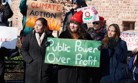
As energy bills soar and climate law wavers, New York City’s dependence on fossil fuels highlights the stakes of an urgent shift in energy policy.
Freeze-thickened puddles along Broadway mirrored a bracing reality this past January: as thermometers plunged, so did New Yorkers’ bank balances. Even in Manhattan’s prosperous enclaves, an arctic blast translated into punishing spikes in gas and electric bills—a burden felt most acutely by the city’s working-class outer boroughs. The political chill has proven just as biting. In Albany, a pivotal state climate law faces potential dilution even as energy affordability verges on crisis.
The root of New York’s energy malaise is plain: dependence on fossil fuels, notably imported oil and gas, exposes the city to volatility far beyond its control. New York State spends nearly $50bn each year importing fossil fuel energy, a line item with disquieting fiscal and environmental consequences. In recent months, geopolitical turmoil—the United States and Israel’s military actions in Iran—has whipsawed oil and gas markets, amplifying the city’s exposure to global shocks.
Many New Yorkers are now unable to pay their bills. Over a million households statewide are behind by at least two months, collectively owing $1.8bn in unpaid utility charges. The confluence of increased global demand, aging delivery infrastructure, and price spikes has pushed the cost of basic household heat out of reach for a growing share of the population. Not incidentally, between 2018 and 2024, New York households used 18% less gas but paid 6% more each year on average—a perverse outcome echoing the law of unintended consequences.
At the eye of the storm sits the state’s ambitious Climate Leadership and Community Protection Act (CLCPA), passed in 2019 and widely touted as among the boldest in America. Its target: a carbon-neutral grid, cleaner air, and ultimately lower energy bills. In theory, the CLCPA breaks the old “ratchet effect” of ever-rising charges for both ratepayers and taxpayers. The logic is elegant; the politics, less so.
Governor Kathy Hochul’s recent flirtation with easing the CLCPA’s strictures portends further uncertainty. Despite a mandate to decarbonise, the administration continues to support new natural gas developments, citing “affordability” and “resilience.” The irony seems lost on nobody. After all, it is precisely this dependence on fossil fuels—fortified by decades of utility lobbying and infrastructure expansion—that now pins New Yorkers between the Scylla of global price shocks and the Charybdis of unaffordable bills.
Consider the utilities: in the last decade alone, gas-system assets doubled from $17bn to over $37bn as companies poured more than $1bn annually into expanding and repairing pipelines, much of them notoriously prone to leaks. Utilities, whose profits are pegged to infrastructure investments, have little incentive to accelerate a transition toward cleaner sources; the status quo, for them, is lucrative. Residents, meanwhile, shoulder ever-rising delivery charges that have become nearly as onerous as the energy itself.
Second-order costs ripple outward. Small businesses across Queens and Brooklyn, already struggling with pandemic aftershocks, face thinner margins as heating and cooling bills shoot upwards. The city’s putative climate leadership falters as “electrify everything” policies remain stuck in permitting bottlenecks and procurement snafus. The longer New York delays a transition to local, renewable generation and robust public power, the more it stands to lose—not just in climate terms, but in global competitiveness and social stability.
The wider stakes: lessons from elsewhere and the politics of inertia
Other American cities offer instructive contrasts. Seattle and San Francisco—both with more assertive public utility models—have seen steadier energy prices and smoother progress toward renewables. European capitals, too, have weathered recent global gas tremors with a measure of resilience, having prioritised diversification and grid modernisation a decade earlier. New York, for all its vaunted ambition, finds itself unusually vulnerable: beholden to distant energy producers and utilities whose interests are entangled with infrastructure inertia, not green transition.
The oil and gas companies, for their part, wage a campaign of obfuscation, blaming the nascent (and yet-fully-unimplemented) climate law for price hikes. This, too, is misleading. The bulk of today’s cost increases stem from long-standing dependence on legacy fuels and a financing system that encourages ever-more capital sunk into pipes rather than progress. That the CLCPA remains scapegoated for unaffordability, while the real culprits collect guaranteed returns, is a triumph of messaging over math.
If ever there were a moment for data-driven pragmatism, it is now. The evidence is unambiguous: reducing exposure to volatile global fuel markets is, in the medium term, the surest route not only to climate resilience but to stabilising energy bills for all. Forking yet more billions into leak-prone infrastructure not only defers decarbonisation—it compounds consumer pain, all while entrenching the market power of incumbent utilities.
To be sure, the transition is neither easy, nor costless. Upgrades to housing stock, grid-scale battery storage, and workforce retraining all come with a hefty price tag. But history suggests that retreating from bold policy may prove still dearer, both in squandered economic opportunity and compounding household distress.
Ultimately, the city’s energy predicament bodes ill for both its budget and its residents’ wellbeing. It may be tedious to say so, but the longer New York cleaves to fossil imports, the more it courts further social tension and fiscal loss. Ambitious climate law, paired with stiff regulatory resolve and a dash of fiscal creativity, remains the best hope for breaking the cycle.
A city that once tamed the gridiron of steel and steam should not be paralysed by pipes and profit margins. If New York wishes to lead, it must look past the short-term chill—and invest in the warmer prospect of a homegrown, affordable energy future. ■
Based on reporting from City & State New York - All Content; additional analysis and context by Borough Brief.