Nine Million Older New Yorkers Forfeit Billions in Federal Aid We Seem to Forget Exists
Millions of older New Yorkers are forfeiting billions in benefits, laying bare the persistent shortcomings of America’s social safety net in the city that never sleeps.
On a humid spring afternoon, as dark clouds threaten another tempest over the Bronx, almost half a million New Yorkers above the age of 65 will make anxious choices: whether to skimp on groceries or forgo a prescribed medication. If statistics from the National Council on Aging (NCOA) hold, more than one in three elderly New Yorkers are quietly losing out on federal aid expressly designed to help with such basics.
A sobering new analysis released on May 19th by the NCOA and the Urban Institute reveals that more than 9 million older adults nationwide—including a hefty contingent in New York City—are failing to access $58 billion in unclaimed federal benefits. The shortfall encompasses monthly supports such as the Supplemental Nutrition Assistance Program (SNAP), Supplemental Security Income (SSI), and Medicare Savings Programs, which collectively stand between millions of seniors and far deeper deprivation.
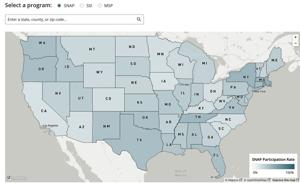
The numbers are as stark as the city’s brownstone shadows. According to NCOA’s freshly updated Benefits Participation Map, households headed by someone aged 60 or above could be missing out on an average of $188 per month in SNAP benefits, $552 in SSI, and $165 towards Medicare costs. For a senior scraping by on $20,000 a year—or less, as is the case for many retirees in the five boroughs—such support could spell the difference between a healthy meal and an empty fridge.
The reasons for this “participation gap” are plain but stubborn. Many older New Yorkers either do not know that they qualify for these programmes or, thanks to the persistent myth of prohibitively complex red tape, assume they will be denied. In the background hums a pervasive bureaucratic haze: eligibility guidelines shift year to year, and application forms can resemble ancient theological tracts in their opacity.
The implications for New York are manifest. A city where 1.7 million people—roughly one in five—live below the poverty line cannot afford to have its social safety net function as little more than a theoretical construct. For City Hall, the figures portend mounting strain on social services and a fresh crop of budget headaches, as older adults with unmet needs increasingly turn to publicly funded emergency rooms, food pantries, and crisis shelters.
When these gaps go unaddressed, the second-order effects multiply. For every dollar in federal benefits forsaken by seniors, the city is tacitly asked to shoulder further economic and health burdens. The NCOA cites sobering longitudinal research: in America, older adults surviving on $20,000 or less per year have a life expectancy nine years shorter than their higher-earning peers. That difference in lifespan translates not only into personal tragedy but into a quietly ballooning bill for Medicaid, city health departments, and the already groaning infrastructure of elder care.
New Yorkers, notoriously self-reliant, are not alone in their struggle to access aid. But the city stands out for its daunting cost of living and its tangled, multilingual tapestry of neighborhoods—Caribbean seniors in Crown Heights, Russian-speaking pensioners in Brighton Beach, homebound elderly Jews on the Upper West Side—all of them at risk of slipping through administrative cracks due to language, mobility, or technology barriers.
The national context is instructive, though scarcely inspiring. Much of America is grappling with the legacy of patchwork benefit systems, each with its own eligibility quirks and an over-reliance on online application portals. Whether in Queens or Wichita, digital literacy remains a formidable obstacle for the oldest Americans—and recent data suggest that the aggregate value of unused benefits has scarcely budged in the last decade. The gap between the eligible and the enrolled is nowhere a uniquely New York problem.
A city that pays dearly for inaction
Still, in Gotham, the stakes are dauntingly high. For municipal planners, the forfeiture of nearly $58 billion in national benefit dollars represents more than a paltry missed opportunity—it leaves the city’s elderly at the mercy of inflation and the housing crunch, as well as jeopardising the stability of intergenerational households. Even local businesses suffer: every unspent SNAP dollar is a lost grocery store sale; every unclaimed Medicare premium means a doctor is less likely to see a patient before disease advances.
There are, admittedly, reasons for hope. The NCOA’s push for tools such as BenefitsCheckup.org, which aims to demystify eligibility and streamline enrollment, suggests the nonprofit sector is at least nimble. So, too, do recent partnerships between libraries, community centres, and healthcare providers to educate seniors in multiple languages—initiatives as emblematic of New York’s adaptability as its perennial street corner chess matches.
Yet the city’s political class, ever prone to grand gestures, has historically been slow to invest meaningfully in direct outreach or to lobby for the federal administrative changes that would reduce friction in sign-ups. Such inertia is an extravagance New York can ill afford. With a rapidly ageing population—by 2030, nearly one in five city residents will be 65 or older—the time to modernise and automate benefit enrollment is now, not some hazy future electoral cycle.
Globally, some cities have done rather better. In Tokyo and Seoul, for instance, universal social insurance schemes and streamlined benefit delivery have kept older poverty rates markedly lower than in most American megacities. The lesson is clear: complexity aids no one; simplicity, on the contrary, pays dividends both civic and economic.
We reckon that closing New York’s participation gap would not only save lives but inject cash into the city’s beleaguered neighborhoods—while honouring the dignity of those who built the metropolis in the first place. The missed billions are not an abstraction; they are the price of inertia, writ large in the daily trade-offs of the city’s oldest generation.
New York, as ever, stands at a crossroads: keep letting paperwork and complexity shred its social fabric, or opt for reforms that are long on pragmatism and short on bureaucratic foibles. For the sake of both thrift and compassion, we favour the latter.
■
Based on reporting from www.qchron.com - RSS Results of type article; additional analysis and context by Borough Brief.