Nine New Brooklyn and Manhattan Restaurants Join Michelin Guide, Mexican Fare Leads the Pack
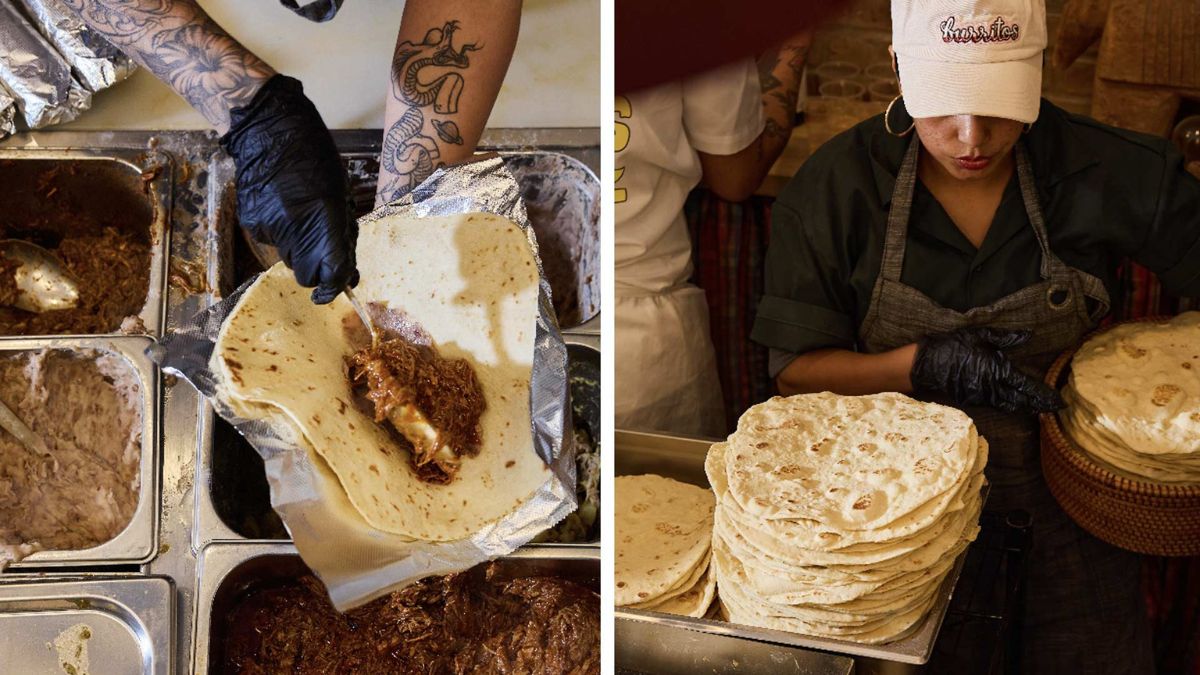
The latest Michelin nod to nine New York restaurants offers a snapshot of a city whose appetite for culinary innovation remains as insatiable as its rents.
New Yorkers boast an unflagging hunger for the new—so it is fitting that the city’s dining scene, whose puniness notoriously belies its influence, continues to draw global acclaim. This month, nine restaurants, from sleek wine bars in Manhattan to taquerías in Brooklyn, made their debut in the august pages of the Michelin Guide. The additions—Los Burritos Juárez, Vato, Elcielo, Bong, Hwaro, Entre Nous, I Cavallini, Le Chêne, and Ensenada—are as notable for their stylistic span as for their geographies, marking yet another evolution in the city’s endless culinary rotation.
For borough chauvinists, there is fodder aplenty: Brooklyn and Manhattan dominate the new roster, with each establishment bringing distinct talent into sharp relief. Mexican-inspired fare commands particular attention. Los Burritos Juárez, a taquería channeling the border flavors of El Paso and Ciudad Juárez and offering a short, rigorous menu, is joined by Vato, a tortillería by the team behind the Michelin-starred Corima. Italian, Colombian, Asian, French, and Californian cuisines round out the roll call, ensuring that, for those who eat to the beat of the city’s patter, novelty continues to abound.
At first glance, the Michelin anointing signifies little more than validation for ambitious chefs and a (modest) uptick in the bookings ledger for the lucky restaurateurs. But such nods reverberate well beyond the kitchens. For New York, whose hospitality sector employs roughly 300,000 and whose restaurant spending totalled some $21 billion in 2023, the Guide’s annual selections act as a barometer for industry shifts and, by extension, city life itself. The signal is clear: diversity remains NYC’s prime ingredient.
This year’s list features more than haute temples of expense-account dining. Elcielo’s modern Colombian tasting menus, Bong’s convivial Cambodian shared plates, and Hwaro’s Korean-French hybrid exemplify the city’s embrace of fusion, the hybrid, and the unclassifiable. These are not the stuffy haunts of yore, but approachable—if not always affordable—spaces that can accommodate both the celebratory clamor of groups and the solo diner’s quiet reconnaissance.
Such trends bode well for the metropolis’s status as an international culinary capital, but they also underscore the city’s ongoing evolution from old-guard French stalwarts to bastions of inventive, border-leaping fare. Le Chêne’s nod to classical French techniques is a rarity among the newcomers, making its inclusion all the more deliberate. Otherwise, diners are encouraged to gambol through an array of flavor profiles: Italian sophistication at I Cavallini, natural wines and contemporary cooking at Entre Nous, and the Californian-inspired Ensenada, which earns praise for pairing an intimate setting (embellished by a copper bar and wall of wine bottles) with an accessible sensibility.
On a practical level, these accolades are a salve for restaurateurs facing daunting economics. The buoyant recovery in foot traffic since the pandemic’s nadir offers hope, yet profit margins remain paltry. Rents in Brooklyn and Manhattan have spiked to pre-pandemic levels, and labor costs creep upward. A Michelin mention, for all its subjectivity, can mean the difference between survival and oblivion—particularly for smaller, chef-driven operations whose balance sheets leave little room for error.
A Michelin star’s double-edged effect
The downside, as seasoned operators know, is that Michelin recognition can be a poisoned chalice. Increased attention brings greater scrutiny; expectations ratchet upwards. In some quarters, a star portends gentrification, higher prices, and an exodus of the loyal neighborhood regulars who nurtured the business from inception. Even so, for every cautionary tale, there is a counterfactual: greater visibility encourages ambitious cooks to persevere in New York rather than decamping to more forgiving markets.
Beyond the five boroughs, New York’s tally stands tall against the country’s other food meccas. While the West Coast boasts a handful of lauded spots in the Bay Area and Los Angeles, and Chicago nurtures its own fine-dining elite, no American city matches New York for sheer volume, variety, and—crucially—spirit of reinvention. Globally, it still bargains with Paris, Tokyo, or London for culinary dominance, though the metrics differ and the Guides’ criteria remain opaque.
One factor lingers in the background: the structure of guides themselves. The Michelin imprimatur, devised with European palates in mind, is not immune to accusations of bias or irrelevance. Some innovative chefs spurn the star system, reckoning it stifles creativity and rewards rote luxury over genuine verve. Even so, for immigrant-led kitchens and genre-blurring culinary teams, the Guide’s slow pivot toward inclusivity is no trivial gesture.
What of the broader impact on diners? For the majority, these restaurants—many offering entrées for less than $30, despite the city’s trend toward $100 feasts—will serve as aspirational, rather than everyday, destinations. Yet the trickle-down is real: successful concepts beget copycats, encouraging landlords and investors to take risks. The persistent churn of the city’s foodscape—so often lamented—remains, perversely, its greatest resource.
Ultimately, Michelin’s latest list reflects, more than anything, New York’s resilience. The city’s kitchens operate with relentless improvisation, hedging against rising costs and shifting tastes. But as these nine newcomers demonstrate, ambition, when allied with invention and tradition, still pays in the currency of reputation—and, if fortune holds, in dollars as well.
Whatever the quibbles regarding subjective selection or the elitism of star culture, the simple fact holds: as restaurants close and open at a rate matched only by subway delays, the appetite for newness in this city appears unquenchable. New York’s tables remain crowded not only with diners, but with ideas, nationalities, and the hope that the next great meal is never far away. ■
Based on reporting from El Diario NY; additional analysis and context by Borough Brief.