NYC Braces for June Heat and Air Alerts, Relief Slated to Arrive Thursday
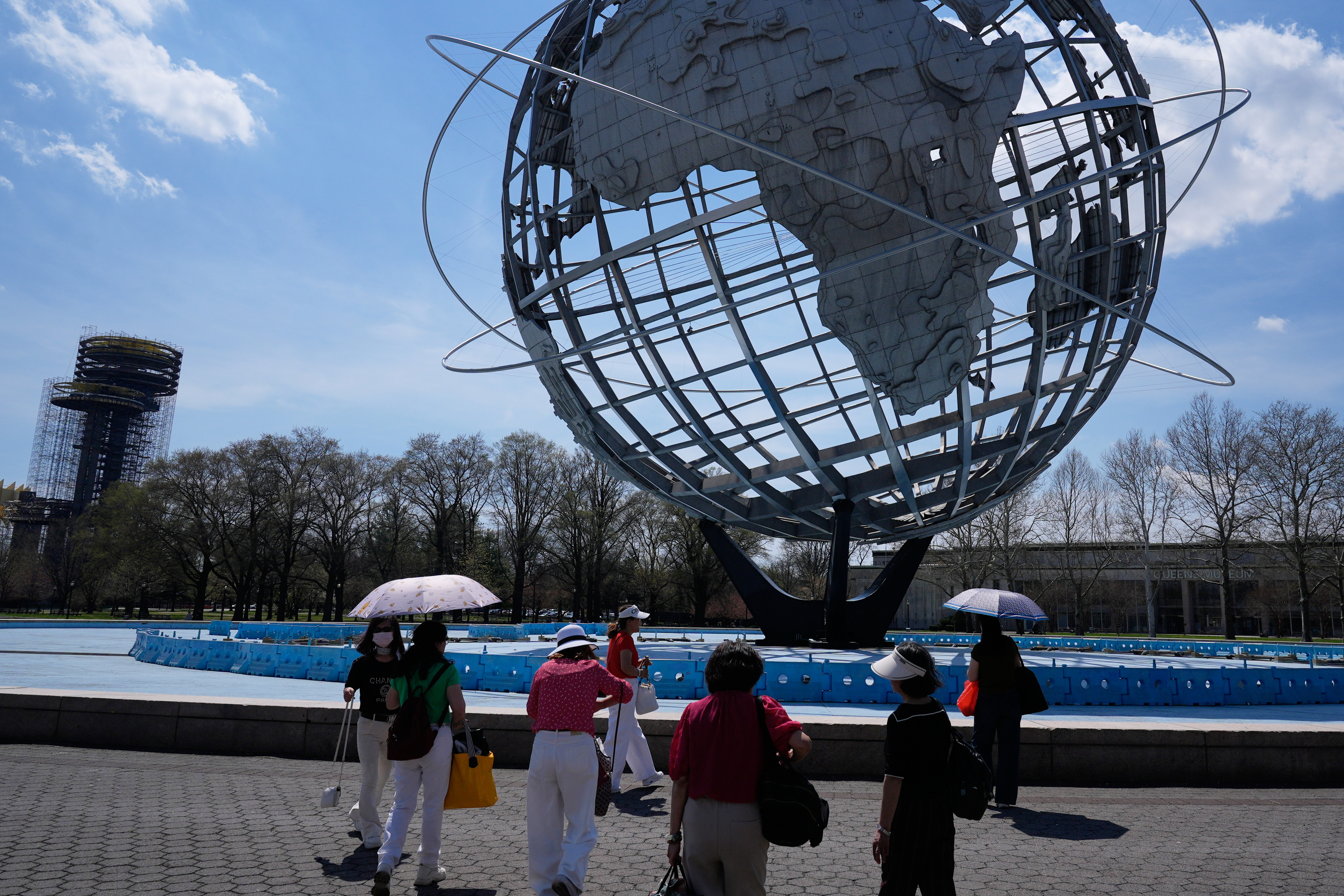
As New York City broils under its first major heatwave of the season, familiar questions about urban preparedness and public health surface with renewed urgency.
New Yorkers, never strangers to atmospheric drama, entered the third week of May with temperatures climbing toward a stifling 95°F (35°C). Humidity hung heavy over the city’s streets, sparing neither Brooklyn joggers nor Midtown office tourists. Meteorologists at Accuweather warned that Tuesday might well be the hottest day of 2026 so far—a dubious milestone, but not one without precedent in a city where the climate narrative grows ever more feverish.
The facts are plain: starting Sunday, the city has endured successive days of oppressive heat, with maximum temperatures hovering around 91°F (33°C)—but feeling considerably hotter. Authorities from the New York State Department of Environmental Conservation responded by issuing air-quality alerts across all five boroughs and neighbouring counties, warning that ground-level ozone could drive the Air Quality Index (AQI) above the cautionary threshold of 100.
Heat advisories and AQI warnings are now familiar signposts of the city’s late spring. Large swathes of the population—children, the elderly, and those with respiratory sensitivities—have been told to limit strenuous outdoor activity. For some, relief is close at hand. Forecasts point to a cold front sweeping in by Thursday, sending daytime highs plunging by as much as fifteen degrees, with rain likely to wash away the worst of the heat by the weekend.
But such meteorological whiplash does not arrive without consequence. New York’s swelling summer population, buoyed by returning tourists and the gradual reanimation of post-pandemic office life, places the city’s infrastructure under perennial stress. As temperatures spike, so too do calls for emergency services: history suggests the city’s roughly 1,700 cooling centers will be put to the test, while the demand for electricity to power air conditioners is likely to strain the already creaky grid operated by Con Edison.
Beyond immediate discomfort, the episode portends grimmer, long-term trends. Heatwaves in New York are arriving sooner and lasting longer. The city’s health department already attributes about 350 premature deaths each year to extreme heat and exacerbated air pollution—a toll that could rise as climate volatility intensifies. Inequities in housing and access to green spaces only worsen the burden on lower-income New Yorkers, who are more likely to live in treeless, sunbaked neighborhoods.
The economic effects, though harder to parse than hospital admissions, accumulate quietly. Productivity drops as outdoor labor becomes riskier, with delivery drivers and construction workers facing hazardous midday conditions. Retailers and restaurants, especially those without robust cooling or outdoor space, see customer counts plummet during heat spikes. Public-sector costs rise, too, as city agencies staff up cooling centers and emergency rooms brace for predictable surges.
Political reactions tend to arrive as quickly as the cold front. City Hall and Albany are eager to demonstrate responsiveness—dispatching social media advisories, extolling the virtues of shade, hydration, and caution. But critics allege that such measures are patchwork responses, belying chronic underinvestment in green infrastructure (think urban tree-planting) or truly resilient designs for social housing. Efforts to expand cool shelter access or mandate lower indoor temperatures routinely founder on budgetary shoals.
There is, of course, a global context to New York’s climatic travails. Heatwaves are striking earlier and harder across much of the northern hemisphere—in Delhi and Madrid, recent May records have fallen. Coastal megacities fester with parallel challenges: aging energy infrastructure, spatial inequality, and governments grappling for solutions that are swift, scalable, and affordable. Tokyo’s early-summer heat plans now include mandatory cooling breaks for outdoor workers; Paris has invested heavily in “cool islands”—urban oases with water, shade, and respite.
How cities adapt, and how soon, is decisive both locally and beyond
Comparisons are humbling for New York. The city’s Million Trees planting goal, launched in 2007, fell short of permanently reversing the urban heat island effect. The city’s Climate Resiliency plans are ambitious on paper—witness the 2022 Heat Action Plan—but progress is incremental, and large sections of the Bronx and outer boroughs lag in both adaptation and investment. National climate policy, meanwhile, remains a patchwork, prone to delays and Congressional bickering. Even so, New York’s blend of density, diversity, and deep pools of civic talent provide a foundation from which new models might yet emerge.
The lesson, if there is one, is that heat is not merely an inconvenience, nor air quality a seasonal afterthought. Both are acute policy challenges that can be neither shrugged off nor solved by individuals alone. Even as the temperature abates, the city will be wise to regard such episodes not as aberrations, but as invitations to redesign public life—socially, economically, and physically—for a warmer age.
The city’s response this week, a mix of public alertness and urban stoicism, is reasonably robust as far as it goes. Yet without sustained investment, creative policy, and a recognition that heatwaves are now standard fare, New York risks ceding both comfort and competitiveness as summers grow longer. The city that never sleeps cannot afford to swelter in complacency. ■
Based on reporting from El Diario NY; additional analysis and context by Borough Brief.