NYC’s $125 Billion Budget Spares Services, Targets Luxury Property Taxes Over Broad Hikes
New York’s latest budget proposal shifts the fiscal burden upward, sparing ordinary property owners in favour of taxing its richest denizens—a political gamble with national resonance.
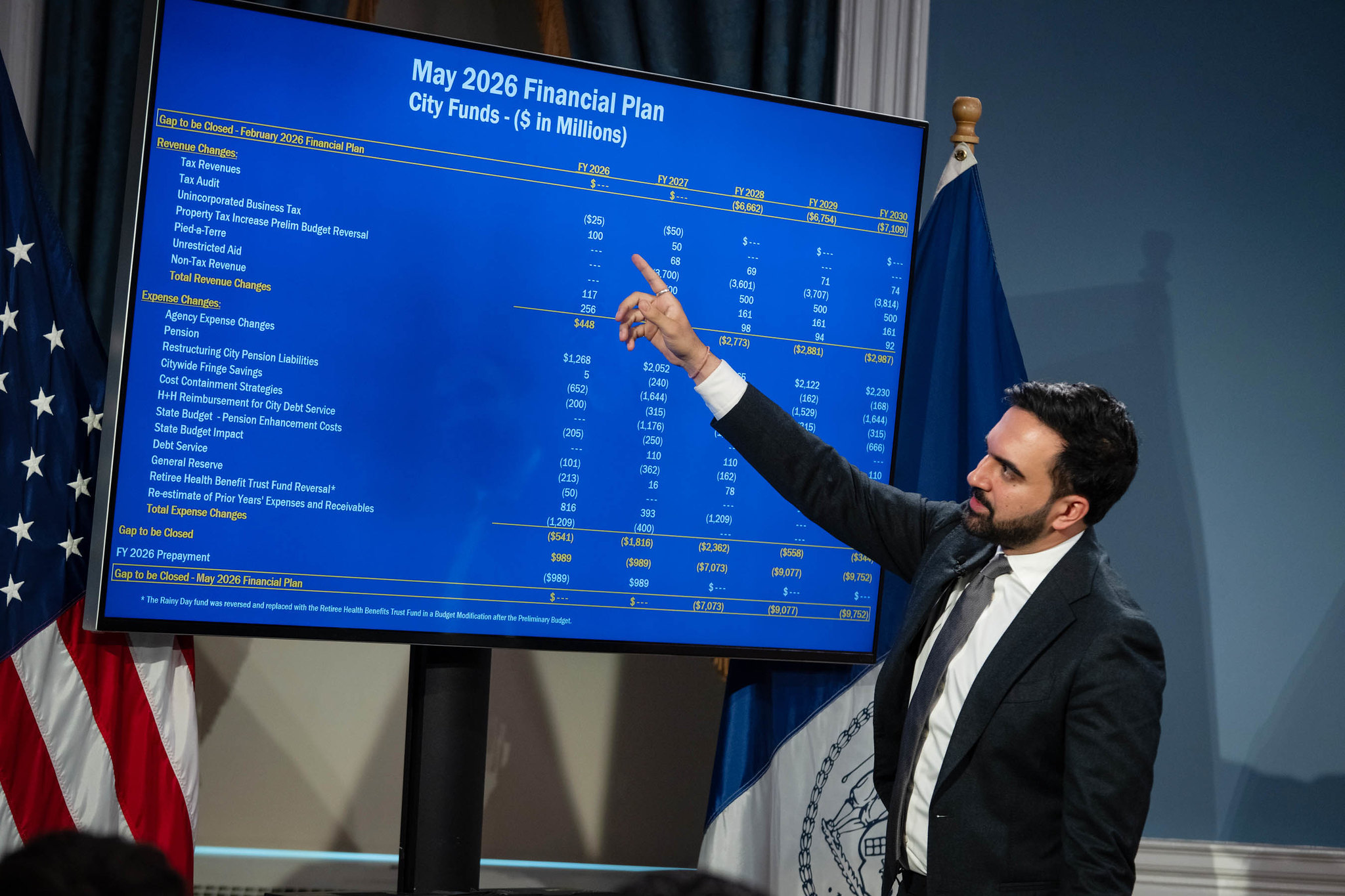
No city in America collects property tax with the avidity of New York, ringing up some $31bn annually—until now, a levy spread broadly across its five sprawling boroughs. On June 4th, Mayor Zohran Mamdani unveiled his executive budget for the 2026-27 fiscal year, countering tradition and expectation. Rather than raising property taxes for all (to the dread of homeowners and small businesses), he is championing new, targeted taxes on the city’s wealthiest, alongside administrative trims and state largesse. For a metropolis facing a staring deficit of $12bn—its heftiest since 2008—this is less a tweak than a tectonic realignment.
The mayor’s $124.7bn plan, already enjoying apparent consensus from the City Council, paints itself as a manifesto for the working class. Programs long on the austerity chopping block—public housing, childcare, school funding, and library services—are instead set to receive meaningful infusions, in marked contrast to recent years of penny-pinching. The move, asserts Mr Mamdani, signals “a new era” of investment, not retrenchment, and eschews the “false austerity” he claims has impoverished the city’s social infrastructure.
The most headline-grabbing measure is the so-called “pied-à-terre tax,” aimed at absentee owners of luxury second homes valued above $5m. This levy alone is projected to raise $500m annually for municipal coffers, with an additional $68m to be wrung from curtailing the “UBT tax credit,” a break benefitting some of the city’s most gilded tax filers. In aggregate, these moves nudge New York’s tax regime towards something resembling a progressive ideal—piling up revenue without the political perils of hitting the average homeowner or strivers running small businesses.
The city claims to have closed its daunting deficit gap without slashing everyday services or raiding its rainy-day fund. Conspicuously, a chunk—$2.8bn—of the fiscal plug derives from what some reckon a one-off windfall: state aid, short-term pension savings, and other nonrecurring devices. Mark Levine, the city comptroller, is approving but also candid. The city, he notes, is still outspending its recurring revenues, even as tax collection reaches record heights. He lauds the pivot from broad-based property tax hikes to focused luxury surcharges, but eyes the cracks papered over by transient accounting solutions with a sceptical brow.
Beyond the ledger, the budget’s reordering of fiscal burdens is pregnant with broader consequence. Ditching universal property tax increments for a narrow soak-the-rich approach wins quick applause from working-class and progressive quarters. It signals political nimbleness—a rare commodity in a city where public unions, real estate lobbyists, and neighbourhood activists wield considerable clout and rarely agree. Yet there are risks: luxury taxes are notoriously volatile, their proceeds hostage to economic winds and the whims of a highly mobile, globalised elite.
Nor does this fiscal strategy operate in a vacuum. The city’s property tax base, the lifeblood of much urban spending, is famously Byzantine, riddled with carve-outs and inequities. Owners in Park Slope and Tribeca often pay lower effective rates than their counterparts in the Bronx or Jamaica, Queens. Relying ever more on the rich may satisfy immediate needs, but could further entrench perceptions of unfairness and tout up the perennial question: who really pays—and who ought to?
Luxury levies also echo last decade’s national debates. In 2019, Albany mulled a “pied-à-terre” tax, only to water it down under withering fire from real-estate groups and influential donors. Elsewhere, San Francisco and Vancouver have pioneered similar surcharges, only to find the wellspring not quite as deep as hoped. Mobile moguls seldom lack for accountants, lawyers, or private-jet escape routes. New York’s challenge, then, will be to compel compliance without driving the super-rich—or their dollars—shorewards to Connecticut, Miami, or further afield.
The pitfalls of progressive taxation
On one reading, Mr Mamdani’s approach is a case of prudent urban governance: blunt the harsh edge of fiscal retrenchment by squeezing the city’s most cosseted. The investments he proposes—in schools, public housing, vouchers, and care infrastructure—address glaring needs and bode well for the city’s most vulnerable. Yet the mayor’s budget, for all its redistributive flourish, is no panacea for fiscal sustainability. A heavy reliance on temporary revenue fixes and savings will, as Mr Levine warns, leave unsupported fiscal scaffolding when the next economic downdraft arrives.
New Yorkers, fiercely proud but keenly aware of their city’s fragility, would do well to temper jubilation with clear-eyed prudence. The social compact at the heart of city budgeting is delicate—even a buoyant market can tip abruptly. It is true that luxury taxes, if deftly administered, can stave off regressive levies; it is equally true that pinning fiscal health on a handful of ultra-wealthy taxpayers is a gambler’s bet.
Nationally, New York’s shift will be closely observed. Cities from Boston to Los Angeles are wrangling with similar pressures: swelling post-pandemic costs, eroding commercial tax bases, and calls for more—rather than less—public spending. If New York’s gambit bodes well, it may fortify the argument for targeted “soak-the-rich” taxation elsewhere. If it sputters, it will serve as a cautionary tale about the perils of chasing after ephemeral fortunes.
Ultimately, Mr Mamdani’s 2026-27 budget is more safety net than magic bullet. It is a wager on the resilience of both New York’s tax base and its social fabric. The challenge, as ever in Gotham, will be to balance ambition with arithmetic. If the city’s big spenders choose to pay, not flee, the next chapter may indeed belong to the working class. But if fortunes prove flimsier than forecast, or exit doors swing open too widely, the price of present equanimity will surely come due.
In matters fiscal, as in matters theatrical, the second act is often the trickiest. New Yorkers will watch the stage: if the city’s newly calibrated compact holds, it will mark an era-defining feat. If not, curtain calls may come sooner than the authors of this latest budget would wish. ■
Based on reporting from El Diario NY; additional analysis and context by Borough Brief.