NYPD and ICE Crack Down on Fake Work Papers as Arrests Spike in 2026
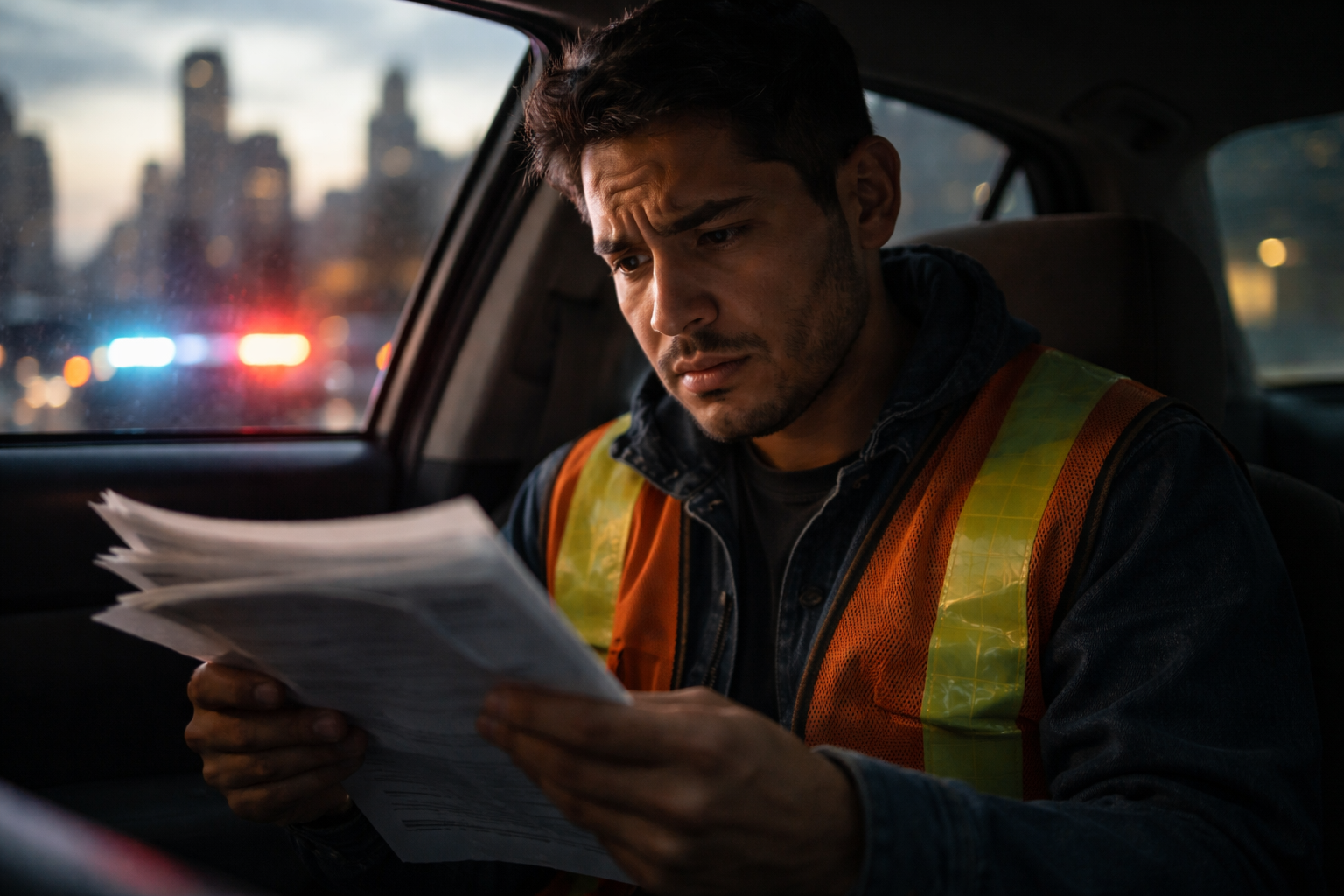
New York’s rising crackdown on fraudulent work documents exposes a deepening dilemma for the city’s undocumented workforce and its already-labour-hungry economy.
By the time the sun rises over the Bronx, the city’s ubiquitous workforce—comprising nurses, cleaners, bar staff, and construction hands—has already begun its invisible daily commute. Among them, perhaps half a million are undocumented immigrants, according to Pew and the Migration Policy Institute. For decades, these individuals have undergirded Gotham’s economy, often relying on forged papers to find work. But in 2026, that risky strategy has suddenly become far more perilous.
This year, New York has witnessed a sharp uptick in detentions related to the use of fraudulent documents. Data from the Deportation Data Project reveal that arrests of undocumented immigrants in the metro area have tripled in the first months of 2026, soaring past 1,200. Notably, mere possession or use of fake documents—previously overlooked unless coupled with prior offences—is now enough to prompt arrest, investigation, and in some cases, deportation.
Though the proportion of detainees actually deported remains subdued—about 16%, compared to higher historical levels—the breadth of enforcement points to a shifting landscape. For those caught, consequences have amplified: fines, summary removal, and bans on future legalisation bids. Immigration attorneys warn that today’s infraction can foreclose tomorrow’s green card, and even a minor misstep may yield lifelong repercussions.
This legal regime springs from the intertwining of local and federal mechanisms. At the federal level, possession or use of fake identity documents to obtain employment constitutes “immigration fraud,” prosecuted under statutes such as 18 U.S.C. §1546. The process is codified: employers must use Form I-9 to check work eligibility, and any falsification there—however minor—puts both bosses and employees squarely on Immigration and Customs Enforcement’s radar.
Despite this, demand for undocumented labour remains robust. Nationally, some 8 million undocumented migrants, roughly 5% of America’s workforce, fill jobs that many native-born workers shun—from cleaning to construction, from kitchens to farm fields. New York’s service and building sectors, in particular, remain dependent upon this invisible cohort. As the avenues for legal work diminish, employers and employees alike face a Hobson’s choice: obey the law and lose livelihoods, or risk criminal sanction by flouting it.
The city’s status as a migrant hub magnifies the conundrum. While New York officials have prided themselves on “sanctuary city” policies that shield undocumented residents from routine immigration inquiry, these municipal bulwarks have eroded as federal scrutiny intensifies. Civil society groups, such as Make the Road New York, now counsel even first-time offenders to expect robust enforcement and an ICE bureaucracy disinclined to mercy.
For New Yorkers themselves, the new environment portends both practical and philosophical worries. The economic tremors are not small: reduced access to work pushes more workers underground or into exploitative jobs with lower wages and fewer protections. Consumer-facing businesses—restaurants, janitorial outfits, construction firms—risk disruptions or chronic understaffing, driving up prices and slowing services. Meanwhile, the shadow of enforcement deepens a sense of anxiety that pervades entire communities, chilling access to city services and civic participation.
The toughened approach reflects a national mood, rather than any idiosyncrasy of the five boroughs. In states such as Texas and Florida, high-profile raids and aggressive use of E-Verify have done little to stem the underlying demand for undocumented labour, but have driven more migration towards states—like New York—where work, however risky, remains available. Yet the “crackdown” model has produced only tepid results: while arrests jump, actual deportations lag. Even ICE’s leadership concedes the conundrum, noting that effective deterrence may be undermined by the complexity of cases and the sheer scale of the workforce.
The limits of enforcement and the future of work
International approaches to undocumented labour offer instructive contrasts. Europe, for instance, combines periodic amnesties with stepped-up employer penalties, yielding mixed outcomes but less shadowy labour markets. In Canada, “regularisation” schemes have enabled thousands to move from precarity into mainstream economic life. New York, which aspires to global-city status, instead finds itself lurching between local protection and federal crackdown.
Immigration policy, as ever, remains mired in Congressional inertia. Despite consensus on the need for “comprehensive reform,” partisan squabbles continue to produce gridlock, leaving cities like New York forced to improvise imperfect solutions. In this vacuum, individual workers bear the brunt—caught between an economy that needs them and a legal system that punishes their very participation.
We regard the current trajectory with a mix of empathy, skepticism, and realism. History has shown that attempts to eradicate underground labour markets through blunt enforcement tend to founder on the shoals of economic necessity and the city’s own voracious appetite for cheap labour. In the absence of legislative courage—a vanishing commodity in Washington—local innovators, employers, and civil society may find themselves forced into ever-more creative (and legally dubious) coping strategies.
For policymakers, the lesson is not obscure. Harsh enforcement, without parallel strategies to regularise status or expand legal work pathways, risks little more than a cycle of panic, evasion, and mounting social costs. For all New York’s energy and resilience, its economic dynamism remains yoked to the fate of the undocumented. A city that prizes pragmatism ought to demand as much from its lawmakers.
Until then, the scramble for work—and the risks that come with it—are likely to remain a defining feature of New York’s daily grind. For half a million strivers, the city’s famous promise appears, for the moment, hedged by fear and uncertainty. ■
Based on reporting from El Diario NY; additional analysis and context by Borough Brief.