Oil Tops $100 a Barrel as Israel-Iran Strikes Test Global Energy Nerves
Surging oil prices driven by Middle Eastern conflict ripple through New York City’s economy—testing its resilience and citizens’ patience.
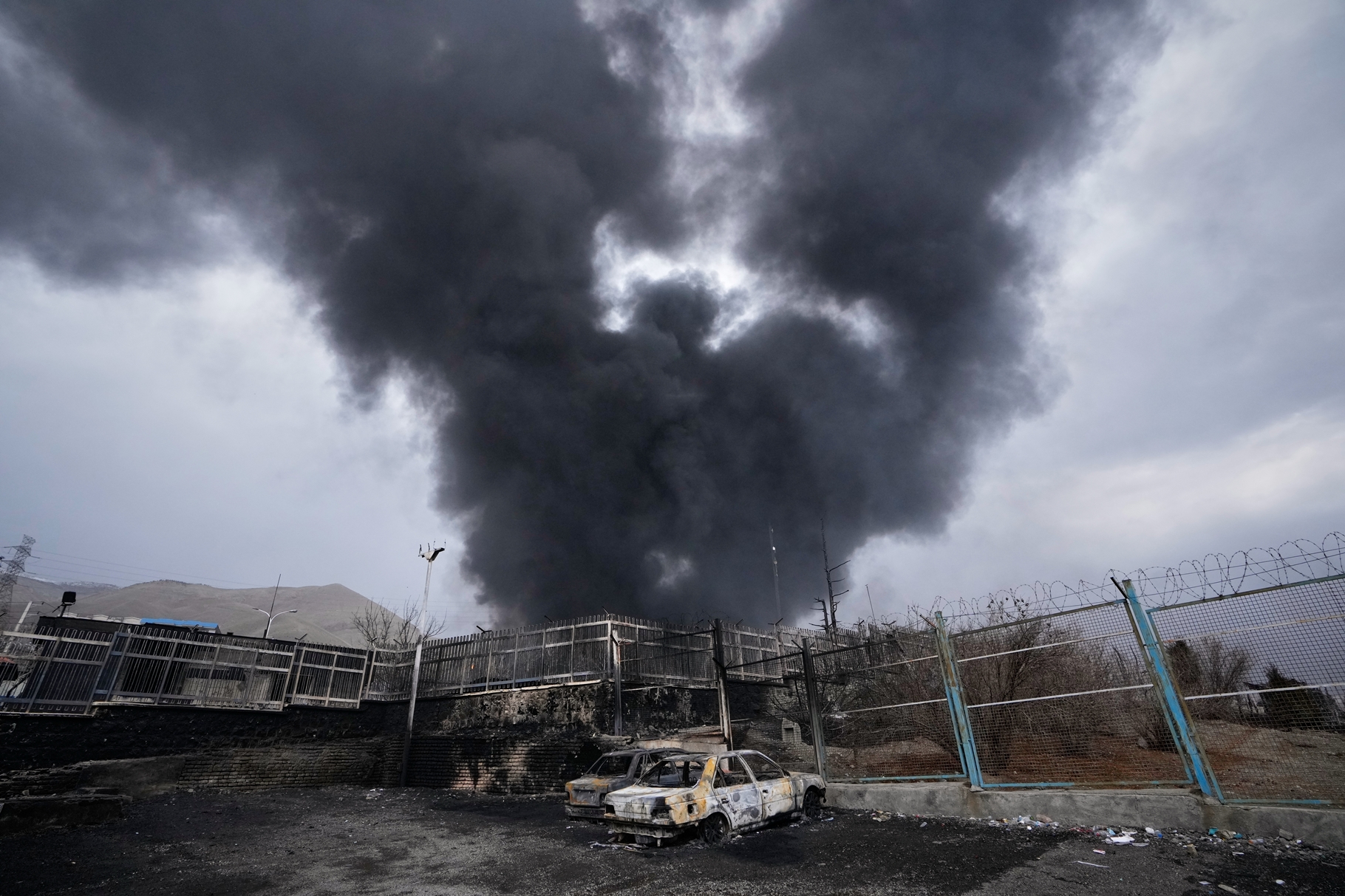
It has been three years since New Yorkers last saw oil prices breach the psychological barrier of $100 per barrel. But as of Sunday, that milestone has been dramatically surpassed: Brent crude, the international benchmark, soared to $107.97, a jump of 16.5% over Friday’s close. The United States’ own marker, West Texas Intermediate (WTI), marched in lockstep, hitting $106.22. The culprit? A cascade of violence in the Middle East, with Israel bombing oil depots in Tehran, the world’s most volatile petrol neighbourhood.
The fresh spike in energy costs is the immediate economic fallout of escalating hostilities between Israel and Iran. Skittishness gripped commodity markets after the latest attacks on April 14th, which targeted both petroleum storage depots in Tehran and a crucial oil transfer terminal. Iranian authorities say four people perished. Israeli officials, for their part, assert that the targets served Iran’s military logistics.
The narrow Strait of Hormuz, long one of the planet’s busiest and most strategic chokepoints, is now even more precarious. Each day, roughly 15 million barrels of oil—one-fifth of global supply—transit the 21-mile-wide waterway separating Iran from the Arabian Peninsula. But with missile and drone threats mounting, tanker traffic has thinned dramatically. Analysts at Rystad Energy reckon that shipping companies, worried about crew safety and insurance costs, have rerouted or paused voyages.
Producers in the Gulf are feeling the squeeze. As exports stumble, crude stockpiles in Iraq, Kuwait, and the United Arab Emirates have swollen to capacity, forcing them to throttle back production. Cuts to output may delight certain OPEC mandarins, but the broader result has been tighter markets and a scramble for alternative supply.
For New York City, the world’s most polyglot metropolis, higher oil prices are more than a footnote in distant geopolitics. Within a week, the average price of regular petrol in America jumped 47 cents to $3.45 per gallon, according to the American Automobile Association. Diesel—vital for delivery trucks, municipal buses, and construction—spiked even more, posting an 83-cent leap to $4.60 per gallon. From Bronx kitchens to Queens bus depots, cost rises will not go unnoticed.
The knock-on effects are already visible. Ride-hailing giants such as Uber and Lyft are mulling fare surcharges. Grocers, facing costlier freight, signal that price tags for everything from bananas to bagels will soon nudge north. The Metropolitan Transportation Authority, which depends on diesel for some of its fleet and construction sites, faces pressure to squeeze more out of a budget already battered by pandemic-era deficits.
Those who hope that the oil shock will be short-lived are, perhaps, indulging in wishful thinking. The risk of conflict escalation, especially if Iran’s 1.6 million barrels per day of exports are disrupted, is considerable. China—a voracious oil importer—may find itself seeking alternate suppliers, tightening global competition even further. But the pain reaches beyond the pump; memories of stagflation in the 1970s are not entirely faded. Energy price surges tend to seep into rents, utility bills, and the cost of just about everything—either quickly or by stealth.
New Yorkers, ever the keen spectators of global drama, must also navigate political crosswinds. Higher fuel costs stoke local inflation and may become fodder for city and state officials seeking to position themselves ahead of November elections. There are calls for gas-tax holidays or strategic reserve releases, but such moves are palliative at best and invariably temporary.
Ripples from the gulf, reverberations on Fifth Avenue
Elsewhere in the world, the energy shock is fanning familiar flames. In Europe, governments fret about another winter of high heating costs; Asian refiners, squeezed between price and supply, eye more expensive substitutes. Some of America’s competitors—Brazil, Nigeria, Canada—stand to benefit from higher prices, but few have the excess capacity to offset a sharp pullback by Gulf producers.
New York, for its part, has recently championed energy transition, touting grid-scale renewables and even a ban on fossil-fuel hookups in new buildings. Yet such measures have only taken modest bites out of the city’s gargantuan appetite for oil-derived energy. Of the 8.5 million residents, nearly one in two commutes by car or taxi daily. Public fleets, heavy industry, and even emergency services are inextricably tied to the fortunes of global hydrocarbons.
Historically, the city has proved resilient in the face of commodity shocks—its service-heavy economy is less oil-intensive than, say, Houston’s. But energy is the linchpin of daily life, and repeated jolts of this sort erode financial cushions, especially for lower-income households and small businesses. Nonprofits providing meals or transportation already report swelling wait-lists as costs bite.
The episode, if it persists, may stiffen resolve for alternative energy sources and more robust supply chains. Yet it also exposes the fragility of global interdependence. A drone strike in Tehran finds its echo in East Harlem’s grocery bill, highlighting just how little insulation geography now provides.
The city’s leaders—always fond of a new levy or regulation—now face an awkward challenge. Intervening directly in global oil markets is beyond their reach, but cushioning constituents from volatility will require deft balancing of fiscal prudence and social need. Past experience suggests that most promises to decouple from fossil energy wilt during periods of economic strain.
Worrying as war in the Gulf may be, it does offer a stern reminder: the global economy’s arteries still pulse with the ebb and flow of oil. The lesson for New York, and for its denizens, is to prepare for longer spells of volatility and not to pin hopes on the next barrel being cheap or easily obtained.
For now, the city will have to absorb yet another global crisis with its trademark mix of stoicism and ingenuity. In the battle between geopolitics and daily routine, New Yorkers have little choice but to keep moving—even if the journey costs a little more at every turn. ■
Based on reporting from El Diario NY; additional analysis and context by Borough Brief.