PATH Trains Face Weekend Closures for Signal Upgrades—Shuttle Buses and Patience Required
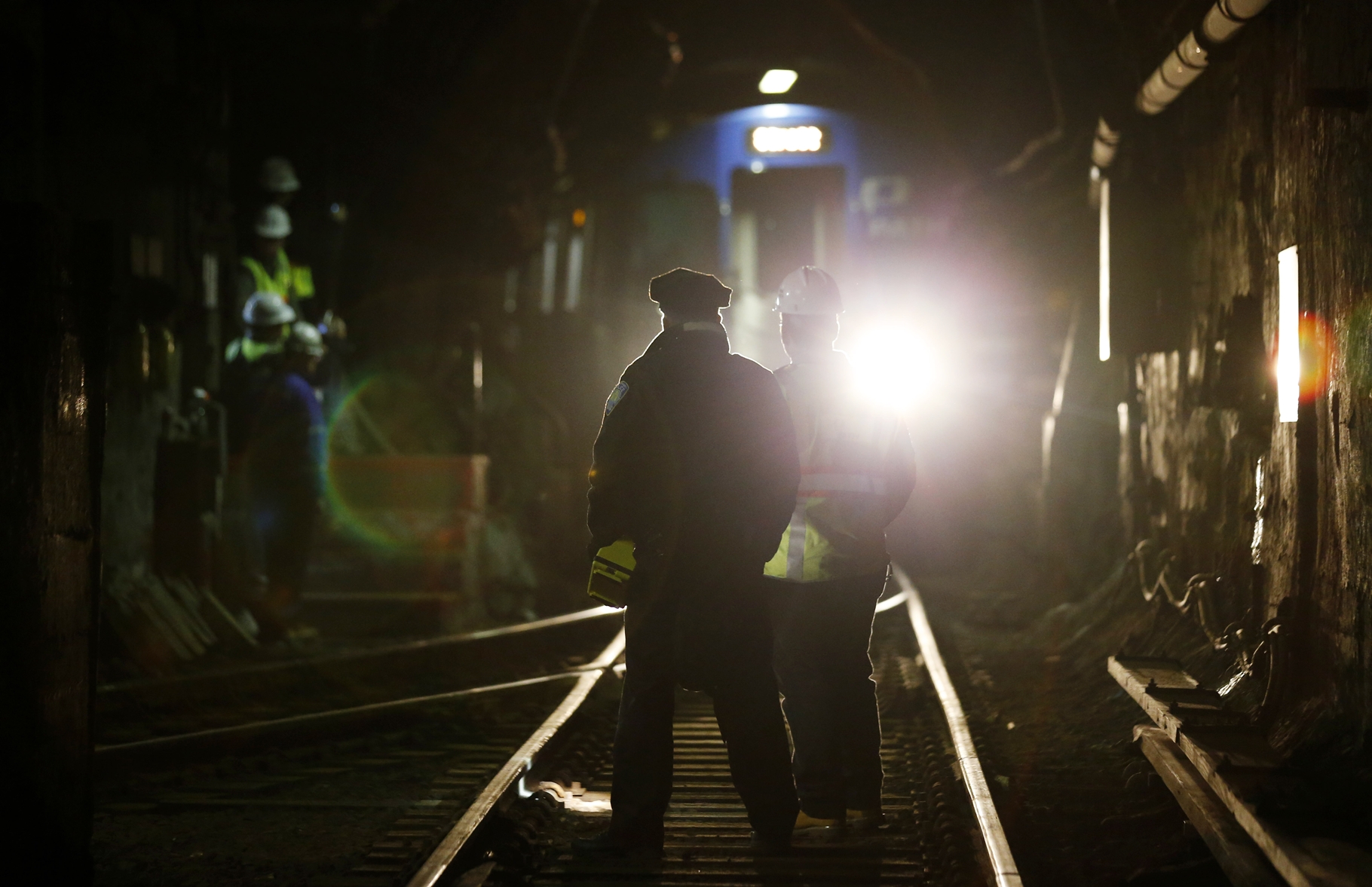
Upgrades to the PATH rail system herald improvements, but the journey there will test New York’s metropolitan patience and logistics alike.
For hundreds of thousands who ride the PATH train each weekend—linking Newark, Jersey City, and Lower Manhattan—few things provoke frustration quite like a sudden notice about yet another closure. But from late February through late April, for five scattered weekends, large swaths of this cross-Hudson artery will grind to a halt. The culprit: a necessary yet fiendishly complex upgrade of the system’s “interlocking” infrastructure and operational software, overdue for renewal in a region that practically runs on rails.
Commuters first felt the pinch beginning the weekend of February 27th, as service between Newark and World Trade Center, as well as Journal Square and Manhattan’s west side, was severed in places. The impact does not conform to a simple calendar—closures are neither consecutive nor uniform. Each affected weekend presents its own pattern, with the precise timing and suspensions shifting according to technical need and local fixture, such as Red Bulls football matches or Jersey’s own medley of events.
This disjointedness, however, is at the heart of the matter. Port Authority Trans-Hudson—the agency that operates PATH—must juggle myriad interests. The phased closures allow the system to remain available during heavy-traffic events, even at the risk of sowing confusion among casual and regular passengers alike. Jessica Mills, the director of customer experience for PATH, openly acknowledged that “it’s a lot to take in,” as the agency released a tangle of substitute shuttle buses, partial rail service, and careful caveats on affected station lists.
Yet the complexity is not arbitrary. The works are necessary in order to install and—crucially—test a freshly implemented set of digital controls at several major “interlockings,” where tracks and signals coordinate trains’ movements. The new system, now under the watchful eye of the Federal Railroad Administration, promises to bolster operational resilience. If a train falters or signal fails, the hope is that service will recover faster and reroute more flexibly than under the lumbering software it replaces.
The immediate implications for New York are plain enough. On each affected weekend—February 27th to March 2nd; March 13th to 16th; March 20th to 23rd; March 27th to 30th; and April 24th to 27th—urbanites will navigate a fresh maze of diversions. Shuttle buses will ply the void between Harrison and Penn Station Newark, with rail service elsewhere running on reduced or altered schedules. For the not-insignificant number of New Jersey residents working or recreating in Manhattan, these journeys will inevitably be longer, more crowded, and more prone to snags.
For regional businesses, the closures bode only tepid gains and certain costs. Restaurants and shops dependent on easy footfall from the pathfinders of PATH stand to lose custom. Employers, particularly in sectors demanding weekend staff, must adjust for late arrivals or unexpected absences. The Port Authority reckons that weekday demand—on which PATH’s economic rationale rests—remains too critical for weekday closures, but weekends remain a lifeline for a region increasingly blurring the lines between work and leisure.
There are, though, subtler second-order effects. The timing is partly strategic: New Jersey will host matches for the World Cup starting June 2026, and the Red Bulls’ home fixtures pepper the spring weekends. The works therefore serve as a dress rehearsal for crowd management on a grander scale, as PATH will bear a buoyant load of international visitors. Moreover, the scale and complexity of the closures force a reckoning with the broader state of American mass transit, where progress is often as ungainly as it is overdue.
PATH’s tribulations are no anomaly. Across the United States, creaking rail infrastructure is a persistent vexation for urban centers. In New York itself, the MTA has grappled with years of signal modernization on subway lines, leading to weekend closures eerily similar in effect. What sets PATH’s approach apart is its patchwork—an attempt to thread the needle between operational necessity and the region’s insatiable appetite for mobility, at a moment when commuter patterns have never been more unpredictable.
A test—and a portent—for transit resilience
International comparisons provide some reason for optimism, if not quite for smugness. Cities such as London and Tokyo have managed more smoothly staged rail upgrades by marshaling dense information campaigns and through relentless attention to rider inconvenience. PATH’s efforts—a virtual forum, careful fit around big-ticket events—are gestures in this direction, but they remain unavoidably reactive: a struggle to minimize the inherent costs of essential maintenance in a region where even minor disruption reverberates from Hoboken to SoHo.
In the end, the measure of success will be less in the smoothness of these spring weekends and more in what follows. Should the new interlockings perform as advertised, PATH could reclaim time lost to breakdowns and reduce the domino effect of delays that bedevil New Yorkers so reliably. With the Federal Railroad Administration in close oversight, future upgrades—such as further digital integration or capacity expansion—may brook less disruption, guided by these growing pains.
It is tempting to dismiss such periodic misery as part of the city’s eternal struggle with entropy. Yet the upgrades, while an irritant, reflect a broader trend in transit governance: a grudging acknowledgment that the region’s infrastructure must adapt not only to present ridership but to surges yet to come. In an era of climate anxiety and mounting congestion, a more agile PATH will prove critical to the mobility of both office-bound workers and global sports fans.
For the PATH’s long-suffering regulars, there is some solace in data-driven optimism. Plenty of urban transit systems have emerged stronger, if only after fitful closures and public grumbling. New York has little choice but to endure the inconvenience—and perhaps even to learn from its own improvisations. As migration, tourism, and local events all surge together, the city will need every ounce of engineering ingenuity it can muster.
PATH’s playbook this spring is, then, part necessity, part rehearsal, and part bet on the patience of New Yorkers and New Jerseyans alike. The improvements may not garner bouquets or backslaps, but if the city is to avoid puny infrastructure debacles on the world stage, it must get the hard things right—however many shuttle buses it takes. ■
Based on reporting from El Diario NY; additional analysis and context by Borough Brief.