Queens Co-ops Face Soaring Costs to Meet Local Law 97 Targets, Fines Loom Larger
New York City’s ambitious building decarbonisation mandate collides with the hard realities of its ageing, co-op-heavy housing stock—and the wallets of ordinary New Yorkers.
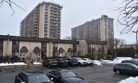
A decade ago, a whiff of oil might have lingered in Glen Oaks Village—a sprawling garden apartment development in north-east Queens. Today, the targets are invisible: carbon molecules and kilowatt hours, not pungent fuel stains. But the price tag for cleaning up is eye-wateringly plain. Glen Oaks, home to about 10,000, now faces a bill of up to $70 million to comply with Local Law 97, the city’s proudest climate regulation. The prospect leaves residents gasping—instead of exhaust, it is the expense choking the community.
Passed in 2019, Local Law 97 (LL97) was meant to be a lodestar in American climate policy. The statute targets the city’s roughly 63,000 largest buildings, each over 25,000 square feet—among them the city’s oft-overlooked co-ops, which tend to house the not-so-rich and almost-famous. By 2030, affected structures must slash emissions by 40% from 2005 levels, or suffer punishing fines. The problem for many buildings? The low-hanging fruit—drafty windows and leaky insulation—was already picked in early compliance; now, only the most capital-intensive retrofits remain.
The scale of the undertaking beggars belief even in a metropolis prized for its tall towers and deep pockets. Glen Oaks’ president, Bob Friedrich, has openly balked at retrofitting each building with new heating and cooling. For his co-op, the required upgrades would topple the annual operating budget many times over. “A clean environment and affordable housing (should not be) a binary choice,” he notes, voicing a sentiment echoed by co-op boards from Bay Terrace in Queens to the heart of Brooklyn.
Such sentiment bodes ill for compliance. City officials estimate that collectively, the city’s 6,800 co-ops face the sort of debt burden that normally accompanies fiscal crises, not weatherization campaigns. If these complexes cannot finance upgrades—and the collapse of anticipated federal aid has darkened their prospects—their boards may simply choose to pay fines, which begin at $1 million per year for Glen Oaks-sized developments. For many, the sums are ruinous rather than nudging.
The implications are manifold. For working- and middle-class New Yorkers—co-op residents, as often as not—green mandates may portend unpalatable increases in maintenance fees or forced sales. For the city, a wave of non-compliance could erode the legitimacy of its climate policy, and worse, hollow out its stock of (semi-)affordable housing. Greenhouse gases may fall, if only because residents are obliged to move elsewhere.
Of course, the mayor’s office maintains it is up to the task of squaring this stubborn circle. Casey Berkovitz, a spokesperson for Mayor Zohran Mamdani’s administration, has professed continued support for LL97, promising more concrete plans in the “coming months.” The mayor has floated tax breaks for co-ops willing to undertake retrofits. But in a metropolis where budgetary surpluses seem as fleeting as warm January days, details remain sketchy. City Hall seems to pin its hopes on a combination of municipal creativity and as-yet-unidentified largesse from higher levels of government.
The economic headwinds are stiffening, not subsiding. The demise of federal aid programmes for green building renovations—a consequence of shifting winds in Washington—has left a vacuum urban policymakers are struggling to fill. Costs remain stubbornly high, running to several hundred dollars per square foot for heat pumps and related upgrades. At current prices, the combined investment for compliance citywide could easily breach $20 billion, a figure that dwarfs the city’s own annual capital plan.
A climate ambition confronted by political limits
These travails are hardly unique to Gotham. In London, Paris and Berlin, city governments have struggled to retrofit their pre-war residential building stock—a low-carbon future, it turns out, weighs heaviest on the oldest structures. Local Law 97, initially praised as among the world’s boldest urban climate measures, now finds itself in the company of similarly stymied schemes elsewhere. Progress in reducing building emissions has been underwhelming across major cities, especially where tenants are more price-sensitive than corporate landlords.
The contours of the challenge have stoked political debate in New York. Progressives see the law as non-negotiable; conservatives deride it as a burden on the very New Yorkers city hall claims to protect. If the city backs down, climate advocates warn of a setback for the broader green transition. If it charges forward regardless of cost, the city may find itself pushing long-time residents—often retired or of moderate means—out of their homes in the name of progress.
Still, it is hard to dismiss the broader rationale behind the city’s targets. Buildings account for nearly 70% of New York’s greenhouse gas emissions, and hurricanes from Irene to Ida serve as reminders that the costs of inaction are hardly theoretical. Electrification and energy efficiency are critical in any credible decarbonisation pathway. But mandates that outstrip residents’ means, or the state’s own ability to subsidise, threaten backlash—and failure.
There is scope for optimism, albeit tempered. Retrofits—particularly of big, multi-family buildings—offer significant emissions reductions per dollar, compared with flashier but smaller-scale initiatives. If the city could muster federal matching funds, or unlock cheaper financing for co-ops, the prospects would brighten markedly. Technological progress could also help: if the cost of heat pumps and high-efficiency boilers continues to drop, more buildings will be able to comply without recourse to fiscal acrobatics.
Yet, as things stand, the city risks achieving the worst of both worlds: robust climate goals, but weak compliance and rising housing distress. A law that aspired to show the world how cities can lead may soon become a case study in how regulatory ambition must be tethered to the financial realities of ordinary dwellers. No whiff of hypocrisy there—just good intentions running into the fog of municipal finance.
The work of turning policy into progress is as intricate as any old townhouse’s plumbing. New York can—and, we reckon, must—strike a bargain between ambition and affordability. To succeed, it will need both hard-headed pragmatism and a willingness to spend where it counts. Otherwise, it risks becoming a city where the air may be slightly cleaner, but the cityscape all the emptier. ■
Based on reporting from City & State New York - All Content; additional analysis and context by Borough Brief.