Queens Snow Totals Top Two Feet as Rockaway Power Flickers, Plows Race Winds
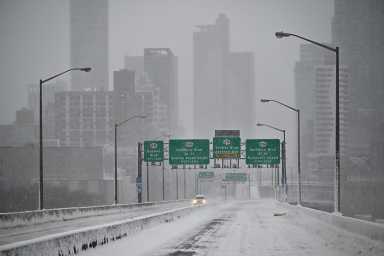
The city’s relentless winter storms underscore the fragility and resilience of New York’s infrastructure—and its people.
When the National Weather Service registered 22.2 inches of snow at LaGuardia Airport on February 23rd, the statistic was more than meteorological trivia. It marked the second time in as many months that Queens, New York City’s largest borough by area, was blasted by a snowstorm leaving more than a foot and a half of precipitation in its wake. For residents waking up to drifts that swallowed cars and flattened neighborhoods’ distinctive bustle, this was neither rare nostalgia nor a mere nuisance.
The latest winter blast has clobbered the city with a vengeance, dumping more snow on Queens in a day than many metropolitan areas receive over an entire season. With winds gusting up to 50 mph, visibility approached nil. Mayor Zohran Mamdani’s administration, already strained from January’s powdery siege, responded by imposing a citywide travel ban until midday. Long after the ban lifts, however, the city’s arteries will remain sluggish with ice, slush and the odd abandoned sedan.
The storm’s first-order effects are obvious and immediate: transit disrupted, life upended, and tens of thousands of homes—particularly in the Rockaways—plunged into chilly darkness. Borough President Donovan Richards advised residents fleeing powerless apartments to three hastily opened warming centers in Far Rockaway and vicinity. The city’s response was brisk, if not buoyant. More than 2,600 sanitation workers fanned out in 12-hour shifts, wielding 2,300 snow plows and deploying 700 salt spreaders in a Sisyphean effort to clear Queens’ nearly 4,500 miles of streets.
Some New Yorkers, stoic as ever, attempted to keep daily routines mostly intact. Essential workers braved the elements, shuffling past snowdrifts and shuttered shops. While most public transport slowed but soldiered on, surface travel was reduced to a crawl; Metrocards did little for anyone living beyond the reach of the subway map. Meanwhile, residents relying on electricity for heat faced the chilling prospect—sometimes literally—of systems buckling right when they were needed most.
For a city that prides itself on operational fortitude, the disruptions portend worries less flamboyant than snowdrifts but far stickier. School closures, work-from-home mandates, and an abrupt halt to retail and restaurant trade carry a cost not easily tallied. City Hall does not publish hourly productivity losses or the opportunity costs borne by thousands of gig-workers who survive on daily wages. But for many Queens families, a day lost to weather is a day’s income vanished without recovery.
The storm’s secondary effects ripple well beyond the snowbanks. Each hour that businesses remain shuttered means foregone tax revenue for a city already fretting over budget gaps. Supply chains, tweaked and tightened since the pandemic, now clatter and groan under the pressure of missed deliveries and idle workers. Storefronts along Jamaica Avenue and Astoria Boulevard sit, lights dimmed, their owners tallying costs. Insurance claims, heating bills and postponed rent payments stack up across the borough, casting a more leaden shadow than the gathering clouds overhead.
New York’s political class, ever attuned to meteorological theatre, risks using such storms as stagecraft rather than an opportunity for reflection on infrastructure. With climate volatility the new normal, many question whether the city’s snow-removal arsenal is fit for purpose. Ploughs and salt-spreaders—vital though they are—cannot conjure up better weather, nor can warming centers become permanent replacements for affordable, resilient housing stock. Each event exposes brittle edges in the city’s physical and social fabric: aging grid infrastructure, a threadbare shelter network, and an emergency communication system that too often relies on the benevolence of social media rather than robust municipal outreach.
Nor is New York alone in its seasonal battles. In recent years, cities as diverse as Boston, Toronto, and even Dallas have confronted their own climate surprises, often with less preparation and more chaos. Toronto, for all its studied sangfroid, has seen several major storms knock out power to hundreds of thousands. Boston, accustomed to Nor’easters, spends gargantuan sums on snow management, but still sees routine gridlock and service outages. Southern metros like Dallas, caught off guard by rare yet punishing freezes, have experienced disasters made worse by underbuilt infrastructure. Yet few cities must balance the scale and density of New York, where a single snowstorm can paralyze a metropolis yet must not halt it entirely.
Winter storms, data, and the limits of resilience
Comparing New York’s response to that of its rivals, the city emerges neither uniquely brittle nor especially robust. Its snowplow fleet, while impressive on paper, is stretched thin across far-flung boroughs and a maze of narrow side streets. Data from the Department of Sanitation show plowing completion times lagging behind targets in outlying zones, especially in multi-family residential areas. The PlowNYC tracker, a digital innovation intended to reassure, often merely confirms residents’ suspicion that their block is near the bottom of the pecking order.
That said, the city’s ability to marshal resources quickly—six-digit payrolls of snow labor, overnight warming centers, round-the-clock transit alerts—demonstrates enviable logistical muscle. Too often, though, the gap between official pronouncements and lived experience remains yawning. Real “resilience” will require not just readiness for snow but investment in grid hardening, stormwater management, and—most elusive—affordable, energy-efficient homes that can ride out both heat waves and deep freezes.
Skeptics, ourselves included, question whether City Hall will spend political capital (and actual dollars) now, with memories of this storm still wet and cold, rather than after the next calamity. The city’s pattern, like the snow itself, is familiar: crisis elicits an energetic response, underscores structural weaknesses, then fades into collective impatience once the streets are clear. Climate trends suggest that this cycle, absent a more durable strategy, will only repeat at ever shorter intervals.
Still, one must admire, if not envy, residents’ collective ability simply to carry on. For all the drama—iced-over bus stops, children sledding down city blocks, power outages bringing neighbors together over candlelight—the upshot is rarely panic, but stoic adaptation. New Yorkers, perhaps uniquely, blend irritation about the authorities’ failings with a stubborn pride in weathering the storm on their own terms.
If the recent snows bode anything, it is that the city’s mixture of improvisation, grumbling resilience, and occasional innovation remains its greatest—if least glamorous—strength. That such tenacity rubs along with bureaucracy, brittle systems, and the occasional mayoral press conference is, in its way, as much a feature as a flaw.
For now, then, Queens shovels out, the power inches back, and city leaders tally up not just the costs but the lessons—until the next snowflakes begin to fall. ■
Based on reporting from QNS; additional analysis and context by Borough Brief.