Report Backs Subway Expansion Over Free Buses, Promising More Housing and Fewer Car Costs
Investing in subway expansion, rather than making buses free, might do more to ease New York’s housing affordability woes and reshape the city’s future.
New York’s subway map has hardly gained new lines since munitions factories closed and victory parades wound through ticker tape: since 1940, no standalone subway has broken ground in the five boroughs. Yet as rents spiral, and the city’s population swells in outlying neighbourhoods, a new report argues that a billionaire’s folly—a $1bn annual bill for fare-free buses—would be outgunned by judicious, old-fashioned tunnelling.
The NYU Marron Institute’s “A Better Billion” report, released this month, rejects zeal for gratis buses championed by the likes of City Councilmember Zohran Mamdani. The authors reckon the real culprit driving tens of thousands out of New York is not a $2.90 bus fare, but the ever-heightening cost of rent. Piling a billion dollars yearly into subway extensions, they say, would uncork a larger stock of housing and grant more residents a chance at affordability.
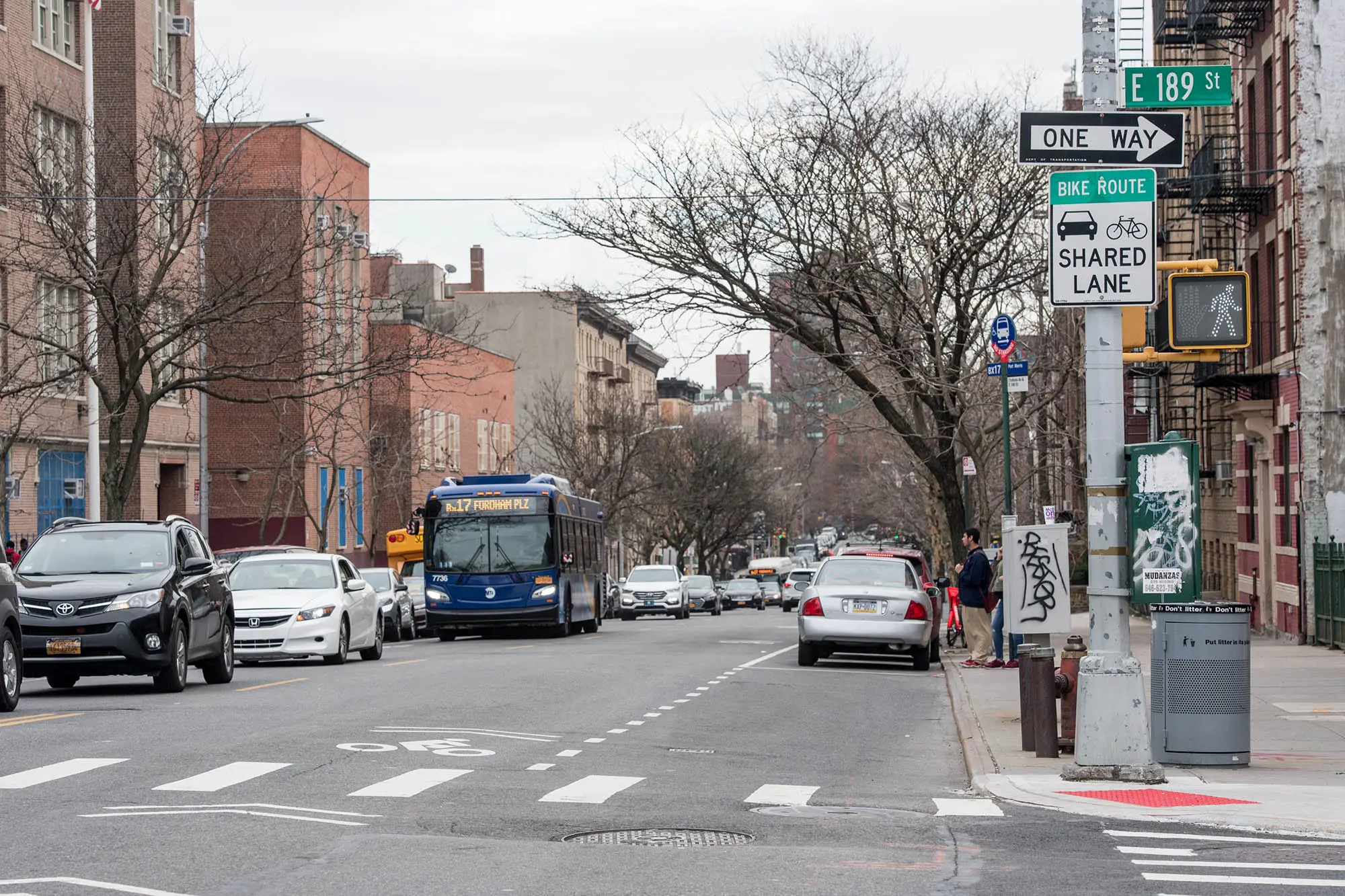
Their analysis proposes 41 miles of new subway, adding 64 stations in a dozen projects over forty years. The potential is not paltry: these schemes would enable the construction of over 160,000 new homes, a figure dwarfing the likely impact of free rides. Among the headline proposals is a $6bn extension of the 5 train down Utica Avenue to Kings Plaza in southern Brooklyn, unleashing some 17,000 units. A $1.7bn southerly jaunt of the E train to Springfield Boulevard in Queens could catalyse 18,000 more. The meatiest is a new light rail dubbed the 12 line, threading Fordham Road in the Bronx and sparking, in NYU’s estimation, nearly 36,000 apartments.
If past is prologue, the thinking goes, new lines spur more than real estate booms. When subways snake into fresh districts, housing supply grows, which nudges prices downward—at least in the aggregate—even as new stations multiply job access and compress commutes. “Travel time for lower rent is the theory,” reasons Eric Goldwyn, the study’s lead author. For every new unit permitted, the overall citywide rent burden (in theory) drops a little. Wayward New Yorkers, frustrated by sky-high rents and long bus slogs, might finally find the arithmetic tolerable.
The implications for New York are broader than one might suppose. While fare-free buses would ease some wallets, genuinely affordable housing is increasingly out of reach for most, especially new arrivals and would-be families in the city’s northern and outermost fringes. Public transport remains essential to economic mobility, but dollar-for-dollar, expanding the subway could do far more to expand opportunity.
At stake is not just the ride, but the very shape of the city. Most of New York’s subway skeleton was laid in decades when outer Queens and Brooklyn were bucolic, light on population, and largely car-dependent. Queens alone has seen its population surge by a million since 1940, yet public transit there is infamously patchy. The Bronx, with its north-south orientation, remains inhospitable to east-west journeys—a handbrake on its potential as a new housing frontier. New lines would, in theory, open tracts currently marooned by geography or transit inertia, leapfrogging the bottlenecks of Manhattan-centric routes.
Housing construction enabled by transit investment would have cascading effects across the local economy. Developing near new stations means shops, schools, clinics, and a burst of local employment. Residents who swap car keys for MetroCards (at $10,000 annual operating savings, per the Bureau of Transportation Statistics) would enjoy more disposable income and a smaller carbon footprint. For city finances, higher property values around new stations could yield buoyant tax receipts—a cycle that once made New York’s subways the envy of the world.
Tunnelling toward affordability, not just mobility
There is a risk, of course, in betting so heavily on capital projects with eye-watering price tags and Byzantine timelines. Money for mass transit is maddeningly finite: New York’s subway extensions arrive tortoise-slow and dollar for dollar, often costlier than their global peers. (The Second Avenue Subway’s first phase devoured $4.5bn for a mere three stops.) City and state squabbles over planning and procurement bode for headaches, not ribbon cuttings.
Nor is the housing boon guaranteed. Land-use rules, zoning squabbles, and neighbourhood resistance can scupper density dreams, even where rails now gleam. Without parallel reforms to encourage apartment construction, the benefit of new lines may accrue slowly and patchily. Political will come and go in four- or eight-year cycles, but tunnel-boring contracts demand the patience of a generation.
Yet the underlying logic is sound, and not unique to New York. London’s property market was nudged downward after the arrival of the Jubilee Line Extension and, later, Crossrail. Paris is expanding its Grand Paris Express partly to confront affordability in exurban suburbs. Asian megacities build new lines almost reflexively, reckoning that density can be an engine of mobility and squeezing in more residents per square mile keeps rents vaguely tethered to reality.
The city’s default—piecemeal, slow-moving transit and creaking, overloaded buses—suited an earlier, smaller New York. Now, absent grander ambitions, commuters face a “tepid” status quo: longer commutes, higher costs, persistent departures to cheaper pastures. Such stasis, as the NYU report dryly notes, is a choice—albeit an unimaginative one.
Ultimately, whether officials heed the report’s advice or default to the easier optics of fare giveaways, they must face the arithmetic New Yorkers already know: getting around the city is easier than paying to live in it. If the next billion is to be spent on transit, it may as well buy not just the promise of free rides, but a fighting chance for affordable shelter. ■
Based on reporting from NYC Headlines | Spectrum News NY1; additional analysis and context by Borough Brief.