Reynoso Unveils Six-Point Transit Plan, Calls for Federal Funding Rethink in Brooklyn
Federal neglect of New York’s transit lifeline carries economic and equity costs felt far beyond the five boroughs.
On any weekday morning, more than 5.5 million New Yorkers flood into the city’s creaking subway system—an undertaking of such scale that it dwarfs the daily ridership of most American public transport networks combined. Yet, while the city shoulders a lion’s share of the country’s transit burden—accounting for 40% of all public transit trips nationwide—it must do so with federal support that is both stingy and lopsided. As funding uncertainties mount and infrastructure ages, the city’s transit ambitions could be facing a prolonged stall on the federal tracks.
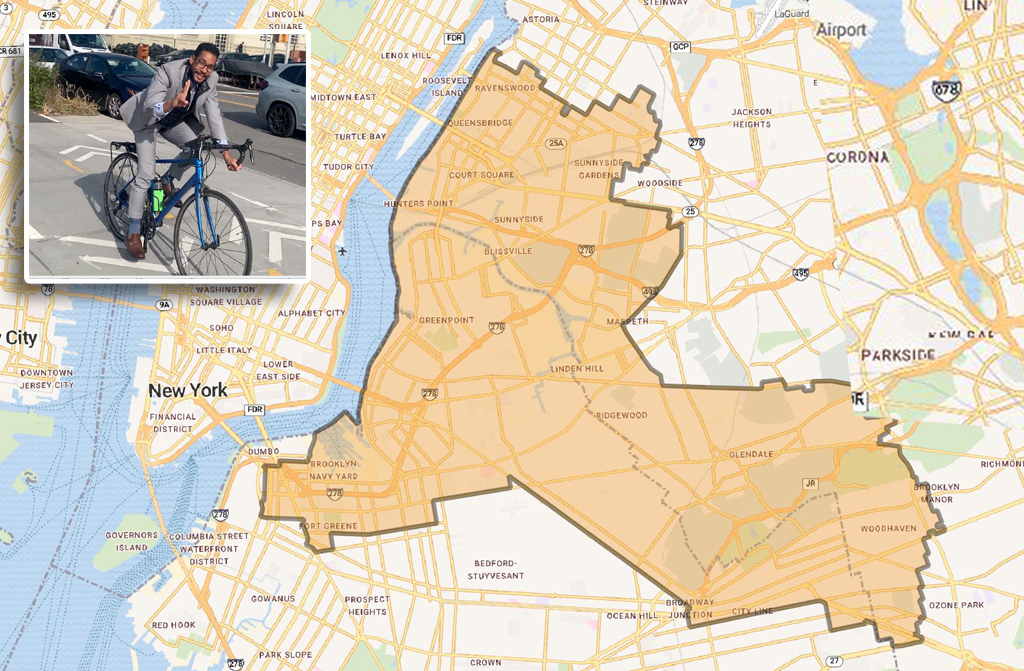
That is the crux of the argument being advanced by Antonio Reynoso, Brooklyn Borough President and contender for Congress in New York’s Seventh District. This week, he unfurled a six-point federal plan to recalibrate Washington’s priorities and safeguard what he calls the “lifeblood” of the city. Mr. Reynoso, a street-level transit advocate with a record long on bike lanes and boulevard redesigns, is hardly the only New York official sounding alarms about funding shortfalls. But his proposals crystallise the frustrations—political as well as fiscal—that now animate local transportation debates.
The substance is plain enough. Federal dollars, Mr. Reynoso notes, are doled out under rules that reserve 80% of surface transport funding for highways. The result: expressways such as the Brooklyn-Queens Expressway slice apart boroughs while the city struggles for vital improvements like new subway cars and signal upgrades, still running on technology that would not have been unfamiliar to a 1920s straphanger. Meanwhile, fare rises and service cuts threaten the working classes most reliant on trains and buses—thereby transforming a technical challenge into a policy dilemma and a matter of equity.
At first blush, such complaints may seem parochial. Yet the ramifications are rather wider. New York’s economy is reliant on service workers and professionals who, in the main, do not drive to work; the city’s very productivity depends on subways and buses running. Delays borne of faltering equipment or cancelled projects do not merely frustrate locals—they ripple outward, impinging on the supply chains and corporate interests that anchor American competitiveness.
Federal neglect is not the only problem, but it is a persistent one. Mr. Reynoso points to presidential interference, both past and prospective, as proof of the city’s vulnerability. The Trump administration’s 2020 freeze on $18 billion in critical transit funds—including for the long-delayed Gateway Program and the Second Avenue Subway—came not from fiscal necessity, but from pique over New York’s contracting standards. The courts eventually released the funds, but New Yorkers remain hostage to shifting winds in Washington.
So, what does Mr. Reynoso propose? At the core is a demand for parity: enabling federal transit dollars to pay not just for bricks and mortar, but also for operations and maintenance—privileges highways have enjoyed for decades. His plan calls for congestion pricing revenue to flow directly back into city infrastructure, enhanced federal investment in state-of-good-repair projects, and galvanised support for new lines like the Interborough Express. Above all, he wants Congress to insulate transit funding from partisan squabbles.
The implications for the city are weighty. If achieved, more robust operational funding could arrest the steady glide toward higher fares and stagnant service, easing pressure on low-income riders. Building new capacity would not simply improve commutes, but could spur development in underserved districts—expanding economic opportunity and reknitting communities once divided by ill-conceived highway projects.
But the second-order effects are just as salient. New Yorkers are frequently reminded that the city remains, despite the boom in remote work, deeply reliant on its public infrastructure. Persistent underinvestment bodes ill not just for residents, but also for the broader metropolitan region and its fiscal health. Commerce depends on predictable transport, and investors—no less than retail workers—are apt to look askance at systems plagued by breakdowns and political brinkmanship.
For all his rhetorical force, Mr. Reynoso faces a national landscape with a certain mulish inertia. Federal transportation priorities, born of postwar car culture and congressional politics, remain stubbornly tilted toward highways and suburbs. The logic—such as it is—rests on the sprawling geography of most of America. But it exacts a heavy toll on urban centres like New York, where mass transit is not a policy indulgence but an existential necessity.
Other metropolises offer object lessons. Paris, London, and Tokyo have long enjoyed significant national investments in their urban transit systems. The contrast is stark: not only do these cities boast enviable reliability and modernisation, but they also treat mass transit as a public good rather than a political bargaining chip. In the United States, by contrast, city transit systems are forever angling for scraps from a federal table built for car ownership.
A stubborn imbalance in federal priorities
This discrepancy is not lost on transit advocates or fiscal realists. Nationally, every major industry relies—indirectly, if not directly—on the efficient movement of people into and out of America’s economic engine rooms. The underfunding of urban transit thus portends not only inconvenience for city dwellers, but also a drag on productivity and competitiveness at scale.
Yet in Washington, talk of reform moves at an achingly slow pace. Highway spending is politically buoyant; subway appropriations provoke legislative haggling. As a result, New York’s long-term ambitions, from congestion pricing to transformative new lines, are perpetually at the mercy of distant lawmakers and fluctuating federal priorities.
Mr. Reynoso’s plan, while commendable for its clarity, is unlikely to undo decades of political inertia on its own. Yet it sharpens a broader debate over how—and for whom—America builds crucial infrastructure. That debate, at least, is moving. Congestion pricing, though sorely delayed, is edging closer to reality. A slow but evident consensus is building around the need for greater equity in investment, both within cities and between urban and rural regions.
The outlook, as so often in New York’s civic life, is cautiously hopeful. Ambitious plans are plentiful; resources seldom follow in tow. Yet we reckon that the demands expressed by Mr. Reynoso and his ilk will gain resonance as gridlock and missed connections mount—making ever clearer that the cost of inaction falls not only on city commuters, but on the country’s prosperity as a whole. ■
Based on reporting from Streetsblog New York City; additional analysis and context by Borough Brief.