Sunnyside Yard’s $14.4 Billion Overbuild Plan Gets Fresh Look, Pandemic Memory Lingers
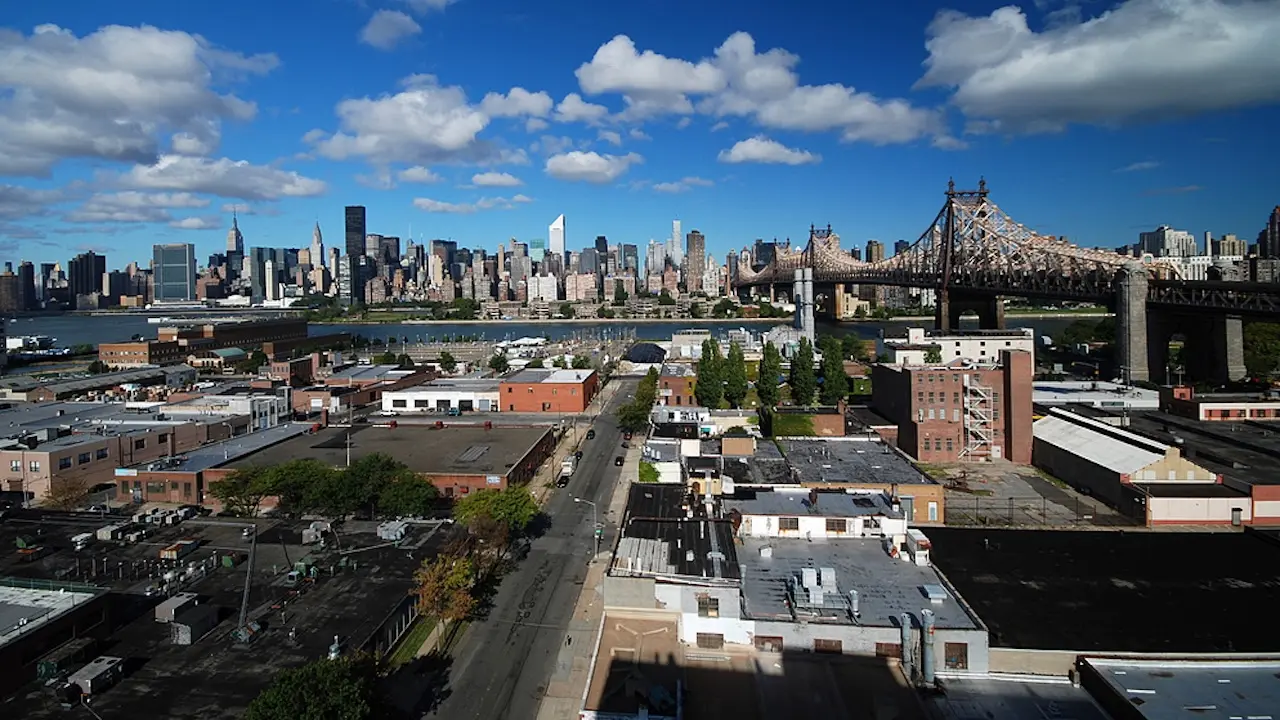
Ambitious plans to build a vast new affordable housing district atop Sunnyside Yard in Queens reflect both New York’s perennial housing shortfall and the formidable obstacles to big-ticket urban transformation.
On a grey March morning in 2020, as Lower Manhattan emptied and sirens filled the avenues, the city shepherded out its largest new housing proposal in a generation: a $14.4bn plan to deck over Sunnyside Yard in western Queens and birth an entirely new neighbourhood, pouring some 12,000 affordable homes into New York’s chronically tight housing market. Twelve days later, Covid-19 arrived—and the vision evaporated almost overnight, quarantined alongside subway riders and office workers.
The plan for Sunnyside Yard is straightforward in concept if confounding in engineering. Join forces with Amtrak—owner of the yard’s jigsaw of live rail lines—and the federal government to finance and oversee the construction of an elevated deck spanning hundreds of acres. The city would claim much of this new land, unlocking space for homes, parks, schools and prospects for economic renewal the likes of which have not been seen since the rise of Co-op City in the Bronx half a century ago.
Last week, Mayor Zohran Mamdani appeared intent on resuscitating this slumbering colossus. With a surprise White House overture to President Donald Trump, he sought to reinvigorate the plan, aware that such a megaproject demands Washington’s fiscal largesse and cooperation from Amtrak, whose jurisdiction over the land is both a blessing and a bureaucratic quagmire.
New York’s housing woes are gargantuan—to borrow a word that rarely feels too strong in this context. The city faces a perennial shortage of affordable dwellings, squeezing immigrants and long-standing residents alike, while recent construction levels remain puny beside swelling demand. Sunnyside Yard’s scale could, in theory, bring down prices and ease displacement across Queens and beyond, infusing neighbourhoods from Long Island City to Woodside with new energy (and new headaches).
Should the deck plan inch forward, the first-order implications for New York are stirring. The project would not merely inject subsidised housing, but create an entire urban district with shops, schools and offices stitched over a knot of tracks. Absent such audacity, the city risks slow-burn decline—a familiar pattern in an era when urban opportunity feels less boundless than it did before 2020.
Yet history is replete with grand city-building gestures that eventually piddled out. Sunnyside Yard has tempted bureaucrats for six decades: from would-be housing czars to real-estate moguls to advocates of sporting glory (a domed Jets stadium came and went as a fever dream). Amtrak and the city have sparred since 2014 over whether a deck could be built at all; only in 2017 did a technical study declare it feasible, “but complicated.” Classic New York understatement.
Second-order effects abound. The project could nudge the regional economy, sustaining construction jobs for years, and perhaps attract employers eager for proximity to new homes and transit. Yet it would test the city’s ability to finance big civic works in an era of ballooning interest rates and finite federal cash. Politics is prickly: coordination among city hall, Albany, Amtrak, and Washington seldom portends nimble action, especially when the price tag—$14.4bn—is meaty even by local standards.
For New Yorkers, the upsides are tantalizing. If realised, Sunnyside could revive a stalling affordability drive, extending opportunities to those now priced out of the private market. Social gains may accrue, too; the master plan unveiled by PAU, the architecture firm chosen in 2018, promises exuberant parks, schools and street life—provided the deck itself ever emerges from its paper womb. Such undertakings, though, bring all-too-familiar risks: cost overruns, delays, value-engineered disappointments and the nagging worry that Queens may receive a cold, windswept replica of Hudson Yards rather than a living neighbourhood.
The American search for buildable city land endures
Globally, New York is hardly alone in its urge to conjure new land from the air above tracks. London’s King’s Cross and Paris’s Rive Gauche stand as examples of ambitious, protracted overbuilds—each beset by delays and escalating costs, yet ultimately yielding revitalised districts, nuanced in design and impactful in urban economics. The lesson is plain: patience, political coordination and deep pockets all matter, but so too does a willingness to absorb setbacks without losing hope (or fiscal sanity) along the way.
Nationally, the fate of Sunnyside will serve as a bellwether for American cities eyeing “decking” as a solution to surging housing needs and decaying infrastructure. It will also test whether an unlikely convergence—New York’s left-leaning city hall and a Republican White House—can transcend the usual tribal gridlock in service of the public good.
Our assessment is measured. We welcome bold thinking in the face of tepid rental-market remedies; New York’s chronic inability to build where and what it needs—notably affordable housing—has compounded inequality, stifled opportunity and fuelled suburban sprawl. But New Yorkers have learned, sometimes painfully, that vision must be matched by pragmatism: by hard bargaining with Washington, careful phasing, and an appetite for the stutters and stalls intrinsic to capital projects. For all the bombast, success at Sunnyside is likelier to be stolid than spectacular.
The Sunnyside Yard plan, still as much aspiration as blueprint, embodies the city’s peculiar blend of ambition and inertia. Should ground finally break, it will testify to a rare alignment of politics, public will and project management—though seasoned observers would not wager their rent money on a ribbon-cutting before the next mayoral election. Still, in a metropolis fighting for affordable homes and social dynamism, even a complicated overbuild can serve as a beacon, however faint, of what is (just) possible. ■
Based on reporting from Section Page News - Crain's New York Business; additional analysis and context by Borough Brief.