Suprema Corte de EE UU Revisa el Futuro del TPS Para 360,000 Migrantes en Juego
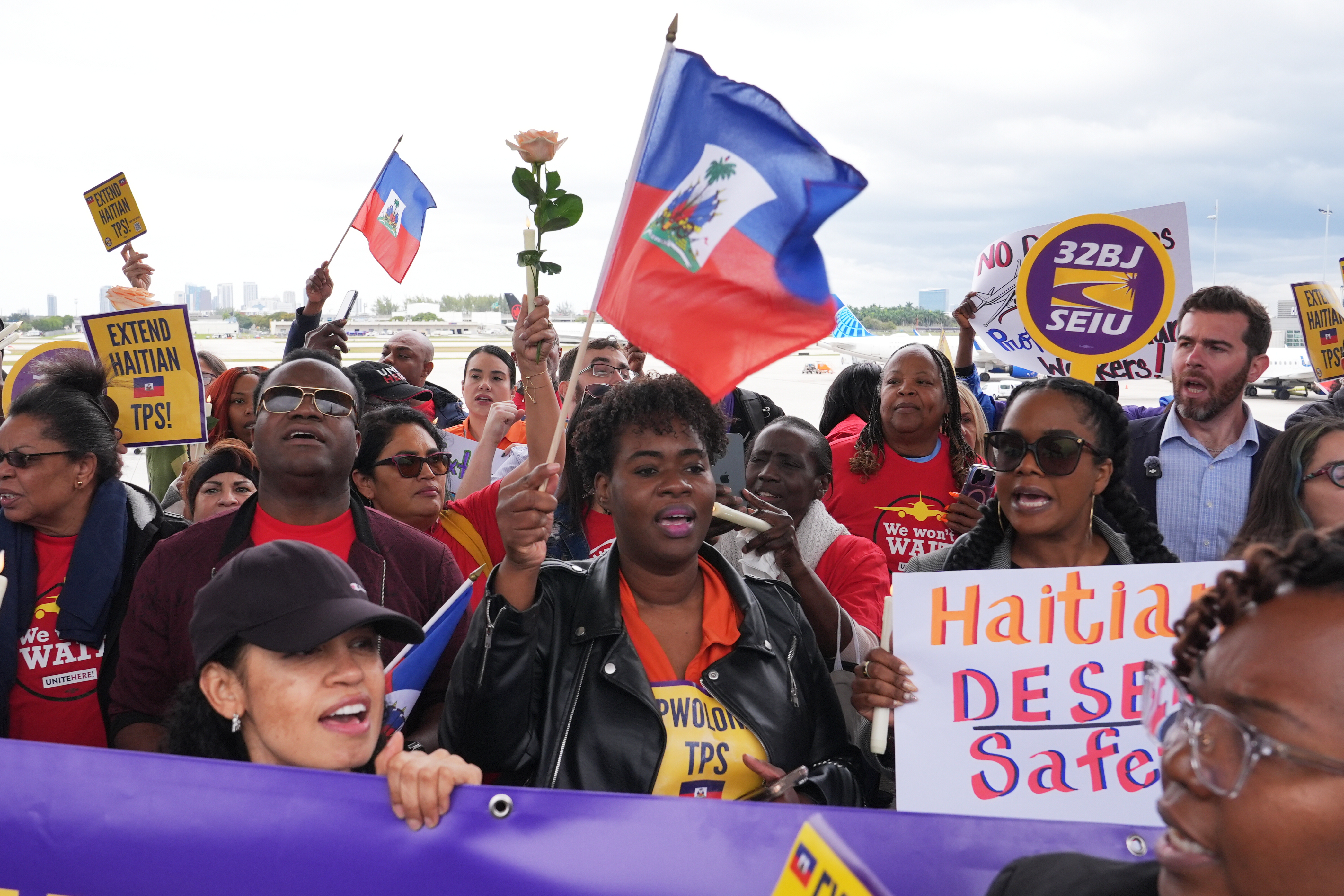
The Supreme Court weighs the future of Temporary Protected Status—a ruling that could upend the lives of New York’s immigrants and reshape American policy on humanitarian migration.
Numerical clarity occasionally has a chilling effect. Some 360,000 people—roughly the population of Staten Island—stand to lose their right to live and work in America if the Supreme Court upholds the Trump administration’s bid to revoke Temporary Protected Status (TPS) for Haitians and Syrians. This, in a city where roughly one in three residents is foreign-born, has sent ripples of anxiety far beyond the courthouse steps in Washington, D.C.
On April 23rd, the justices heard arguments over whether the Department of Homeland Security could end TPS, a policy legacy of the Immigration Act of 1990, for certain countries without running afoul of administrative law. At issue is not merely the fate of 360,000 from Haiti and Syria—many of them clustered in New York and Miami—but the legal yardstick by which the federal government could strip protection from 1.3 million TPS recipients in all, hailing from 17 countries. The case, the first direct Supreme Court test of TPS, has drawn activists, lawyers, and the attention of city halls in migrant-rich metropolises.
TPS was designed as a stop-gap, conferring limited-term legal status, work permits and protection from deportation on migrants escaping bullets or earthquakes. Haiti’s devastation by the 2010 quake, and Syria’s unceasing civil strife, long met the programme’s humanitarian threshold. In 2017 the Trump administration, via then-Acting Secretary Kristi Noem, moved to halt the reprieve, arguing conditions in both countries had improved—a debatable claim by most yardsticks.
Lower courts in New York and Washington, D.C., sided with advocates who argued the terminations were both capricious and in violation of the federal Administrative Procedure Act. Yet the Supreme Court now weighs whether these rulings overstretched, and—by extension—how much discretion presidents, present or future, wield under the law. The stakes are existential: if the high court rules for the government, 360,000 people will find their legal footing in the US crumbling, some after decades here.
For New York in particular, the impact would be acute. The city is home to the country’s second-largest Haitian community and a significant slice of Syrians counted under TPS. Many work in health care, transit, construction and food service—sectors already groaning under labour shortages. A mass forced departure would mean not just frayed families, but a shrunken, less dynamic labour market.
Nor is the impact merely economic; the social consequences would bruise New York’s civic tapestry. Many TPS holders have US-citizen children attending city schools, and deep roots in local communities. Their abrupt erasure would fuel hardship, disrupt neighbourhoods, and—most likely—spur a shadow population of the undocumented, wary of authorities and less able to participate in civic life. The city’s famed ability to integrate newcomers would fray, not flourish.
Beyond Gotham, the ruling will set a precedent for how the federal government handles the inevitable churn of global instability and disaster-driven migration. No American city is immune. Miami is home to tens of thousands of TPS holders from Haiti; cities across Texas, California and New Jersey have sizable Salvadoran and Honduran populations protected under the scheme. The nationwide reach of the programme belies any notion this is a local New York matter.
Legal questions and political overtones
The legal questions are tangled. The administration claims the law gives it sweeping authority to end TPS designation when “conditions no longer warrant” protection. Advocacy groups counter that abrupt, poorly reasoned terminations breach both administrative norms and congressional intent. Lower courts chided the government for slapdash process; the Supreme Court’s conservative majority may see less merit in that argument. As with much American jurisprudence, the fate of people with names, jobs and families may hinge on the dry parsing of statutory language.
The politics are equally fraught. Both parties have brandished TPS as a humanitarian shield, but often with electoral calculation in mind; untold numbers of otherwise-ineligible migrants have been able to work and build lives in the US because of its patchwork duration. A ruling upholding the end of TPS might embolden restrictionists hoping to roll back even more migration relief. Conversely, a rebuke could revive hopes for legislative overhaul—though Congress’s torpor to date inspires little confidence.
Migration dilemmas are hardly unique to the US. Europe, too, has wrangled over humanitarian exceptions—witness Germany’s staggered policy on Syrian refugees, and the periodic upheavals in British, French, or Italian asylum rules. Australia and Canada, meanwhile, have quietly shifted from permanent asylum toward “limited time” or “temporary protected” status, often with fewer safeguards than America once offered. The difference, of course, is scale—and the degree to which US cities like New York have become profoundly reliant on legally liminal newcomers for their economic and social vitality.
What lessons should New York, and America more broadly, draw from this legal drama? It is tempting to cloak TPS as a technical tussle over sovereignty and bureaucratic discretion. But the deeper truth is that piecemeal, patchwork solutions—whether by executive order or court decree—are ill-fitted to address the durable reality of mass migration. Cities teem with evidence that TPS holders, like other immigrants before them, have contributed to the vibrancy and growth that policy-makers claim to cherish.
We recognise the argument for executive latitude in adjusting to shifting world calamities; rules cannot freeze forever. Yet a decision to strip status from long-settled, law-abiding residents, without a plausible path to permanence, bodes ill—for their communities, for the city’s economy, and for the rule of law. At best, it portends a brief reduction in official numbers; at worst, it risks swelling a disempowered underclass.
Above all, the episode demonstrates both the limits and necessity of national clarity. If America wants to avoid a cycle of judicial whiplash and bureaucratic improvisation, the power to grant refuge—and eventually, permanent status—should be debated and decided in Congress, not left to the whims of whichever party occupies the White House. For now, however, the fate of hundreds of thousands hangs on the interpretation of a dusty statute by nine black-robed arbiters.
Their decision will shape not only the lives of many New Yorkers, but the moral and practical architecture of American migration for years to come. The city waits, as always, with one eye on Washington and the other on the patchwork of faces that have long made it more than the sum of its parts. ■
Based on reporting from El Diario NY; additional analysis and context by Borough Brief.