Swastika Found on Brooklyn Heights Storefront as City Antisemitic Incidents Surge Yet Again
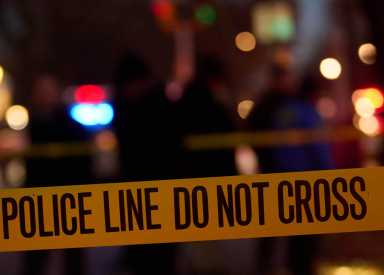
As antisemitic incidents surge in New York City, a single swastika in Brooklyn portends deeper social fissures and questions the durability of urban tolerance.
The swastika, painstakingly drawn in blue ink and scarcely larger than a baseball, was easily missed by the jostling commuters around Brooklyn’s 16 Court Street. On a grey March afternoon, two passersby—a pair of longtime Brooklynites—did not miss it. “We gasped,” one later recounted, describing the quick chill of recognition that still attends this most notorious of symbols, even eighty years after the fall of Berlin.
The discovery, classified by the New York Police Department as a hate crime, was not an isolated flourish of vandalism. Rather, it joins a lengthening docket of antisemitic attacks and intimidations roiling the city. According to recently released figures, bias cases have surged: the NYPD’s Hate Crimes Task Force opened 58 investigations in January, up from 23 during the same month last year—a jump of 152%. Anti-Jewish crimes comprised 31 of those, surging by 182%.
Such numbers, always incomplete, skirt the deeper anxieties nestling within New York’s famously diverse neighbourhoods. In Brooklyn Heights, where the storefront in question sits vacant, politics and demography intermingle as they have since the borough’s mercantile heyday. Council Member Lincoln Restler, who lives near the scene and worships nearby, was among the first officials to respond. His disappointment, though palpable, is fast becoming a refrain: leaders now routinely express outrage, gratitude for prompt reporting, and commitment to the battle against sectarian hate.
The city’s official machinery churned dutifully. Police attended the scene, surveyed the evidence, and initiated an investigation. The Department of Sanitation arrived soon after, removing the offending icon. In a city as restless as New York, each fresh instance of hate flickers briefly before being subsumed in the next day’s traffic and news cycle. Yet the aggregated effect, data reveal, is neither transitory nor trivial.
A surge in reported hate crimes rarely bodes well for the social compact in ethnically and religiously heterogeneous metropolises. When one group becomes the preferred target of vandals, it exposes latent faults in a city’s celebrated tolerance—and it tests whether symbols, institutions and legal codes possess teeth sharp enough to protect those at risk. For New Yorkers, already inured to news of crime spikes and fraying civility, the rise of antisemitism hints at deeper unease.
For the city’s Jewish communities—still the largest outside Israel, hosting more than 1.1m New Yorkers—the reappearance of Nazi graffiti stings with painful clarity. It rekindles collective memories, not just of the Holocaust but of the periodic eruptions of bigotry that have surfaced in New York before: the Crown Heights riots of 1991, or the rash of cemetery desecrations since the millennium’s turn. Each instance raises fresh questions about education, vigilance and the durability of pluralism.
The second-order effects hover over New York’s politics and economy. Upticks in hate crimes can dampen the reputation of “the city of immigrants”; they invite scrutiny from tourists and global investors who are already perturbed by stories of subway shoves and retail theft. Politicians, eager to demonstrate responsiveness, must balance symbolic gestures (statements of solidarity; visits to sites of vandalism) with more concrete policy: improved policing, community outreach, even curriculum reform to ensure that new generations remember the symbolism behind such graffiti.
A broader reckoning with intolerance
Perhaps most sobering is how New York’s uptick mirrors data elsewhere. American cities from Los Angeles to Chicago have also reported a jump in antisemitic incidents over the past year, mirroring global trends. The Anti-Defamation League, a watchdog body, calculates that 2023 was the worst year on record for American antisemitism. Europe, meanwhile, has faced waves of comparable attacks, with Jewish schools and synagogues beefing up security details in London, Paris and Berlin.
This is not merely a story of anti-Jewish sentiment, but of rising intolerance in fractious times. In New York, bias incidents targeting Muslims, Asians and LGBTQ+ citizens have likewise ticked upward—for reasons sociologists and police still debate. The pandemic years frayed nerves and finances alike; recently, war in the Middle East has been accompanied by street tensions in American cities. Yet that hardly renders acts of hate inevitable, or excusable.
What then does the city’s experience portend for the nation—much less the world’s other pluralistic metropolises? New York’s woes serve as a canary for liberal urbanism: if the town that prides itself on its thick-skinned cosmopolitanism cannot insulate itself from ancient hatreds, where can? The city’s response—swift removal, timely reporting, and public condemnation—marks a minimal threshold. Anything less, and the sluice gates open to graver disorder.
Yet there remains reason for measured optimism. The incident in Brooklyn drew rapid, coordinated correction: a citizen reported, the police responded, elected officials pledged support, and sanitation employees wiped the physical mark from public view. New York’s legal and civic institutions, though imperfect, still function. The more daunting challenge lies not with the one-off scrawler, but with systematic education, community engagement, and confronting the social forces that make a Nazi symbol seem attractive to the young, the alienated or the simply malicious.
As ever, incidents like this force us to reckon anew with the unfinished business of pluralism. New York, despite its grandeur, relies on rickety norms of mutual respect and “live and let live.” These norms are easily punctured, but with attention and self-correction, they need not crumble entirely. For now, vigilance, not complacency, must be the city’s watchword. ■
Based on reporting from amNewYork; additional analysis and context by Borough Brief.