Trump Doubts Reports on Iranian Leader’s Death, Floats “Surrender” as Tehran Reacts Sharply
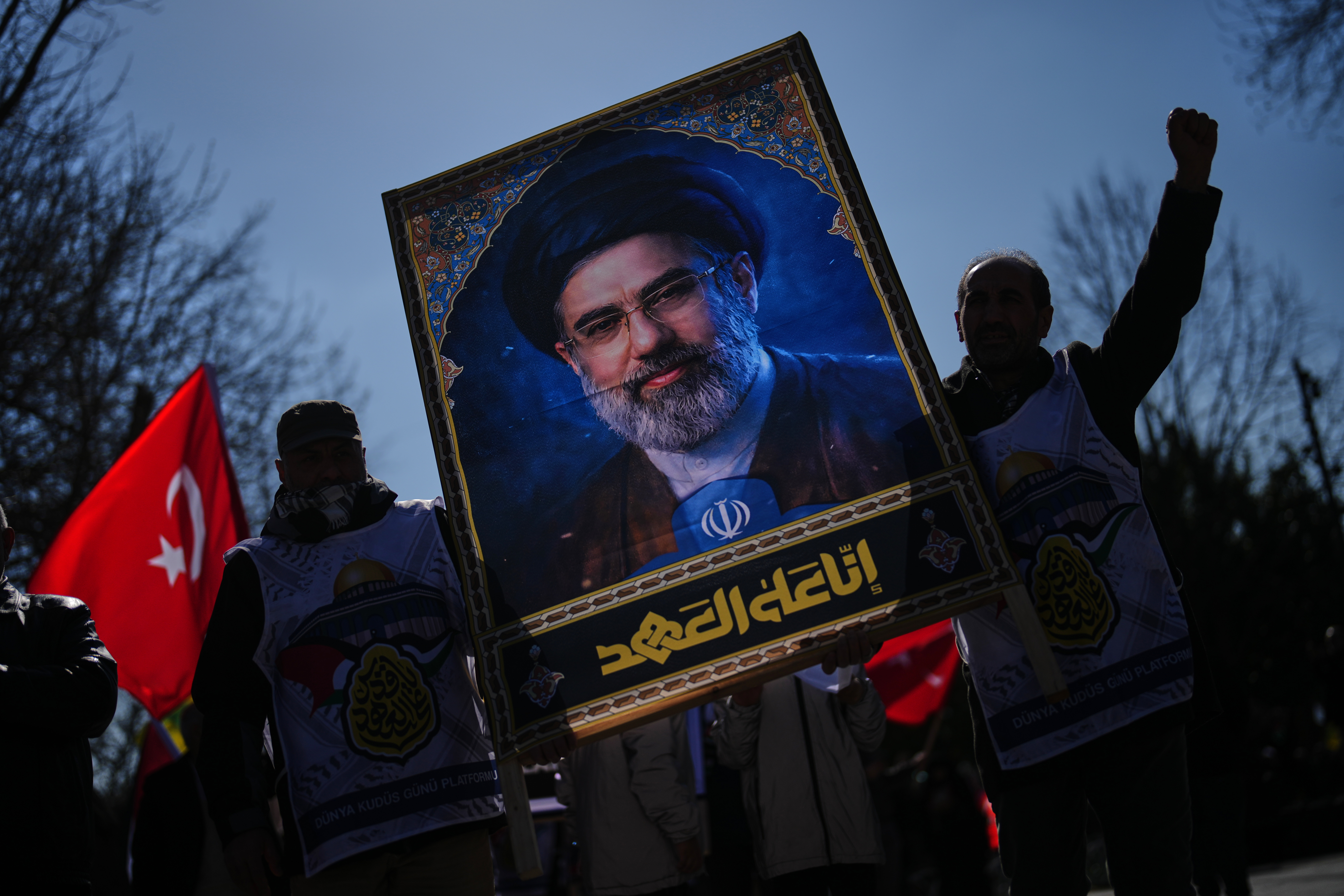
Heightened tensions between the US and Iran reverberate far beyond the Persian Gulf, putting New York City’s economic interests and diverse communities on a precarious footing.
The whiff of oil and the clang of geopolitical sabres are in the air. Last week’s bombardment of Iran’s strategic infrastructure—by what President Donald Trump trumpeted as “one of the most powerful” coordinated US-Israeli strikes ever in the region—underscored escalating hostilities not seen since the Gulf’s heyday as the world’s powder keg. Yet, it is not just distant diplomats and generals who flick through the debris for answers. From Wall Street to Astoria, the reverberations of conflict have a habit of showing up close to home in New York.
At the centre of the current furore stands the enigmatic figure of Mojtaba Jamenei, the presumed but now ambiguously absent successor to Ali Khamenei as Iran’s supreme leader. Trump, ever the dealer in provocative uncertainty, dismissed reports of Jamenei’s death as mere “rumor” in an NBC interview, noting, with his signature insouciance, that “nobody has been able to prove” whether the cleric is even alive. Meanwhile, the US Secretary of Defense, Peter Hegseth, claimed that Jamenei had been gravely wounded and “disfigured” in the late February strike.
Uncertainty over Iran’s leadership and the truculent posture of Washington has heightened New York’s perennial anxieties over global volatility. The city’s economic arteries, notably its financial and energy sectors, are critically sensitive to tremors in the Gulf. Iran’s threat to retaliate by targeting economic and energy infrastructure “related to the United States” in the Middle East, coupled with a temporary blockage of the Strait of Hormuz—through which roughly a fifth of global oil flows—has already contributed to wild oscillations in oil futures.
Traders on the NYMEX exchange, already jittery from a stuttering global recovery, found themselves staring at price spikes reminiscent of the early 2000s. Every escalation generates further hedging costs, and energy-linked stocks continue to bob nervously with each sabre-rattling press release. New York’s robust, if not always disciplined, financial engine faces exposure at multiple levels: pension funds invest globally, airlines hedge against jet fuel price surges, subway fares and heating bills can inch upwards along with Brent crude.
But above the tickers and trading screens, New York’s social fabric is equally enmeshed in the broader uncertainties of US-Iran relations. The city’s Persian-speaking diaspora—over 70,000 strong by unofficial counts—remains alert to news from Tehran, often filling Queens coffee shops with nervous speculation. For Muslim New Yorkers at large, fresh rounds of Middle Eastern conflict can, regrettably, fuel prejudice and raise old spectres of discrimination, particularly when national rhetoric veers from the measured to the bellicose.
Nor is the diplomatic dance merely a story of distant capitals. The local port’s ongoing investments in energy infrastructure, from Greenpoint’s fuel terminals to the Con Ed heating grid, are hostage to swings in global supply chains. Even temporary uncertainty about Hormuz’s navigability threatens to snarl deliveries and nudge up operational costs. Trump’s pledge on Truth Social to “perhaps” repeat the bombardments “just for fun” did little to calm nerves, least of all among New York business leaders.
Nationally, the Trump administration has signalled no intent to restore the Iran nuclear accord. The White House maintains that “conditions are not good enough” for talks and lays out maximalist demands—the total abandonment of all Iranian nuclear ambitions. Meanwhile, an additional deployment of 5,000 US troops to the Middle East hints at escalations yet to come. It is, in essence, the old American dictum: speak loudly, carry the biggest stick you can muster, and leave all exit ramps conspicuously blocked for now.
Ripple effects from the Gulf: local and global context
New York is far from alone in this strategic unease. Cities such as London, Dubai, and Singapore—all global finance nodes—also scan for adjudications in the Persian Gulf, knowing that their own fates typically rise or fall alongside the world’s oil tap. Yet, New York’s uniquely internationalist outlook, as well as its status as financial fulcrum, renders it especially vulnerable to instability in such chokepoints as Hormuz. Past disruptions, from the Tanker War to the 1979 oil embargo, suggest that local pain is inevitable should red lines be crossed.
Still, analyst gloom may prove excessive. The US energy sector is more resilient than in decades past, with shale output and LNG exports buoying supplies against Middle Eastern hiccups. Iranian capacity, while significant, is less gargantuan than the days when it set prices single-handedly. Moreover, New York’s diversified service economy is less directly beholden to raw energy flows than, say, Houston or Rotterdam.
Yet, it would be a sort of civic myopia to dismiss the perils outright. The unpredictable theatre of Iranian succession, bombastic presidential utterances, and opaque threats about “economic infrastructure” all raise the price of doing global business—sometimes quite literally. Whether the current policy produces a more compliant Iran or merely stokes a wider regional inferno remains, as ever, open to question.
Should city and state leaders prepare for lasting fallout? Prudence dictates they should, not out of nostalgia for Cold War bunker drills, but in recognition that global events can reprice local risks with stunning speed. The surge in subway security following attacks abroad, or the uptick in anti-Muslim incidents during periods of Middle East tension, hint at consequences that outstrip headlines and trading floors alike.
In the end, New York’s capacity for absorption is formidable, though hardly limitless. The city’s DNA is woven with resilience, adaptation, and a sometimes sardonic detachment from events beyond its control. But the gathering storm over Hormuz hints at a familiar, if unwelcome, lesson: that in a globalised era, there are no true bystanders—only participants with longer or shorter fuses.
For now, New Yorkers may stoically price in another dollop of risk premium and then get on with daily business. If history offers any solace, it is that the city, and its denizens, tend to muddle through even the most fretful crises. But economic caution and social vigilance will be prudent companions should oil once again turn from lubricant to accelerant in the city’s frenetic life. ■
Based on reporting from El Diario NY; additional analysis and context by Borough Brief.