Trump Immigration Rule Could Deny Green Cards for Protest Speech, Flag Burning, NY Advocates Skeptical
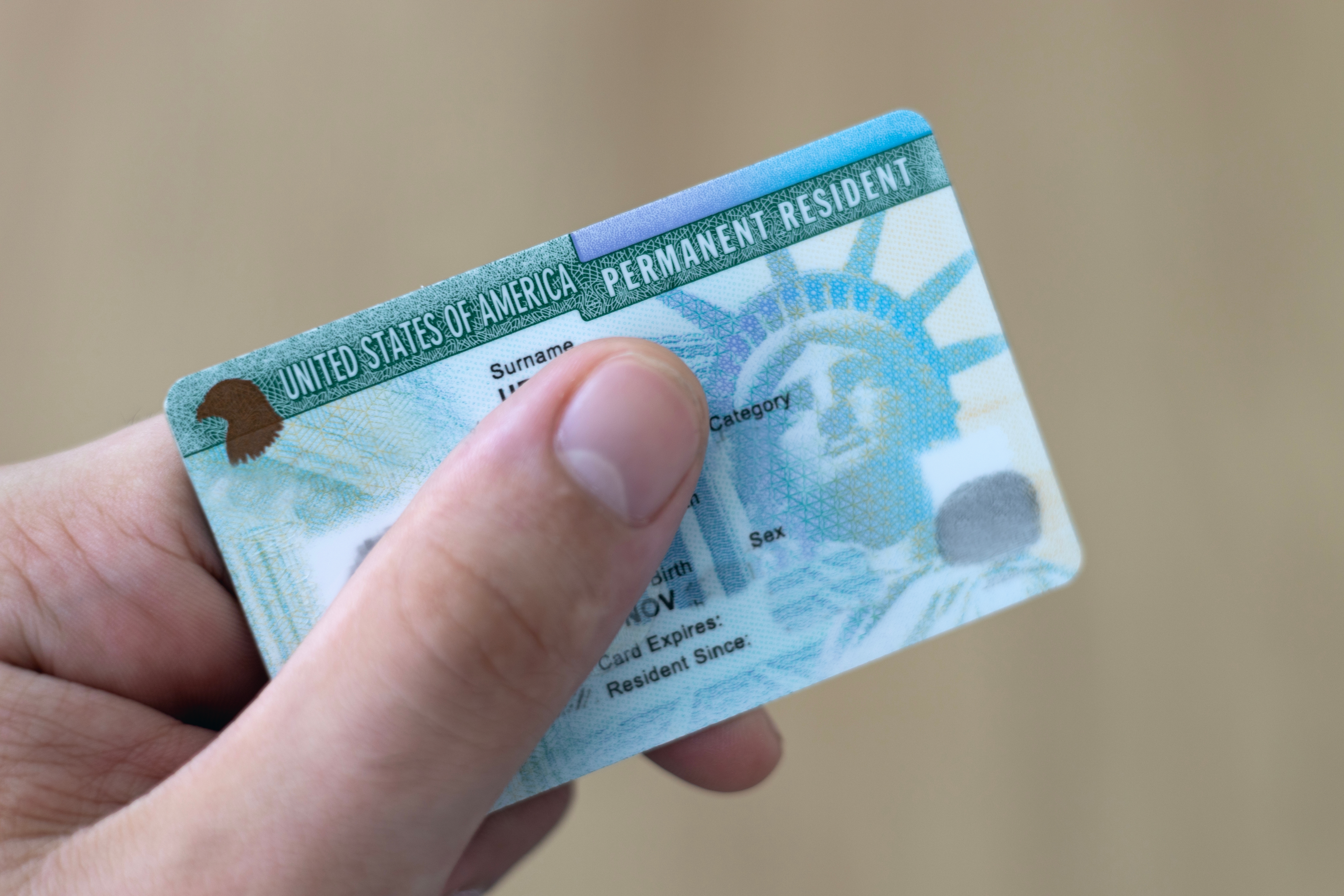
America’s latest immigration guidance shows how shifting definitions of loyalty risk chilling free speech in the city built by immigrants.
Ask almost any denizen of New York City—a Syrian doctoral student at Columbia, a Palestinian-American deli owner in Astoria, or a French fintech coder near Bryant Park—if they have ever burned a flag. The answer is likely no. But ask whether they have protested, signed petitions, or voiced opinions now under scrutiny by the Department of Homeland Security (DHS), and a far larger cohort may fall uncomfortably silent. New directives, quietly circulating as internal guidance, could make certain expressions of dissent costlier than before.
According to leaked DHS training materials cited by The New York Times, the Trump administration has set out new, unpublished criteria for green card adjudication. These guidelines instruct officials to take political expression into account when evaluating applications for permanent residency. Specifically, prospective green-card holders may be denied if they are found to have engaged in what DHS terms “anti-American” or “antisemitic” expression, including pro-Palestinian activism and even the burning of the US flag.
Under the proposed scheme, officers are told to refer any cases implicating “possible conduct or ideologies anti-American and/or antisemitic” to their superiors for legal review. Notably, the bar for rejection is not predicated on acts of violence or violations of the law. Rather, officials are guided to treat the mere articulation or support of certain ideas as “overwhelmingly negative” factors—enough to scuttle a path to residency and, ultimately, to American citizenship.
The guidelines appear to single out recent incidents on university campuses, especially in the wake of last year’s Hamas attack on Israel. Students and foreign nationals who attended protests, signed open letters, or engaged in heated rhetoric may now find themselves facing not only college disciplinary boards, but also the full machinery of federal immigration enforcement. Acts previously held up as exemplars of democratic expression—including flag-burning, which the Supreme Court deemed protected speech in Texas v. Johnson (1989)—weigh against applicants, by administrative fiat if not by law.
For New York City, where 37% of the population is foreign-born and universities are as ubiquitous as bagel shops, such policy portends outsized consequences. The city’s mosaic of recent arrivals, many still working their way through the maze of American immigration, may find self-censorship easier than crossing federal authorities. Advocacy groups, including the New York Immigration Coalition, sound the alarm that these moves chill the foundational freedoms the city cherishes.
It is not mere abstraction: Murad Awawdeh, head of the NYIC, warns that the policy’s reach could “punish immigrants for the public expression of their beliefs.” Never mind that dissent, not docility, has been the sinew of New York’s—and America’s—remarkable rise. The new regime’s Rubicon, by rewarding conformity over candour, risks undermining the very diversity of thought that powers everything from Wall Street to Williamsburg.
Some fret about an economic knock-on effect. New York’s universities, responsible for drawing tens of thousands of foreign students and billions of dollars in spending annually, may become less attractive if potential applicants fear protests will cost them their future here. In the city’s hypercharged hothouse of activism, public rallies and political debate are as perennial as subway delays. When the right to disagree becomes a liability on one’s visa record, the city’s intellectual metabolism will surely suffer.
Nor are the second-order political implications trivial. Historically, waves of New Yorkers—Vietnam-era dissenters, Eastern European and Soviet émigrés, Tiananmen exiles—have contributed to a civic life rich in pluralism and contestation. New barriers to political expression among immigrants risk narrowing, not widening, the pool of engaged citizens. Community organisations and civil rights campaigners quietly note that the calculus of participation, from volunteering for local causes to attending a protest, grows ever more fraught.
Nationally, the new approach stands in contrast with the country’s self-image as a bastion of free speech. America has long lionised the right to offend as well as the right to worship and to assemble, threading these freedoms through its constitutional fabric. Other liberal democracies have, at times, restricted hate speech or protected prevailing symbols more jealously—but few would so baldly make a path to residency contingent on political loyalty.
Treading a thin line between security and liberty
The ostensible aim, from DHS’s perspective, is to shield the nation from internal threats, especially at a time of increased social polarisation and persistent fears of extremism. Yet the criteria are broad, potentially sweeping up peaceful dissent alongside genuinely malign conduct. The Supreme Court’s early-20th-century verdicts upheld the deportation of flag-burning anarchists; in the intervening century, however, jurisprudence and public norms have shifted. That the Trump administration would now conjure language redolent of the Palmer Raids is notable, and not in a reassuring way.
To its credit, the guidance did pass through legal review, providing a bureaucratic check of sorts. But a system vesting frontline officers with the discretion—or obligation—to scrutinise opinions invites inconsistency and the risk of overreach. In a city with combustible politics and a million recent immigrants, even the perception of such a policy could portend wary silence and reduced civic participation.
Critical distinctions between speech and action, once vivid, blur when bureaucrats conflate unpopular opinion with subversive activity. So long as the Supreme Court continues to hold the line on protected speech, applicants can point to precedent. In practice, though, many will tick the box of least resistance, and refrain from vigorous debate.
The irony, of course, is that in seeking to cultivate greater loyalty, the guidelines may only foster suspicion and cautious compliance—qualities rarely heralded as recipes for national greatness. The impulse to keep out subversives is ancient. But American greatness has more often lain in its capacity to absorb critics and contradictions, not to stifle them.
Absent public scrutiny and clarity, the risk is that New York’s perennial churn of ideas and activism is dampened—subtly but pervasively. A city built by the outspoken and the outsized may find itself whispering when it once shouted.
However these guidelines fare in the courts and political arena, New Yorkers—old and new—will watch closely. After all, in a city that thrives on a contest of voices, loyalty has always meant something more than mute assent. ■
Based on reporting from El Diario NY; additional analysis and context by Borough Brief.