Woodside Houses First in NYCHA to Get Full Heat Pump Retrofit, 87% Energy Drop Recorded
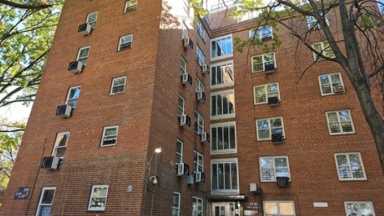
The overhaul of heating at a Queens public-housing complex signals both promise and pitfalls for decarbonising New York’s vast, creaking apartment stock.
At Woodside Houses in western Queens, tenants say the hissing radiators that once heralded winter have finally fallen silent. Last month, the city’s housing authority completed its first building-wide retrofit, swapping out its half-century-old steam heating system for 150 plug-and-play electric heat pumps produced by Midea. Such a transformation—at a property operated by the chronically underfunded New York City Housing Authority (NYCHA), no less—portends more than improved comfort for some 2,900 Woodside residents. In the jargon of municipal climate hawks, it is an improbable beachhead in the campaign to electrify New York’s leaky, carbon-belching housing.
The installation forms the vanguard of NYCHA’s Clean Heat for All Challenge, a 2022 initiative pursued in partnership with the New York Power Authority and the state’s Energy Research and Development Authority. The scheme compelled manufacturers—Midea among them—to design “cold-climate”-ready window heat pumps that can be wired into aging buildings without the need for gut renovations or specialist electricians. Swapping in heat pumps promises not just a lower-carbon footprint but also a likely leap in winter comfort, predictable bills and, with any luck, fewer tenant complaints.
For a city tethered to steam heat and spiking fossil-fuel bills, this test balloon was not a trivial exercise. At Woodside, a 36-unit pilot last year reported an eye-catching 87% drop in energy use. As word spreads of tenants enjoying actual climate control—rather than the traditional “boil or freeze” binary—momentum builds for further rollouts. NYCHA has already inked contracts to deliver over 20,000 such units citywide, with the Bay View Houses next in line.
This is not only about sputtering pipes and tenants’ comfort. NYCHA alone manages some 177,000 apartments across 335 developments—by far America’s largest public-housing landlord. Its properties also account for nearly 4% of the city’s planet-warming emissions, a burden rendered heavier by a notorious repair backlog now topping $40bn. A systematic switch to electric heat, especially if paired with other energy-sipping measures, could dent both those liabilities.
For New York, which has enshrined ambitious emissions targets in law, these numbers matter. The city’s Local Law 97, which took effect this year, holds building owners liable for overshooting carbon thresholds, and the state itself aims to end fossil-fuel heat in most new buildings by 2027. Politically, NYCHA’s role as municipal guinea pig affords smaller landlords a preview of what electrification could cost—both in dollars and disruption.
But implications run deeper. The explicit design of Midea’s heat pumps—to fit through windows, run on standard outlets, and self-manage condensation—evinces the sheer quirkiness of New York’s apartment stock, most of which predates modern HVAC engineering. NYCHA developments are only the iceberg’s tip. To hit its statutory targets, New York must retrofit hundreds of thousands of private co-ops, prewar tenements and brownstones, many owned by landlords with neither NYCHA’s scale nor the city’s political capital.
The economic ramifications bear scrutiny. Electric heat typically costs more per BTU than fossil gas in New York, and ConEd’s retail electricity prices have a way of marching only in one direction. Advocates reckon the enormous efficiency gains—Midea’s pilot outperformed traditional heating dramatically—could offset steeper power bills, but only if the units are kept in tip-top shape. Any savings likewise depend on the city securing both volume discounts and nimble contractors; both are in notoriously short supply.
Scaling the model: hope, hype and hard cash
Compared with Europe and Asia, where heat-pump adoption is buoyant and regulatory carrots are fatter, New York finds itself late to the dance. Even San Francisco’s municipal housing—smaller in bulk but similarly battered by deferred maintenance—is further along in piloting all-electric retrofits. City officials tout Woodside’s installation as a trailblazer, but the trick will be moving from pilot to mass deployment. At present, only around 15% of American households in cold climates use any kind of heat pump.
Critics—in landlord and tenant circles alike—raise eyebrows at the technical hurdles. Window units, though easier to install, often evoke memories of rumbling, leaky air conditioners, and their aesthetics are not universally admired. The experience at Woodside will bear watching over multiple seasons: Will outages mount? Do tenants game settings? Will the balance sheet reflect genuine, enduring savings once maintenance contracts and bulk rates are factored in?
Federal and state subsidies, announced with fanfare for climate-friendly retrofits, are most visible in headline figures; their actual delivery is often gaunt and slow-footed. NYCHA remains heavily dependent on outside politicians’ largesse. The ease with which Woodside’s success at scale can be replicated will ultimately turn less on technical wizardry than on sustained political and financial capital.
Yet the experiment, we reckon, bodes relatively well for public housing and the city at large. If frazzled housing officials can orchestrate seamless changeovers in crumbling NYCHA apartments—no small feat amid perennial budget wrangling—private landlords with better balance sheets ought to manage the same. The city’s signature challenges—eccentric infrastructure, stratified wealth, political inertia—have seldom allowed for headlong, uniform innovations. Incrementalism is thus not merely inevitable but possibly prudent.
Now that one building has made the leap, the rest of Gotham may belatedly follow, wading into the icy waters of electrified heating. The steam may be gone, but in Woodside, the air is oddly hopeful. ■
Based on reporting from QNS; additional analysis and context by Borough Brief.